Siesta Key's powder-white quartz sand — consistently ranked America's #1 beach — mornings with manatees, afternoons in a Venetian palace built by a circus king, and a treasure hunt for million-year-old shark teeth. Sarasota packs a whole childhood of wonder into four Gulf Coast days.
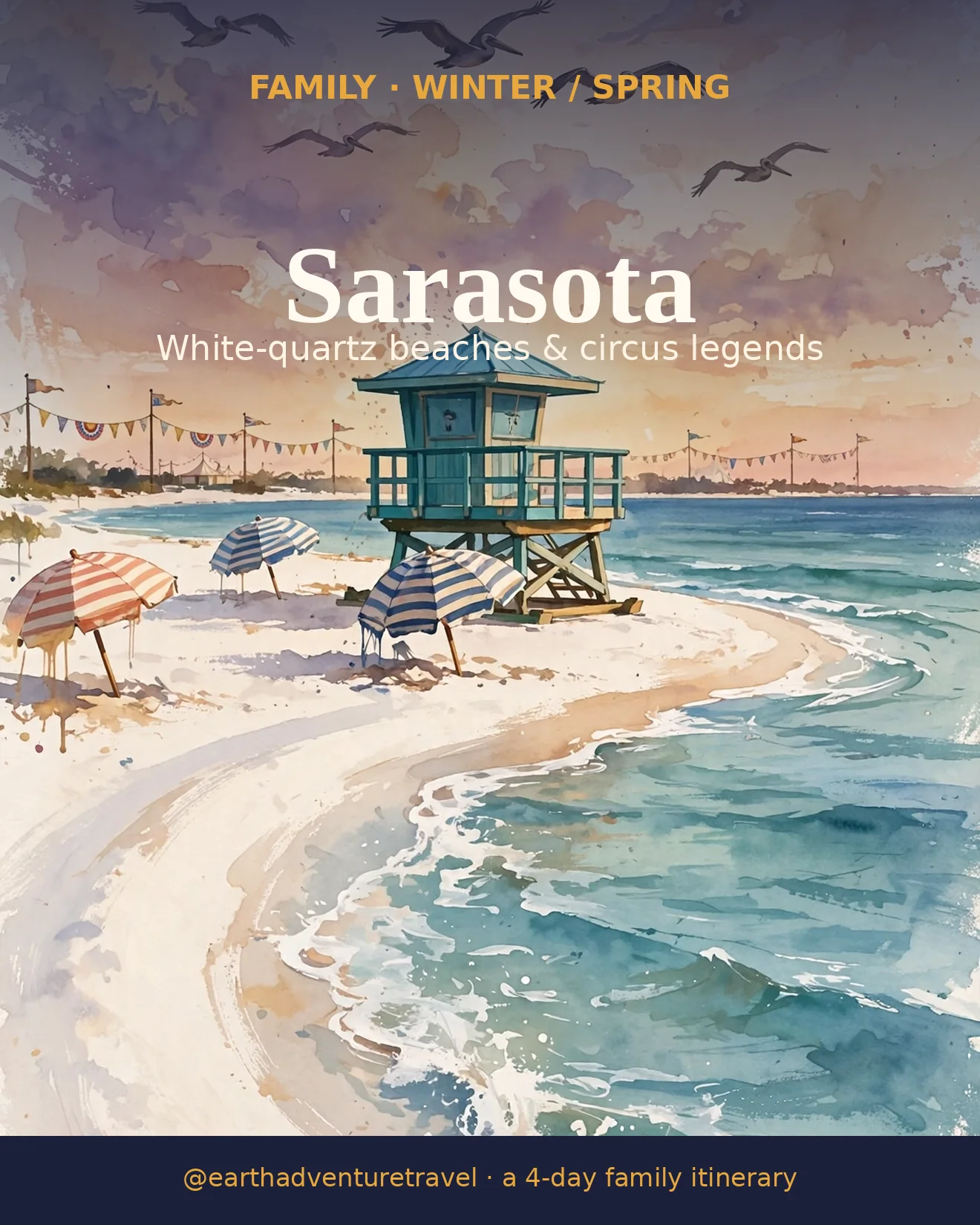
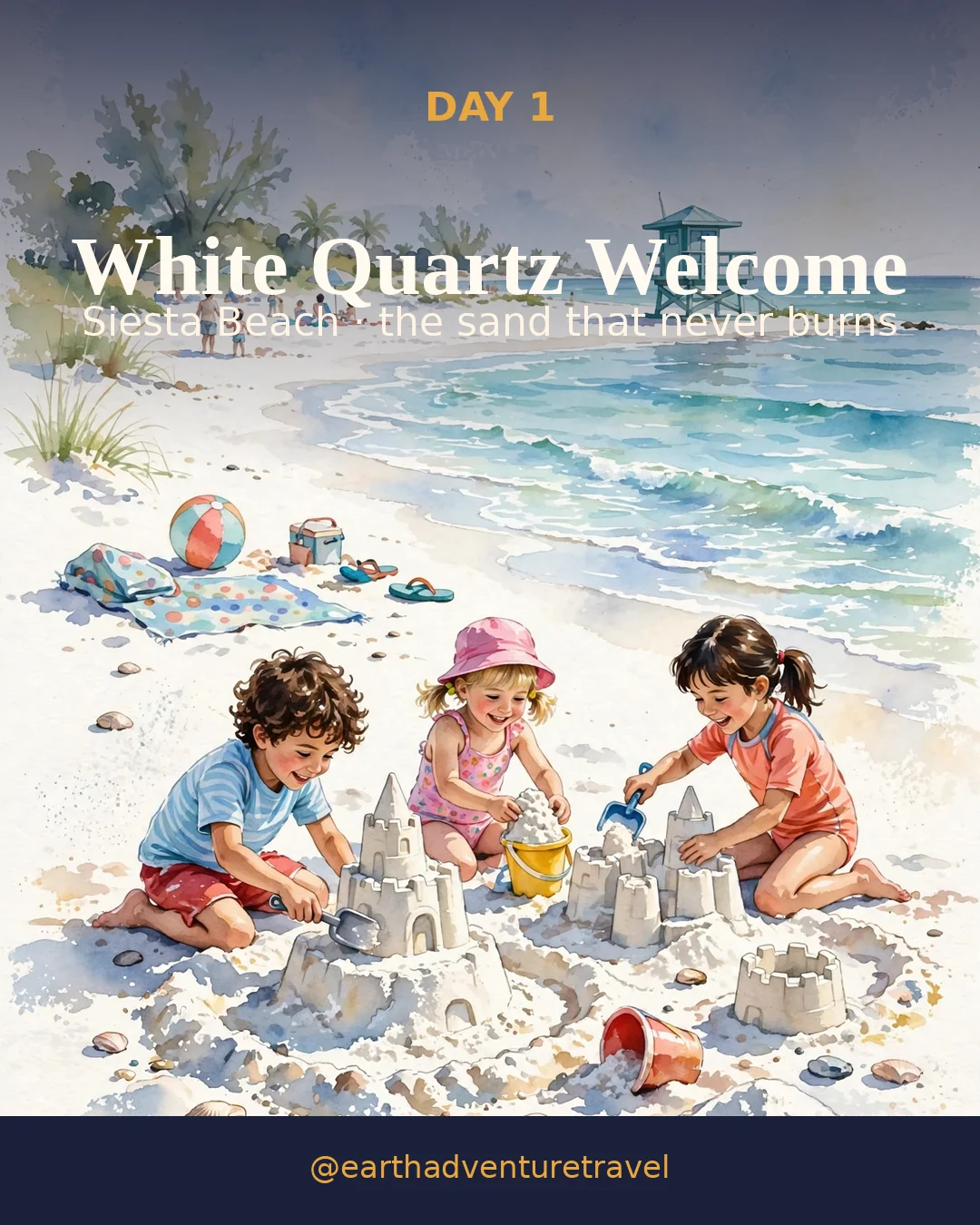
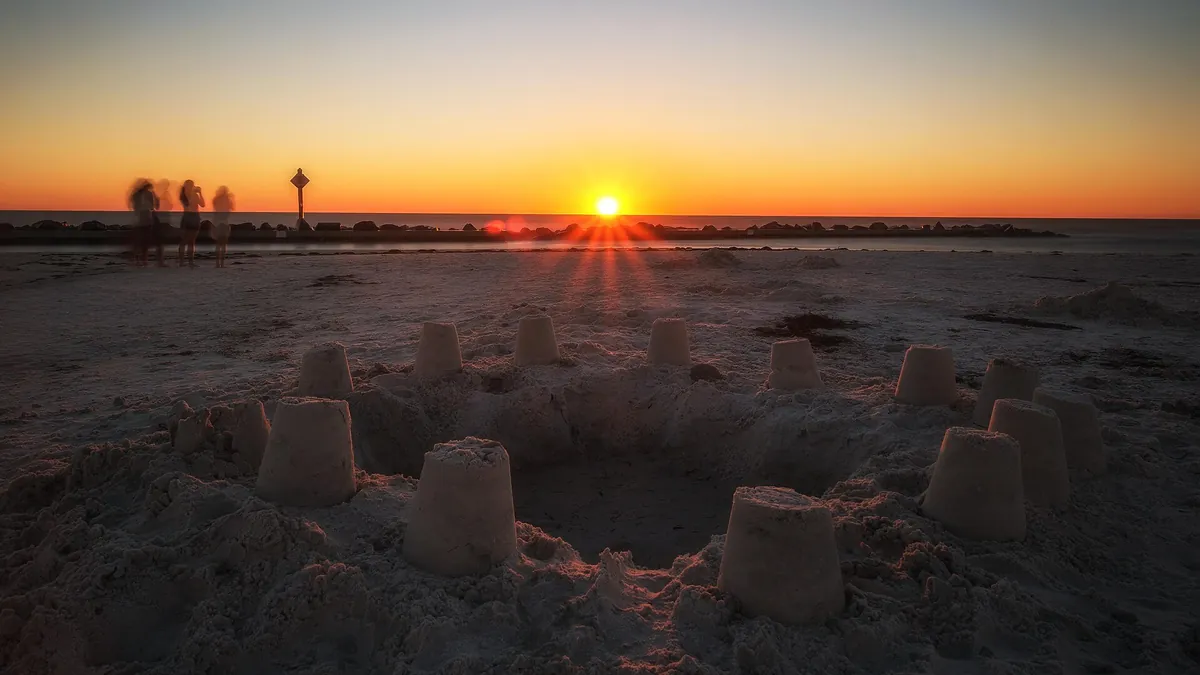
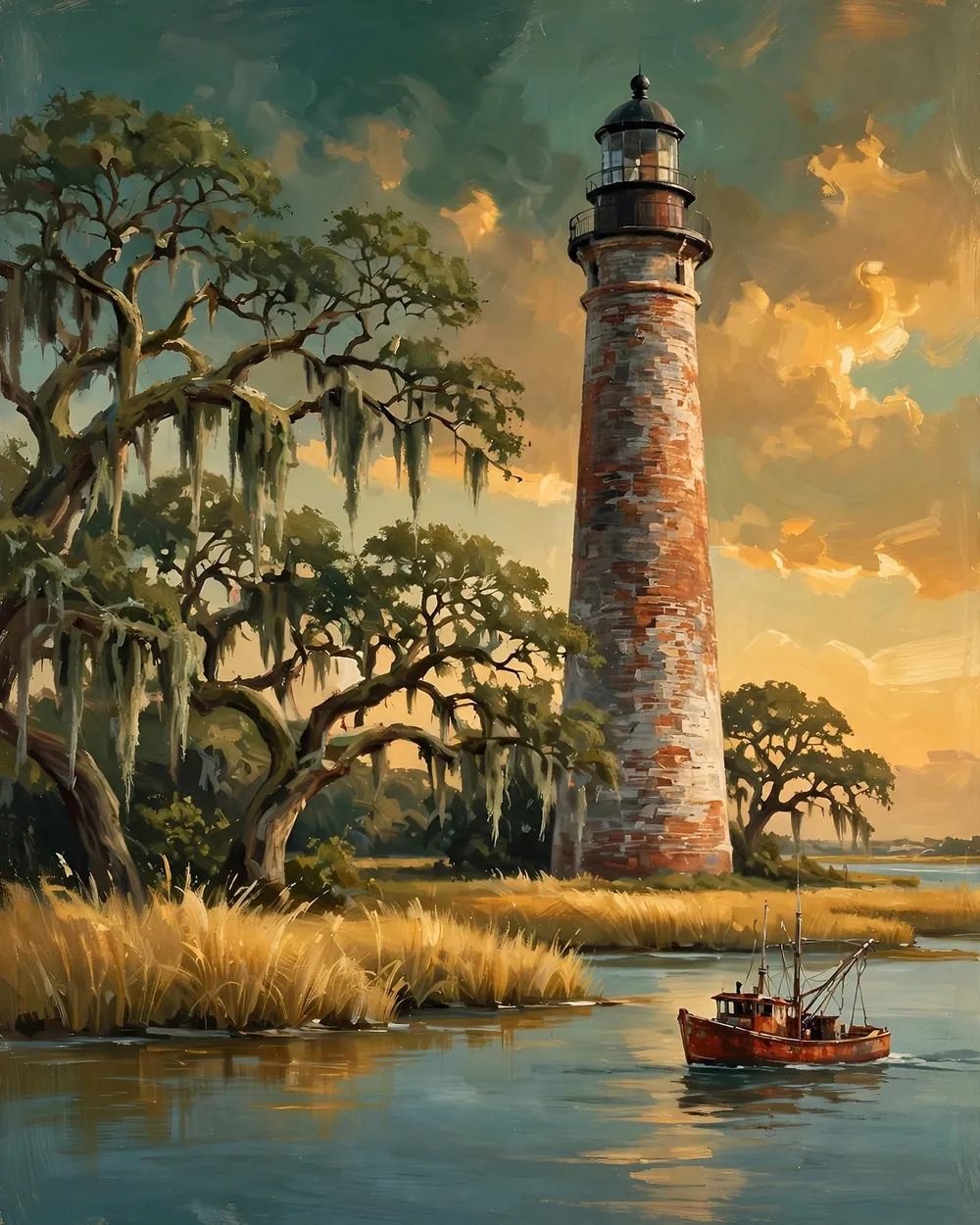
Original itinerary artworkSiesta Beach · the quartz-sand shoreline that keeps winning #1 in America
The trip in 60 seconds
Rough budget · family of 4
The range below is a planning estimate, not a quote. Lodging drives the biggest swing — Siesta Key condos in March book out early. Attractions are modestly priced; the beach itself is free.
$2.4K–$3.9K
Three nights · rental car, food, lodging · flights excluded · Ringling ~$25/adult, Big Cat $25/$10
Lodging
$250–$400/night Siesta Key condo
Car + fuel
fly into SRQ, rent on site
Ticket priorities
Mote timed entry — book first
Low-cost wins
beaches · Drum Circle · shark teeth
Buffer
March rates + beach rentals
The route
Four days, one easy coast.
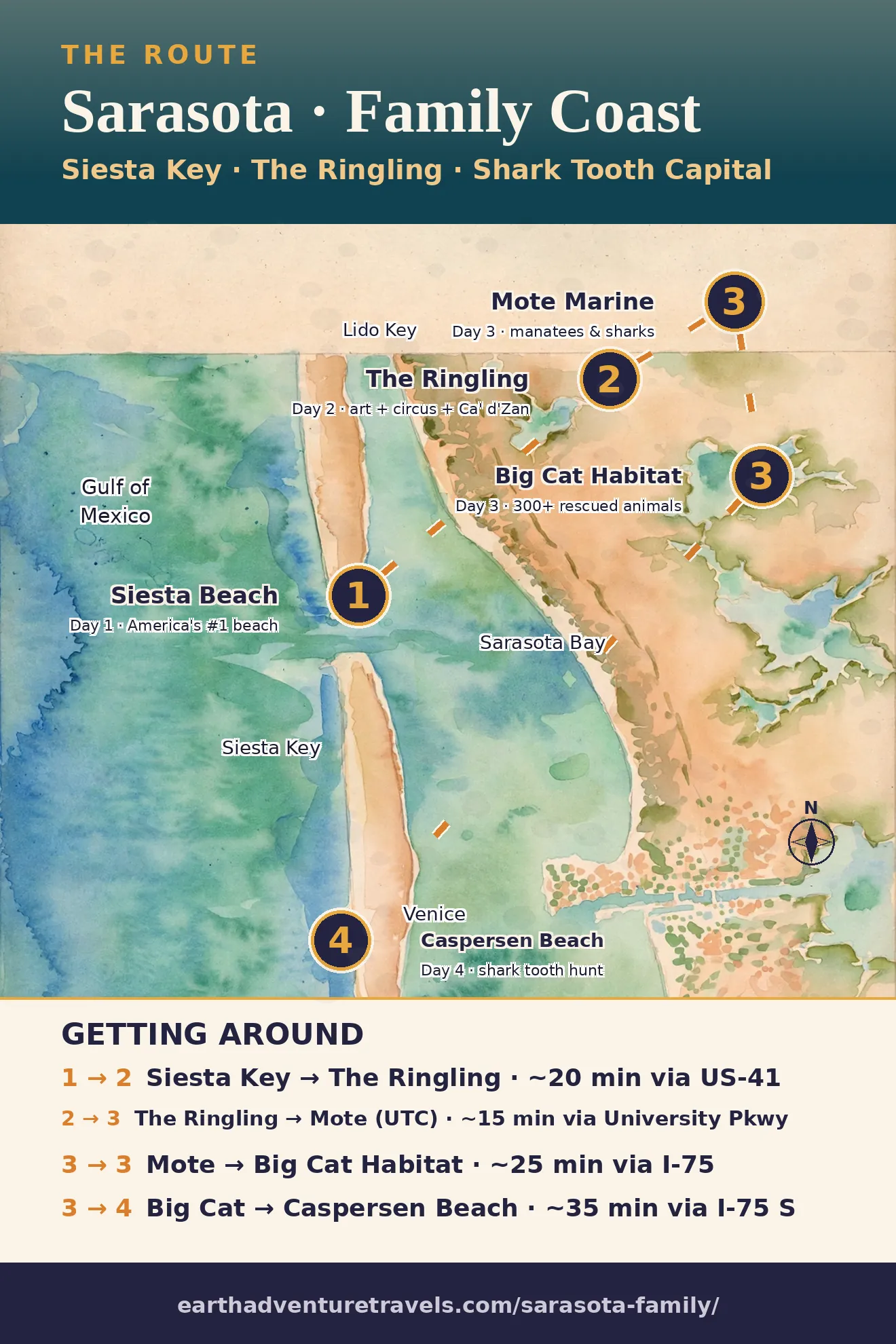
Build each day around the boldface activity. Everything else is optional. Mornings are for the headline stop — the beach, the museum, the manatees — afternoons stay loose for sand, naps, and sunset. Nothing on this route is more than 35 minutes apart.
A gentle north-to-south arc: Siesta Key's beaches, bayfront museums, and the Shark Tooth Capital.
The idea
Sarasota is where America's best beach met the circus — and they stayed.
Here's the direct answer: four days in Sarasota for a family, between January and April, when highs sit in the 70s and the Gulf is calm. Siesta Key's quartz sand — 99% pure, cool underfoot, ranked #1 in America — anchors the trip. Around it: the Ringling circus museums and a Venetian palace, manatees and sharks at Mote Marine, rescued lions and tigers, and a fossil shark-tooth hunt in the town literally called the Shark Tooth Capital of the World. Beach mornings, storybook afternoons, sunsets every night.
Day-by-day summary
Saveable route recap · four days on Sarasota's Family Coast
Siesta Beach · the sand that stays cool under bare feet
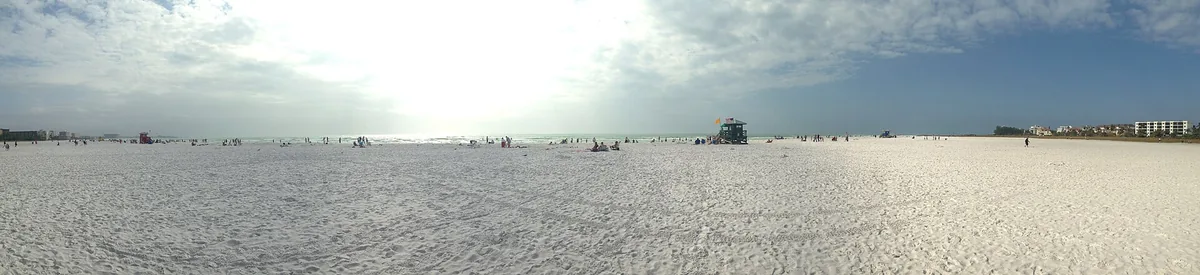
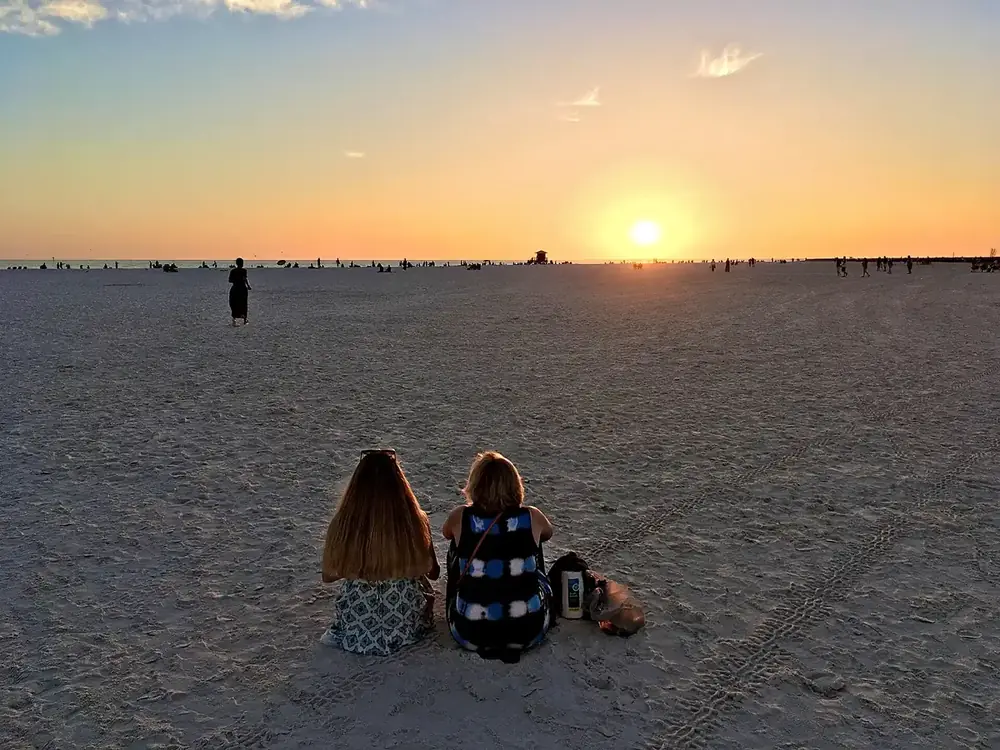
Land at Sarasota-Bradenton Airport (SRQ), grab the rental car, and drive straight to the sand — Siesta Key is about 20 minutes southwest. Head for Siesta Beach (948 Beach Rd), the main public beach and the reason this trip exists. The claim to fame is geological and real: the sand is 99% pure quartz, so fine it squeaks and so reflective it stays cool even at midday — the rare beach where bare feet beat sandals. The rankings back it up: #1 beach in the U.S. from U.S. News (2026), Dr. Beach, and Tripadvisor.
The beach is built for all-day family stays: 950 free parking spaces, lifeguards year-round 10am–5pm, restrooms, a shaded playground, volleyball and pickleball courts, and chair/umbrella/cabana rentals. The Sun Deck concession serves burgers, tacos, and cold drinks so you never have to leave. Set up near the lifeguard stands between the pavilion and the courts — closest to restrooms and the playground. The Gulf shelf stays knee-deep a long way out, which is why toddlers love it. January–March water runs 64–68°F: bracing for swimming, perfect for wading and sandcastles. By April it reaches the low 70s.
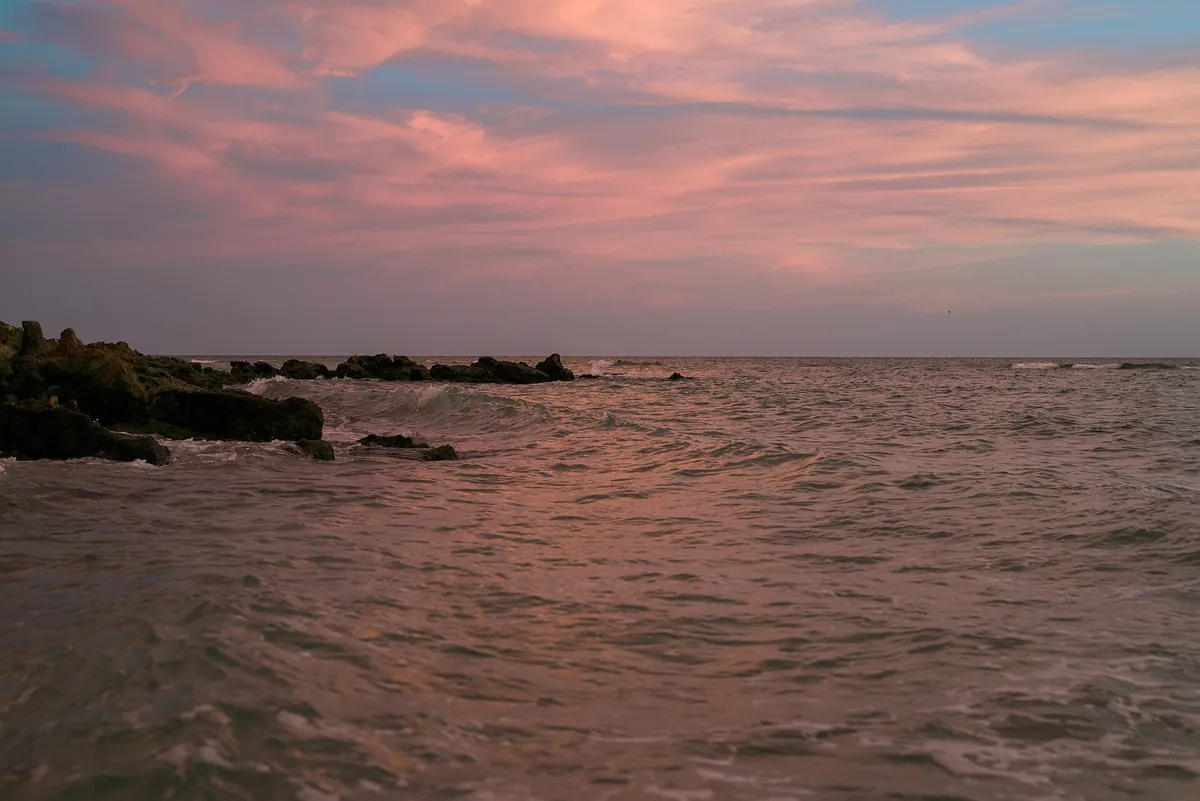
Stay for sunset — the wide flat beach faces due west into it. On Sundays, time it for the Siesta Key Drum Circle: drummers gather on the sand about an hour before sunset, a free tradition since 1996. Dinner in Siesta Key Village — the Daiquiri Deck does grouper sandwiches with live music. The free Siesta Key trolley loops the island if you'd rather not move the car.
Where to stay
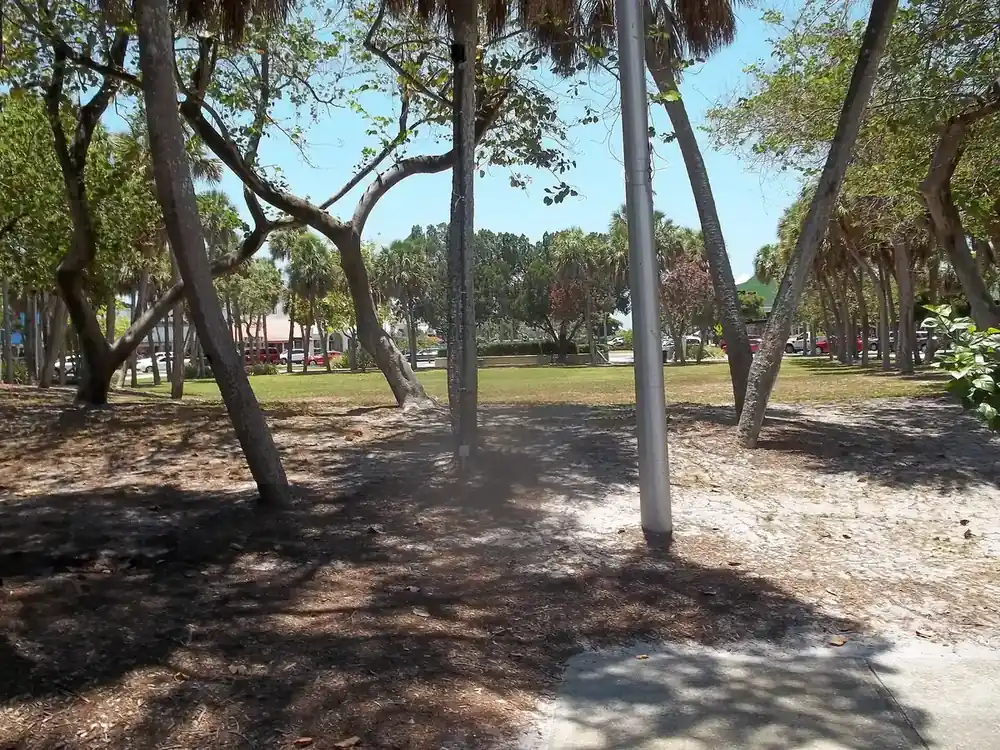
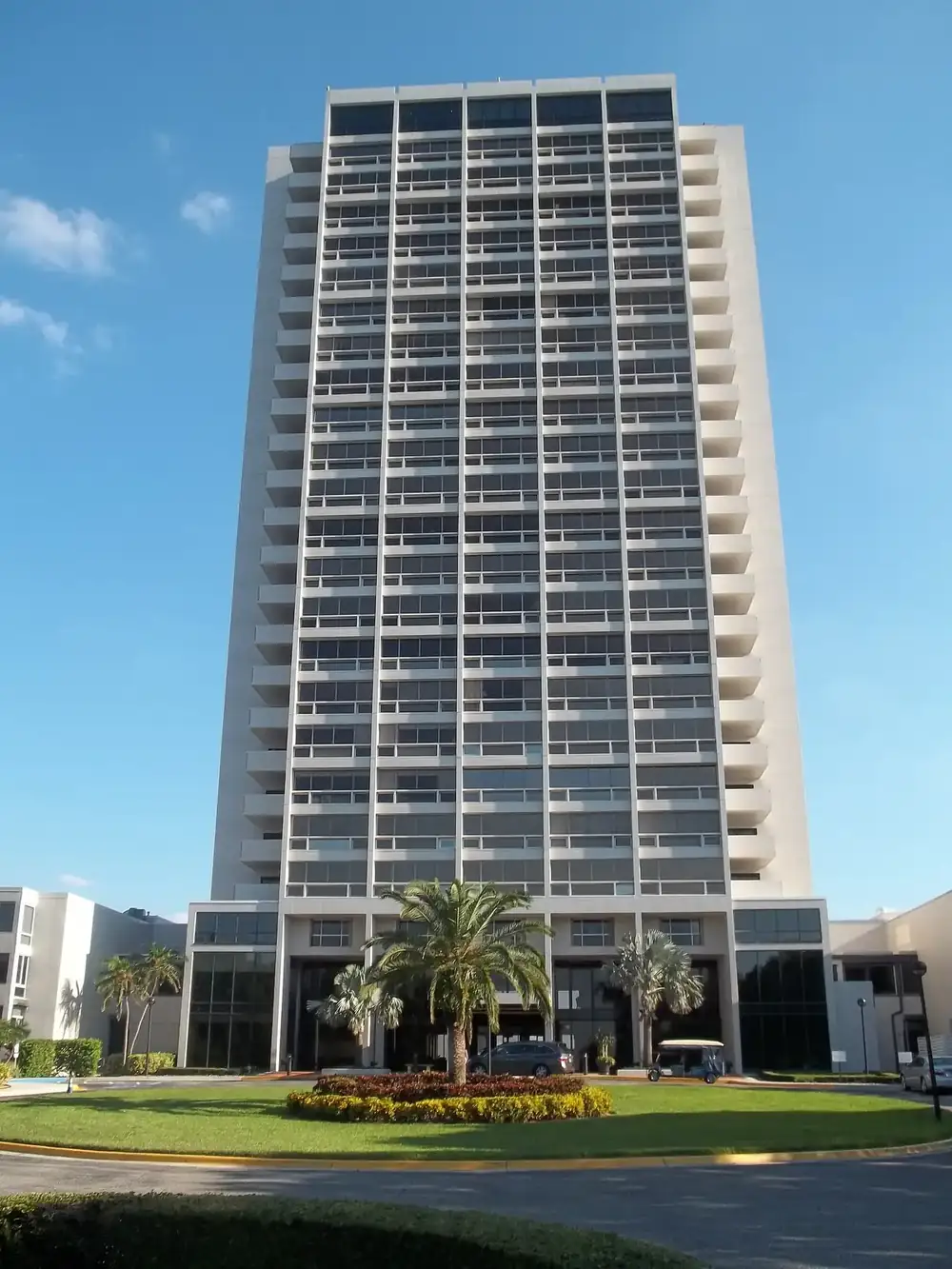
Stay on Siesta Key so the beach is a walk, not a drive. The island is mostly low-rise condo resorts along Beach Road and Midnight Pass Road — book a two-bedroom condo with a kitchen (winter/spring runs $250–$400/night; reserve 3+ months out for March). Cheaper alternative: downtown Sarasota hotels ($150–$220/night), 15–20 minutes over the south bridge. Longboat Key to the north is quieter and more resort-style if the Village energy isn't your speed.
Pro tip: Siesta Beach's 950 free spaces fill by 10am on winter/spring weekends. Arrive by 9am, or come after 3pm when the morning crowd leaves — the light is better anyway. For dinner, ride the free island trolley instead of re-parking in the Village.
Route note: SRQ → Siesta Beach: ~12 miles, 20–25 min via US-41 and Siesta Drive. Siesta Beach → Siesta Key Village: 1 mile north on Beach Rd, 5 min (or the free trolley).
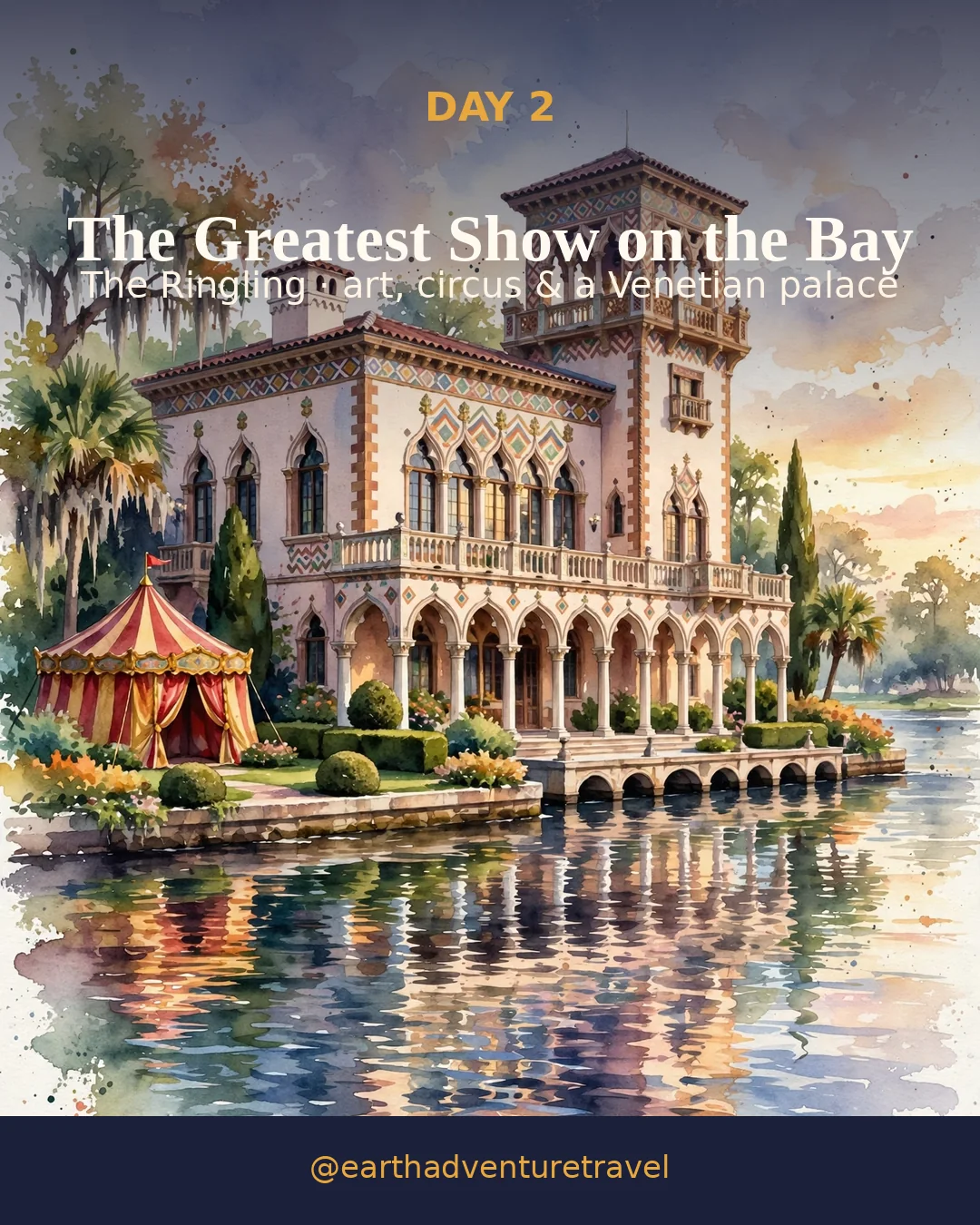
Ca' d'Zan · the circus king's Venetian palace on the bay
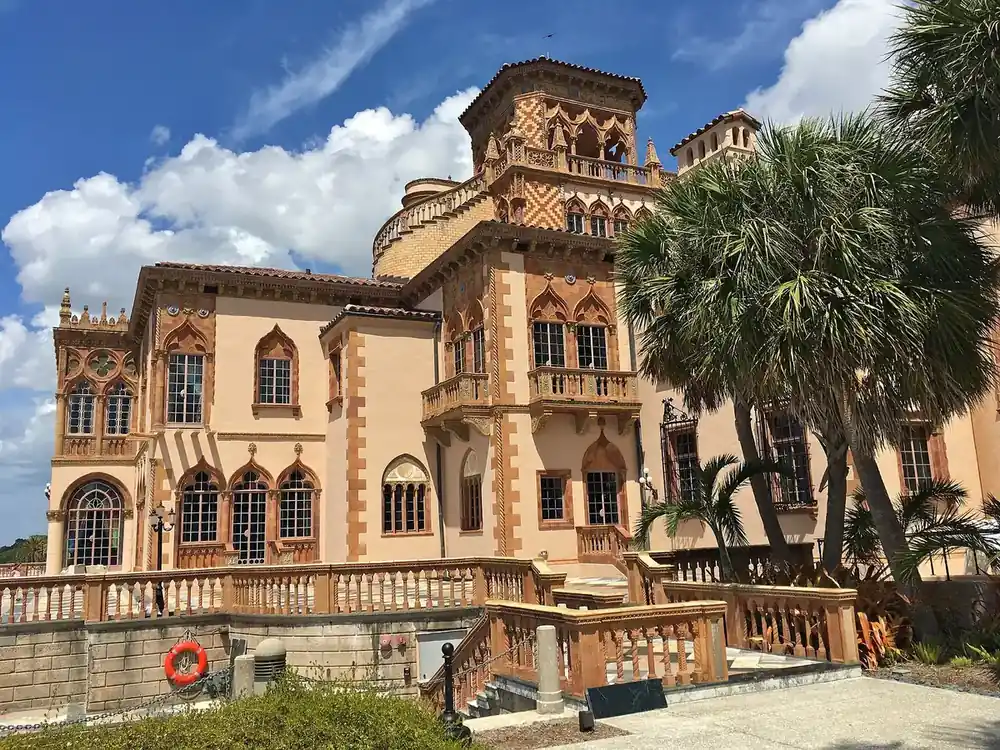
Sarasota was the winter home of the Ringling Bros. circus, and John Ringling poured the fortune into a 66-acre bayfront estate that's now Florida's most surprising family museum complex. The Ringling (5401 Bay Shore Rd) opens at 10am — arrive then; you'll want 4–5 hours. Start at the Circus Museum (Tibbals Learning Center): the 3,800-square-foot miniature circus — 42,000+ pieces, parades of tiny clowns and 200+ animals — stops kids cold, and the restored big-top wagons show how a traveling city of a thousand people actually worked.
Cross to the Museum of Art — 21 galleries, including the famous Rubens rooms — then Ca' d'Zan, the Ringlings' 36,000-square-foot Venetian Gothic mansion completed in 1926: glazed ceramic tile, hand-painted ceilings, and a waterfront terrace staring straight down Sarasota Bay. The first floor is a $15 self-guided add-on; with kids, the exterior, terrace, and bayfront lawns deliver most of the wow. General admission runs about $25/adult (verify current prices at ringling.org) — and Mondays are free, so plan this day for a Monday if you can. Parking is free and the grounds are wheelchair accessible.
The grounds are the secret weapon for families: banyan trees, Mable Ringling's rose garden, and a bayfront lawn made for running. Eat at the Banyan Café on site or picnic on the lawn. Evening: drive the Ringling Causeway to St. Armands Circle on Lido Key — dinner at the Columbia Restaurant (411 St. Armands Circle; Florida's oldest restaurant, serving since 1905; its pressed Cubano was named Florida's best sandwich by Food & Wine). Walk it off with sunset at Lido Beach, a calmer, less crowded alternative to Siesta with full amenities and lifeguards.
Where to stay
Same base as last night — no reason to move. Siesta Key keeps you about 20 minutes from the Ringling via US-41. If you'd rather be walkable to dinner, one night on Lido Key puts St. Armands Circle outside your door — but you'll trade Siesta's beach mornings for it.
Pro tip: The estate is big and mostly outdoors between buildings — bring hats, water, and sunscreen even in February. Free wheelchairs are available at the admissions desk, and courtesy shuttles loop the grounds when little legs fade. Thursday evenings the art museum stays open until 8pm.
Route note: Siesta Key → The Ringling: ~9 miles, 20 min north via US-41. The Ringling → St. Armands Circle: ~6 miles, 15 min via the Ringling Causeway. St. Armands → Lido Beach: 5 min west.
Four days on this coast and the kids will remember two things: the sand that never burned their feet, and the afternoon the circus came back to life.
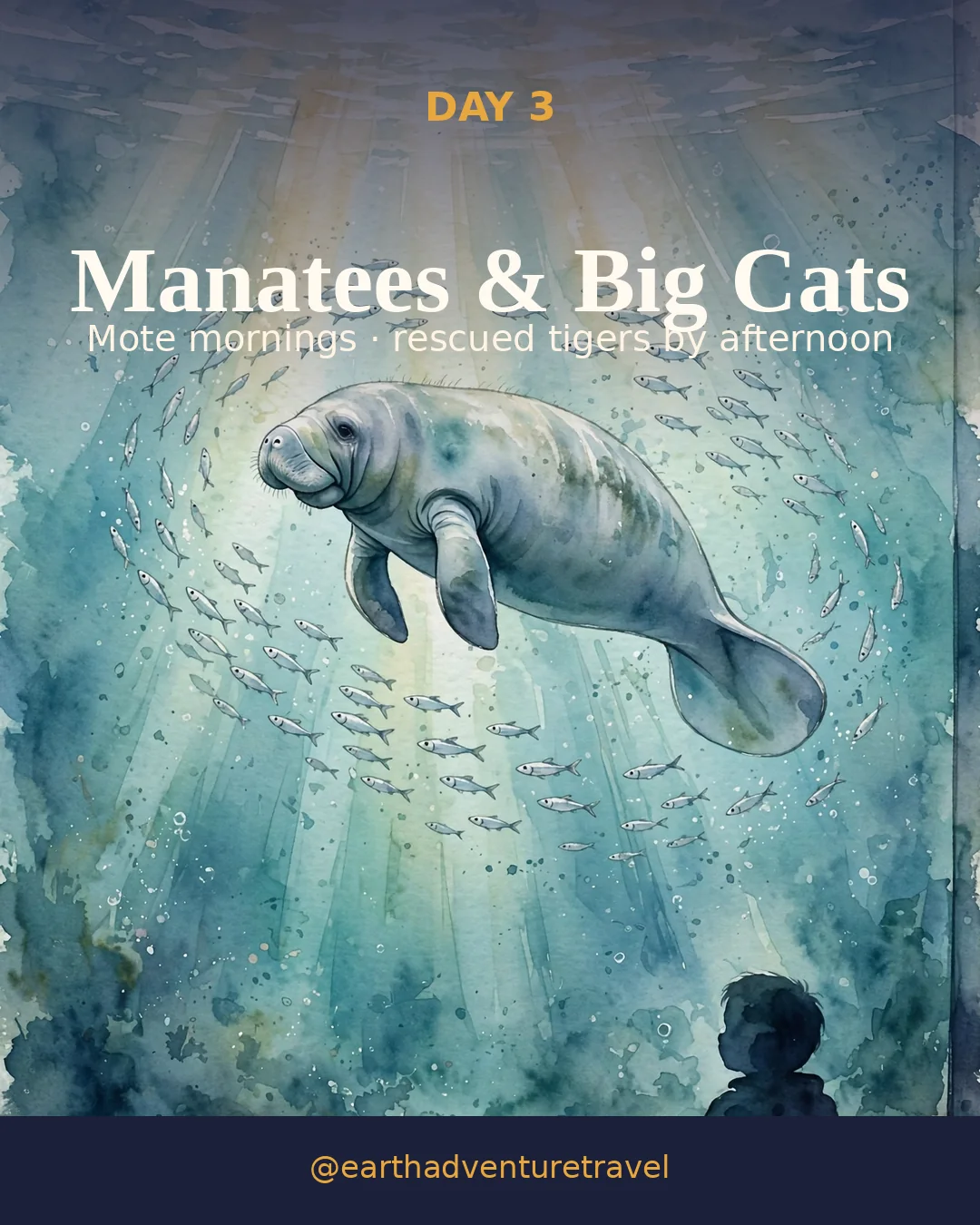
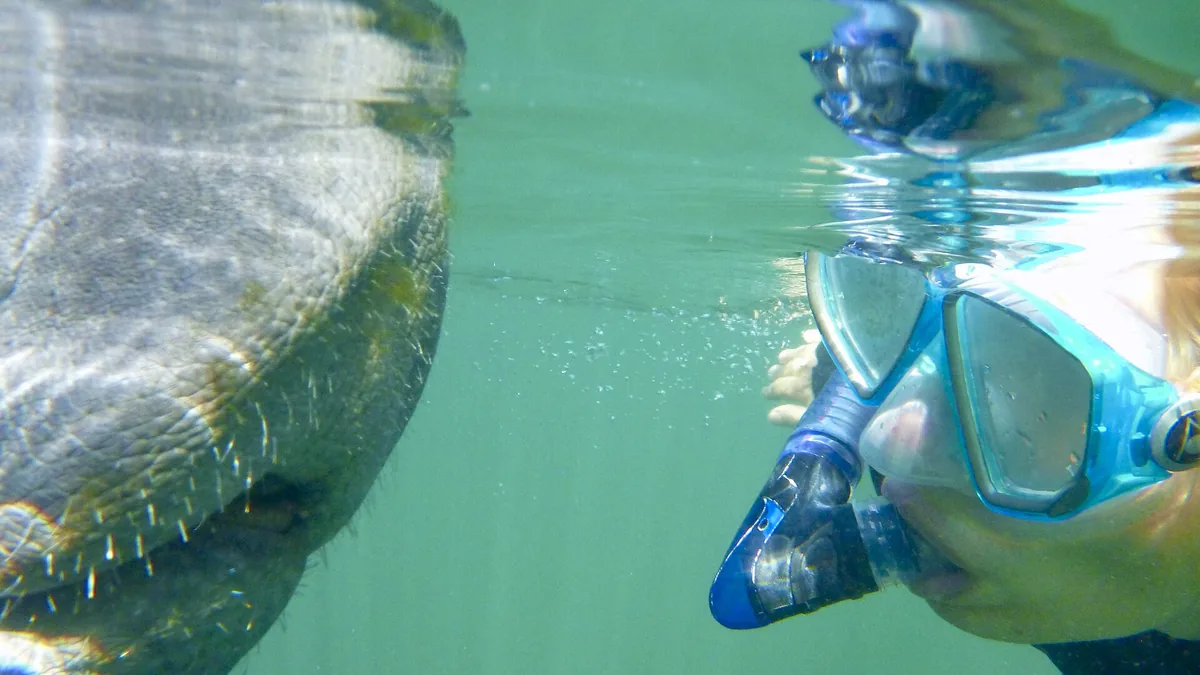
Manatee encounter · the gentle giants of Mote's tanks
Morning at Mote Marine Laboratory & Aquarium — but go to the NEW building: Mote moved its public aquarium to 225 University Town Center Dr (behind the UTC mall); the old City Island facility is research-only now, so don't navigate to the old address. Buy timed tickets online in advance at mote.org — weekends sell out. The three-story building runs top-down: start on the third floor and spiral down through 100+ species — manatees, sea turtles, sharks, and the touch tanks where kids stroke stingrays and horseshoe crabs. Allow 90 minutes to 2 hours. There's a small first-floor café, free parking, and the whole building is stroller-friendly.
Lunch around the UTC mall (dozens of family options), then east to Big Cat Habitat (7101 Palmer Blvd) — and mind the clock: it's open Wednesday–Sunday, 12–4pm only. This is a rescue sanctuary, not a zoo: 300+ animals on 20 acres, including lions, tigers, ligers, bears, and a sloth that steals the show. Admission is $25/adult, $10/kids, parking is free, and paths are wheelchair accessible. The early-afternoon keeper talks are the best window — arrive near the noon opening to catch the full cycle. Kids can add a $3 bear feeding or $5 pony ride.
This is the day's logistics hinge: Mote's timed entry and Big Cat's narrow window have to line up. Book Mote for 10am, lunch at 12:30, Big Cat at 1:30–2pm. If anyone needs a breather instead, swap Big Cat for Sarasota Jungle Gardens — 10 acres of flamingos, animal shows, koi feeding, a playground and a train ride. It's one of Florida's oldest attractions and pure toddler catnip.
Where to stay
Same Siesta Key base. Both stops are 25–30 minutes inland; you're back on the sand for sunset with zero packing. If the UTC area tempted you, the University Town Center hotels ($160–$220/night) put Mote and the mall at your doorstep — but Siesta's beach mornings are worth the drive.
Pro tip: Mote's timed tickets are the day's critical reservation — book the 10am slot the moment your dates are firm. Big Cat Habitat takes walk-ups, but the lot is small; arriving at the noon opening beats the 2pm rush, and you'll catch the most active animals.
Route note: Siesta Key → Mote (UTC): ~14 miles, 25 min via US-41 and University Pkwy. Mote → Big Cat Habitat: ~12 miles, 25 min via I-75. Big Cat → Siesta Key: ~14 miles, 30 min.
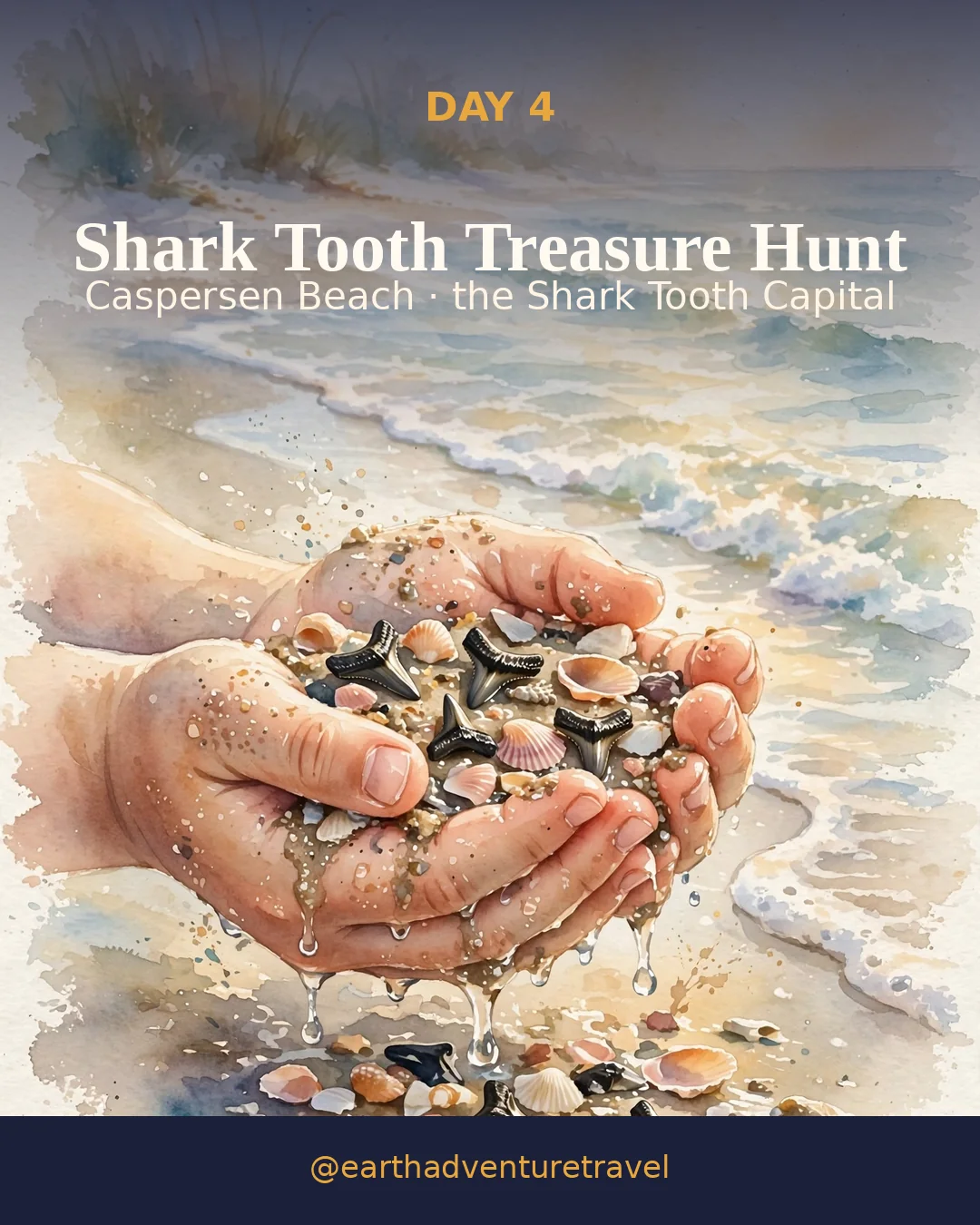
Caspersen Beach, Venice · hunting fossils in the shell line
Save the most hands-on day for last. Venice, 35 minutes south, sits on an ancient fossil bed — it's literally called the Shark Tooth Capital of the World. Head to Caspersen Beach: walk the shell line at the water's edge, scoop a handful of sand and shells, and sift. The teeth are small (1/8 to 3.5 inches), dark gray or black triangles — once your eyes calibrate, you'll find dozens. Low tide and the spots where shells naturally pile up are the most productive. It's free, it's a genuine fossil hunt, and kids who were "done with the beach" on Day 1 will suddenly not want to leave. Note the trade-offs: Caspersen has a rockier shore and no year-round lifeguards — it's a treasure beach, not a swim beach.
Celebrate the haul at Sharkey's on the Pier — the restaurant on the Venice fishing pier with a straight-on Gulf view and the well-earned fish sandwich. Walk the pier, watch the fishermen, then wander historic downtown Venice — platted in 1925 on a John Nolen plan, all wide boulevards and pocket parks — for ice cream. If the crew wants one more swim, Venice Beach proper has lifeguards and easier logistics than Caspersen's rocky shore.
Drive back north at golden hour. Optional farewell stop: Turtle Beach on south Siesta Key — coarser sand, better shelling than Siesta Beach, a playground for the finale, and a boat launch to watch. End where you started: sunset on Siesta Beach, quartz sand in everyone's shoes.
Where to stay
Last night — same Siesta Key base, or if you have an early flight, move to an airport hotel near SRQ (10 minutes from the terminal, typically $140–$180/night in winter/spring). Don't switch lodging mid-trip otherwise; the driving is easy and repacking costs you beach time.
Pro tip: Bring a kitchen colander or a cheap sifter from a beach shop — it turns tooth hunting from frustrating to addictive. Give each kid a small zip bag: it prevents the great backseat tooth mix-up and becomes the trip souvenir.
Route note: Siesta Key → Caspersen Beach: ~22 miles, 35 min south via I-75. Caspersen → Venice Beach/Sharkey's: 3 miles north, 8 min. Venice → Siesta Key: ~22 miles, 35 min.
The idea
America's best beach — with a circus, a marine lab, and a fossil hunt attached.
Follow the days in order: Day 1 is pure Siesta Beach, Day 2 is the Ringling estate and St. Armands, Day 3 pairs Mote's manatees with rescued big cats, Day 4 is the shark-tooth hunt in Venice. Every day is back on the sand by late afternoon — that's the rhythm that makes this trip work with kids.
This route keeps you based on Siesta Key for all four days: the #1-ranked beach, the 99%-quartz sand that never burns feet, and a village built for flip-flop dinners. The headline stops — the Ringling, Mote Marine, Big Cat Habitat, Caspersen Beach — are all 15–35 minutes away. No packing, no repacking, no wasted mornings.
And the timing: January through April is Sarasota's sweet spot. Highs in the low-to-mid 70s, low humidity, the driest skies of the year — and snowbird season means everything is open and lively. The Gulf runs 64–68°F in deep winter (wade, don't swim) and warms into the 70s by April.
4days
99%pure quartz sand
#1beach in the U.S. (2026)
300+rescued animals
The people behind the plans
Who is Earth Adventure Travel?
We build routes for real life — wrangling kids, spanning generations, or heading out solo — and check every detail of this Sarasota guide against official sources so the plan holds up when you get there.
These are planning ranges, not quotes. Winter and spring are Sarasota's sweet spot — highs in the 70s, low humidity, dry skies; summer brings 90s heat, humidity, and afternoon storms. Attraction prices are 2026 rates in USD. Hours and prices should be checked again before departure.
What earns space
Reef-safe sunscreen + a beach umbrella — the quartz sand reflects; you'll burn faster than you expect, and there's little natural shade
Light layers + a windbreaker — winter/spring mornings start in the 50s even when afternoons hit the 70s
Water shoes — Caspersen's rocky shore and the shell fragments at the waterline
Beach wagon + cooler — Siesta Beach is carry-in, and the walk from the lot is real
Sand toys + a sifter or colander — the shark-tooth hunt at Caspersen lives or dies on this
Snorkel masks (April and later) — Point of Rocks at Crescent Beach when the water clears
Binoculars — dolphins cruise the Gulf most mornings, visible from shore
Rash guards — the winter Gulf is 64–68°F; kids stay in longer with one on
Sand toys. The quartz sand is the main event — buckets, shovels, and a sifter for the shark-tooth hunt earn their bag space.A light layer. Evenings on St. Armands Circle cool off fast — the windbreaker you packed for the 50s morning does double duty.Morning eyes. Sarasota Bay at first light — binoculars for dolphins, and reef-safe sunscreen before the quartz starts reflecting.
Saveable route overview · four days on Sarasota's Family Coast
Eat like a family
Sarasota eats casual and Gulf-first. The non-negotiables: the Columbia Restaurant on St. Armands Circle (Florida's oldest restaurant, since 1905 — the pressed Cubano), the Sun Deck at Siesta Beach (burgers and tacos without leaving the sand), Sharkey's on the Pier in Venice (the fish sandwich with a Gulf view), and the Daiquiri Deck in Siesta Key Village (grouper sandwiches, live music). The old-Florida splurge: Alpine Steakhouse, family-run since 1975. The ritual: ice cream in the Village after sunset.
Saveable route recap · four days on Sarasota's Family Coast
Day-trip add-ons
Have a fifth day? Myakka River State Park (~30 minutes east — airboat rides and very real alligators) is the easy add. Selby Botanical Gardens pairs with the Ringling day for plant lovers. Anna Maria Island (45 minutes north) is the old-Florida beach town day. Each is a full or half day; don't stack one onto the shark-tooth day.
Day 1 · White Quartz Welcome — Siesta BeachDay 2 · The Greatest Show on the Bay — The RinglingDay 3 · Manatees & Big Cats — Mote MarineDay 4 · Shark Tooth Treasure Hunt — Caspersen Beach
Good to know
Sarasota family FAQ
Is Siesta Key really the #1 beach in the U.S.?
Yes, by multiple independent rankings: U.S. News (2026), Dr. Beach (2011 and 2017), and Tripadvisor (2025) have all named Siesta Beach #1. The 99%-pure quartz sand stays cool underfoot and the Gulf shelf stays shallow a long way out — it's genuinely exceptional, not marketing.
When is the best time to visit Sarasota with kids?
March–April is the sweet spot: highs in the high 70s to low 80s, the driest skies of the year, and Gulf water warming into the 70s. January–February brings mild 70s beach days with cooler water (64–68°F). Avoid June–September: 90°F heat, humidity, and afternoon storms.
Is the Gulf water warm enough to swim in winter?
Honestly, barely. The Gulf averages 64–68°F January–March — most kids wade and splash rather than swim. By April it reaches ~73°F and swimming is comfortable. Pack rash guards for winter trips; they add real warmth and sun protection.
How much time do we need at The Ringling?
Plan 4–5 hours: the Circus Museum (kids' favorite), the art museum, Ca' d'Zan, and the bayfront grounds. Arrive at the 10am opening — it's a 66-acre estate and afternoons get hot. Mondays are free for general admission, so schedule this day for a Monday if you can.
Is the Mote aquarium at the new location?
Yes — go to 225 University Town Center Dr, behind the UTC mall. The old City Island facility is now research-only and closed to the public. Buy timed tickets online in advance at mote.org; weekends sell out. Allow 90 minutes to 2 hours for the three floors.
What are Big Cat Habitat's hours?
Wednesday–Sunday, 12–4pm only — it's a narrow window, so plan around it. Admission is $25/adult and $10/kids. Arrive near the noon opening for the most active animals and the early-afternoon keeper talks.
Where do we actually find shark teeth?
Caspersen Beach in Venice — the town is literally the Shark Tooth Capital of the World. Look for small dark-gray or black triangles (1/8 to 3.5 inches) in the shell line at the water's edge. Low tide is best. A kitchen colander or cheap sifter makes it dramatically easier.
Do we need a car in Sarasota?
Yes. The keys, the Ringling, Mote, and Venice are 15–35 minutes apart with no useful transit between them. On Siesta Key itself, the free island trolley covers the beach-to-Village run so you can leave the car parked.
Is Siesta Beach good for toddlers?
Excellent. The Gulf shelf is famously gentle — knee-deep a long way out — plus there's a shaded playground, restrooms, outdoor showers, and lifeguards year-round 10am–5pm. The quartz sand stays cool, so bare feet are fine even at midday.
What if it rains?
You have the best rainy-day bench on the Gulf Coast: The Ringling's museums are indoors (the Circus Museum alone can absorb a morning), Mote is entirely indoors, and Big Cat Habitat has covered viewing areas. Save the beach days for the sun and flip the order if a storm rolls through.
Before you book
Book the timed tickets first.
Hours, prices, and water temps shift — verify these on the official sites before departure.
Mote timed ticketsBuy online in advance at mote.org — weekends sell out; go to the UTC building, not City Island
Big Cat Habitat hoursWed–Sun 12–4pm only · $25/adult, $10/kids · bigcathabitat.org
Ringling Monday freeGeneral admission free Mondays · ~$25/adult otherwise · Ca' d'Zan first floor +$15 · ringling.org
Siesta Beach parking950 free spaces fill by 10am on winter/spring weekends — arrive early or ride the free trolley
Gulf water temps64–68°F Jan–Mar, low 70s by April — pack rash guards if the kids will swim
Drum Circle SundaysSiesta Beach, about an hour before sunset — free, running since 1996
Keep planning
More routes for families who chase warm sand.
Stay on the Gulf, island-hop the Keys, or trade Florida for Lowcountry calm.
Travel With a Plan: Sarasota with kids ↗travelwithaplan.com — beach-by-beach breakdown (Siesta, Crescent, Turtle, Lido) with amenity details used for Day 1 and Day 4, Oct 2026
PlanetWare: Siesta Key beaches ↗planetware.com — confirmed 950 free parking spaces, year-round lifeguard hours, and Sun Deck concessions, Oct 2026
We3Travel: Venice shark-tooth hunting ↗we3travel.com — verified Caspersen Beach technique, low-tide timing, and the Shark Tooth Capital framing for Day 4, Oct 2026
The trip index
Choose the landscape. Then choose the pace.
Every itinerary gives you a realistic route, daily rhythm, planning notes, and the details that make a family trip work.
↑
Use the filters above to see matching itineraries.
Featured route · New York
Niagara Falls to the Finger Lakes
Big-water drama first, then gorge walks, glassmaking, and lake-country calm—a five-day route designed for grandparents, parents, and kids traveling together.