01French Quarter · the Vieux Carré
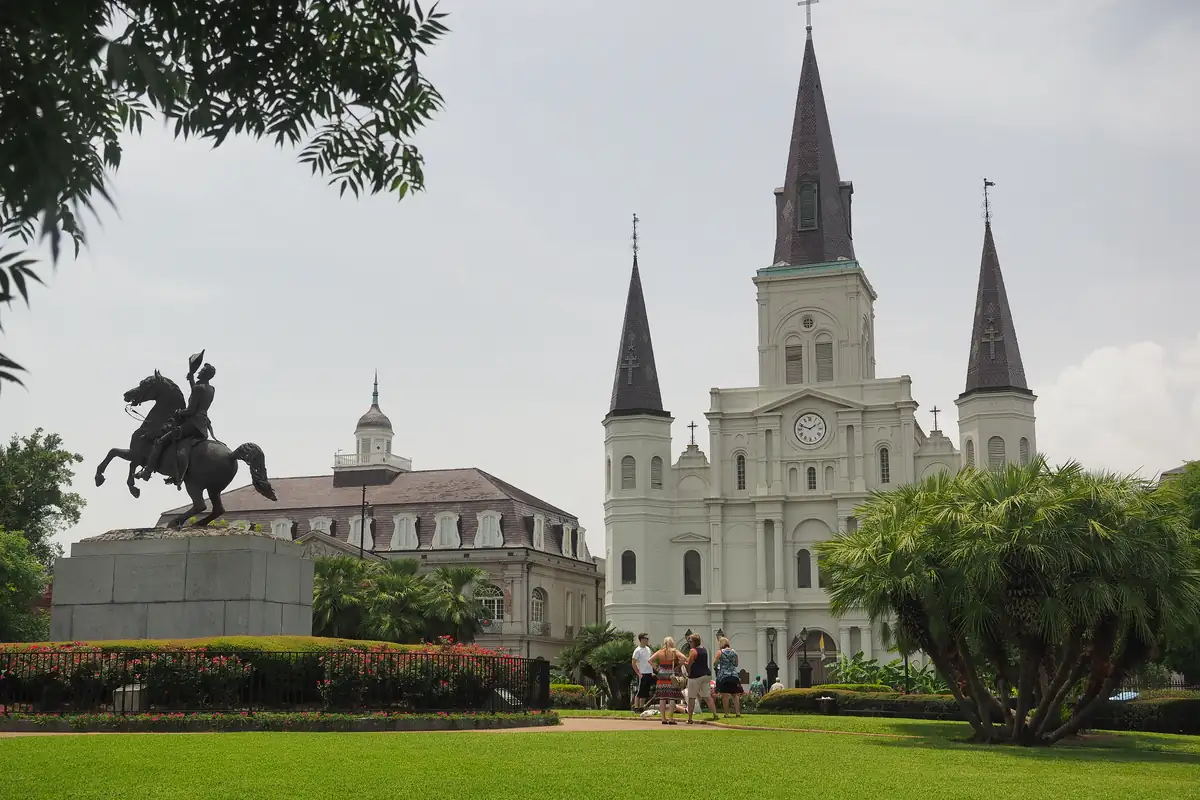
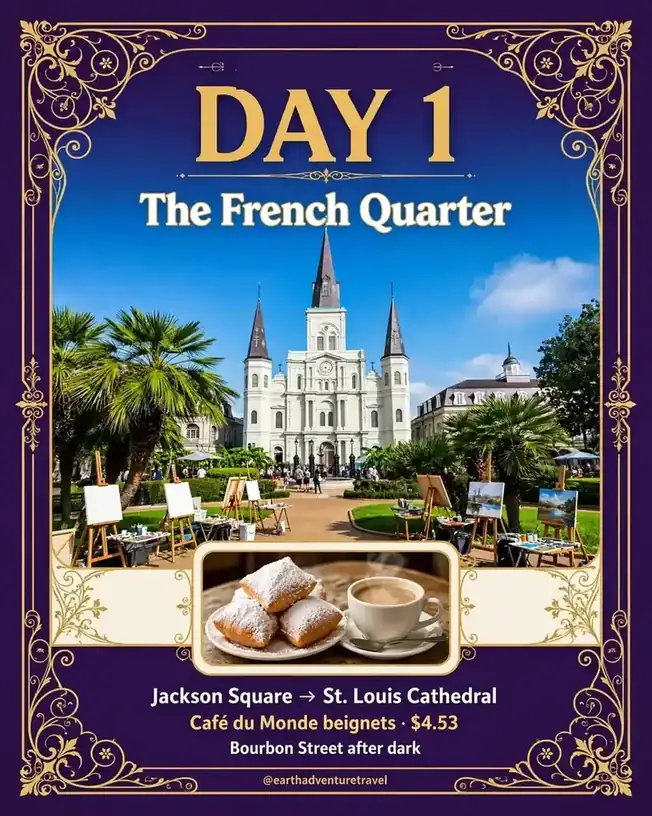
Start at Jackson Square — the walled park at the Quarter's heart, with St. Louis Cathedral (the oldest continuously active Roman Catholic cathedral in the US, 1794) anchoring the river side. Arrive before 9 a.m. for empty benches and street performers setting up. The Cabildo and Presbytère flank the cathedral (Louisiana State Museums, $6 each or combo) — the Presbytère's Mardi Gras exhibit is worth an hour.
Morning: Café du Monde
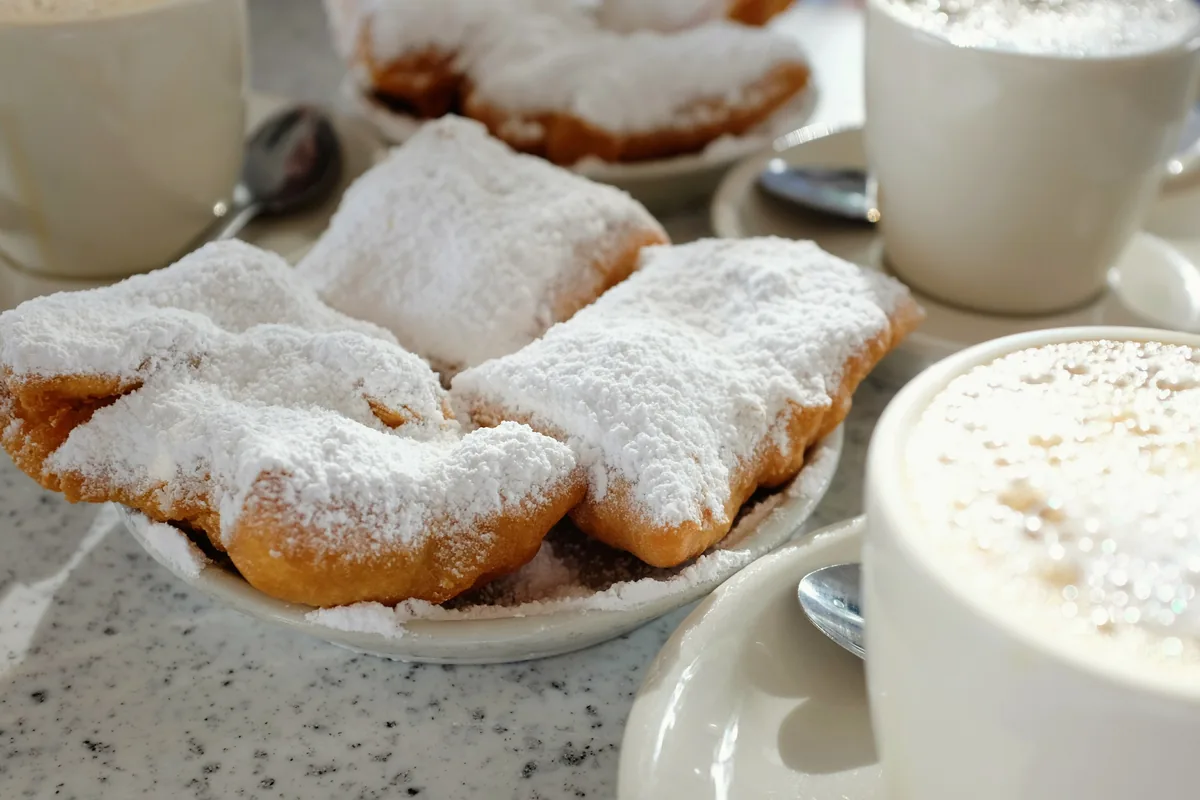
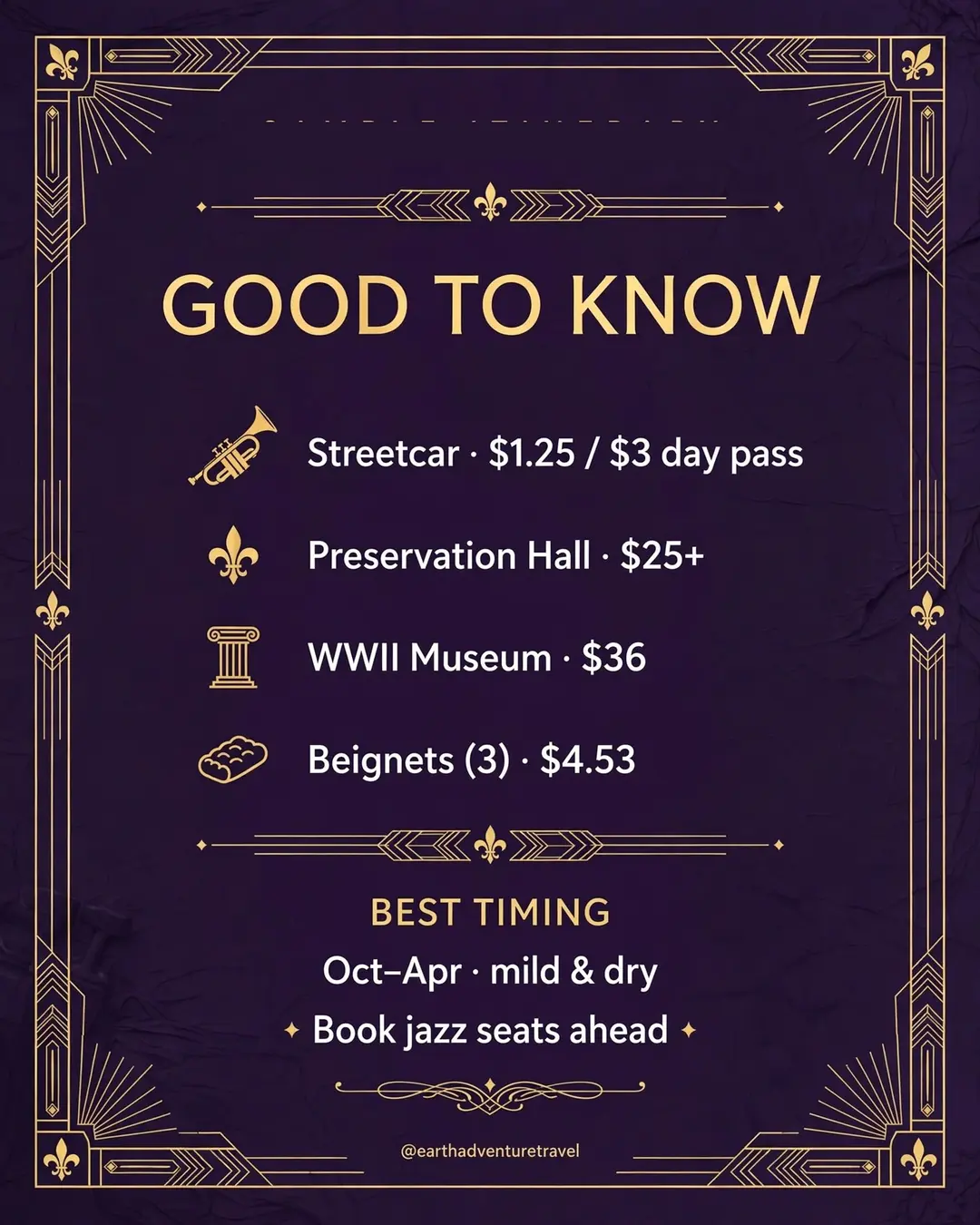
Walk two blocks to Café du Monde (800 Decatur St, open 24 hours). The move: go before 9 a.m. to skip the line that snakes around the block by 10. Order the beignets — $4.53 for three, buried in powdered sugar — with a café au lait. CASH ONLY at the original location (there's an ATM inside, but bring bills). Powdered sugar will cover everything you own; embrace it. The City Park location has no line if you're out that way later.
- Royal Street — walk the gallery/antique stretch (St. Ann to St. Louis) for window shopping; street musicians play the corners
- French Market — six blocks of food stalls and crafts along Decatur; the flea market section has local art
- St. Louis Cemetery No. 1 — $5, guided tours only (book via the Archdiocese); Marie Laveau's tomb is here
Afternoon: Courtyards and cocktails
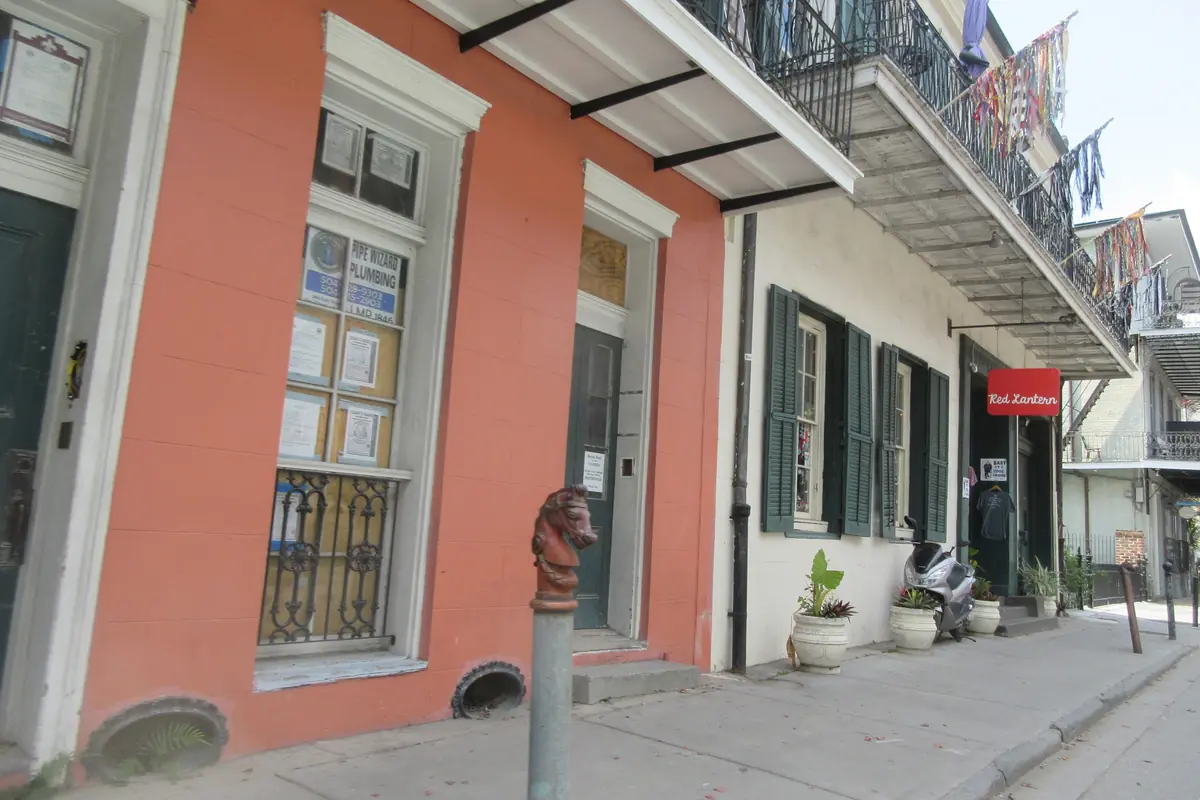
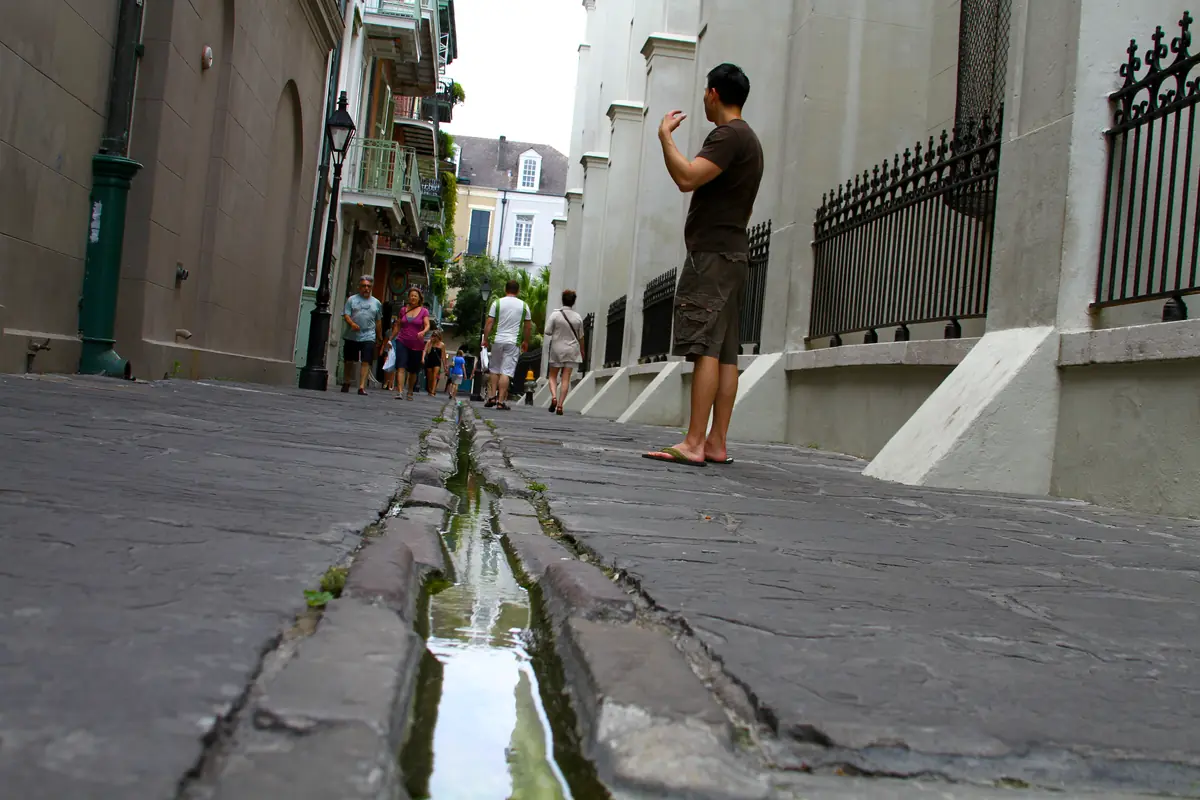
The Quarter's secret is its courtyards — hidden behind every wrought-iron gate. Pat O'Brien's (718 St. Peter) has the famous flaming fountain courtyard; the Hurricane is touristy but order one to share. Napoleon House (500 Chartres, since 1797) does the classic Pimm's Cup in a candlelit room that hasn't changed in decades. Lafitte's Blacksmith Shop (941 Bourbon, circa 1772) is the oldest bar in America — candlelit, piano, no pretense.
Evening: Bourbon Street (once, then escape)
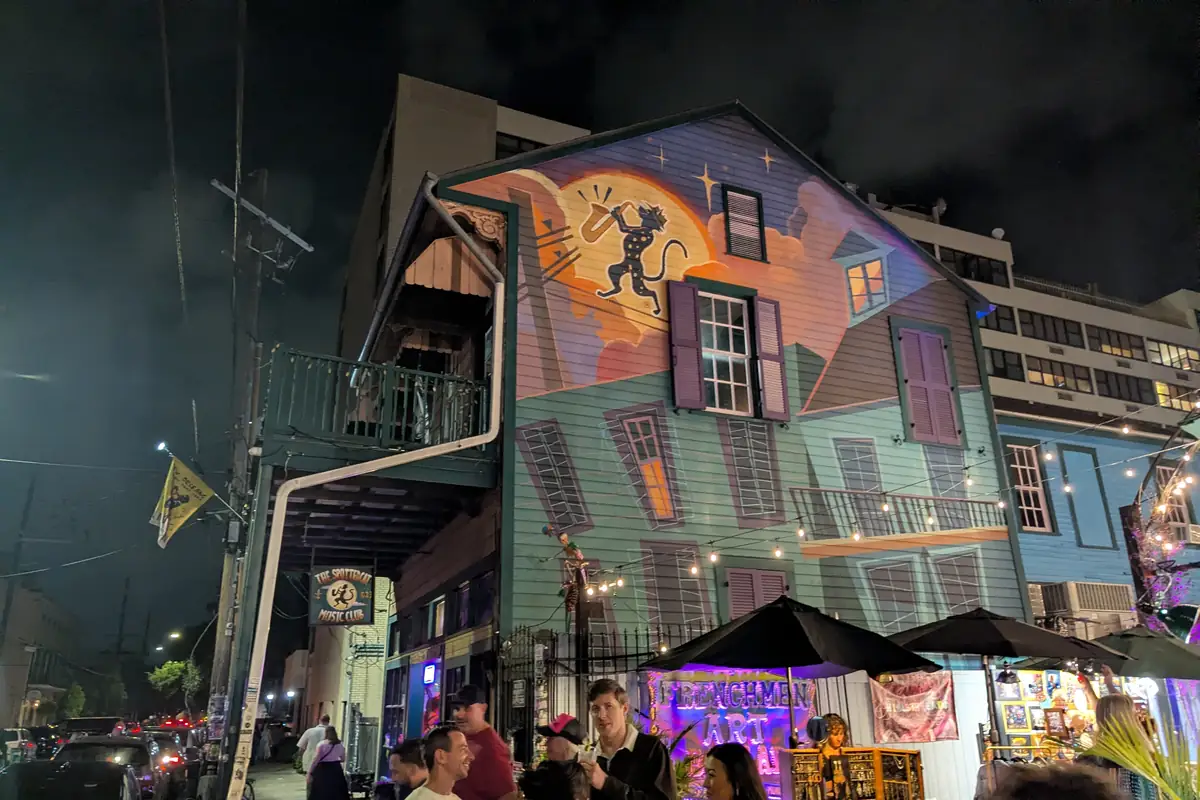
Walk Bourbon Street after dark for the spectacle — neon, balconies, the whole beautiful chaos. Do it once, take the photo, then escape to Frenchmen Street (15-minute walk east into the Marigny) for the real music. The Spotted Cat, d.b.a., and Blue Nile have no-cover or low-cover sets where locals actually go. End the night at the Carousel Bar in the Hotel Monteleone — the bar slowly rotates; order a Vieux Carré (the cocktail invented here).
Where to stay
Stay in the French Quarter — everything above is walkable. Hotel Monteleone (214 Royal St, since 1886) is the romantic classic — literary history (Hemingway, Faulkner), the Carousel Bar, from $250/night. Royal Sonesta (300 Bourbon) has balcony rooms overlooking the street — request a Bourbon Balcony room for people-watching. Hotel Provincial (1024 Chartres) is quieter, courtyard pool, from $180/night. Dinner: August (John Besh's flagship, book 2+ weeks ahead) or Galatoire's (Friday lunch is the institution — jackets required).
Where to eat
Day 1 is for settling in. Lunch: Central Grocery (the original muffuletta — $18, feeds two) or Napoleon House's muffuletta. Dinner is the main event — Galatoire's (old-line Creole, jackets required, book ahead) or Arnaud's (1918, classic French-Creole). Casual: Coop's Place (fried chicken, rabbit jambalaya) or Johnny's Po-Boys (since 1950).
Bad-weather plan
Rain? The Presbytère and Cabildo are indoor and excellent. The New Orleans Jazz Museum (at the Old U.S. Mint, $8) covers music history. Or do a cooking class — the New Orleans School of Cooking (524 St. Louis St) runs $45 demo classes with lunch included.
Walk: ~2.5 miles, all flat · Free: Jackson Square, Royal Street, French Market · Paid: Presbytère/Cabildo $6, Cemetery tour $5
First-day rule: The Quarter rewards slowness. Sit in Jackson Square. Watch the cathedral light change. Don't rush to "see everything" — the neighborhood is the attraction.