Civil Rights TrailMultigenerationalSouth

Six days · Birmingham, Montgomery, Selma & Memphis — the places that changed America

A 6-Day Civil Rights Trail Journey for Three Generations

Last verified: October 2026How we verify

Stand in the church where a movement prayed, cross the bridge it marched over, and hear the music it made — six days from Birmingham to Memphis, paced for grandparents and grandkids together.

Historic & Cultural RoutesCities & Urban Weekends

6 days / 5 nightsBest Mar–May, Sep–NovMultigenerationalEstimate: $3.4K–$5.0K family of 4
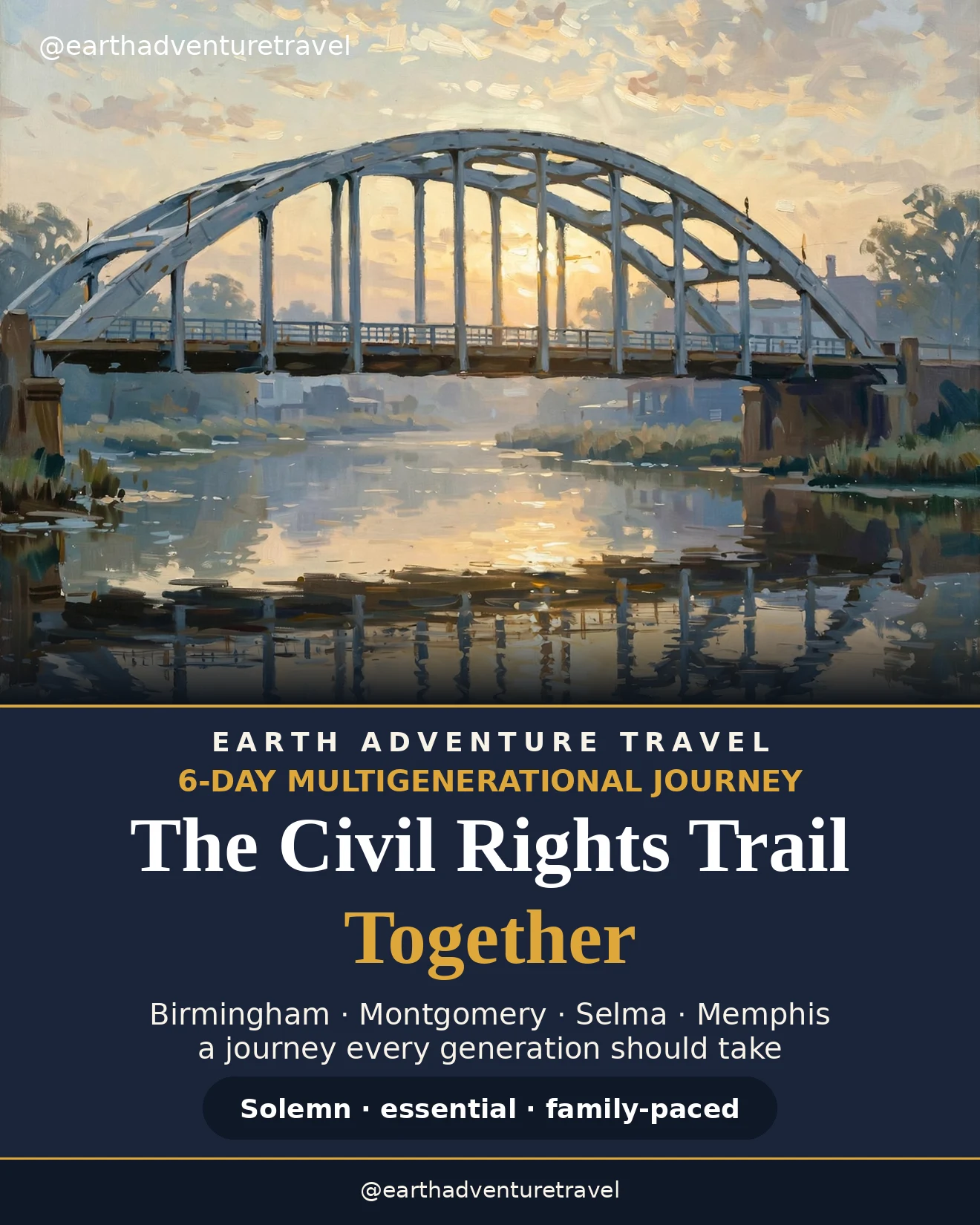
Illustrated Civil Rights Trail guide cover: the Edmund Pettus Bridge at dawn
Original itinerary artwork
On this page
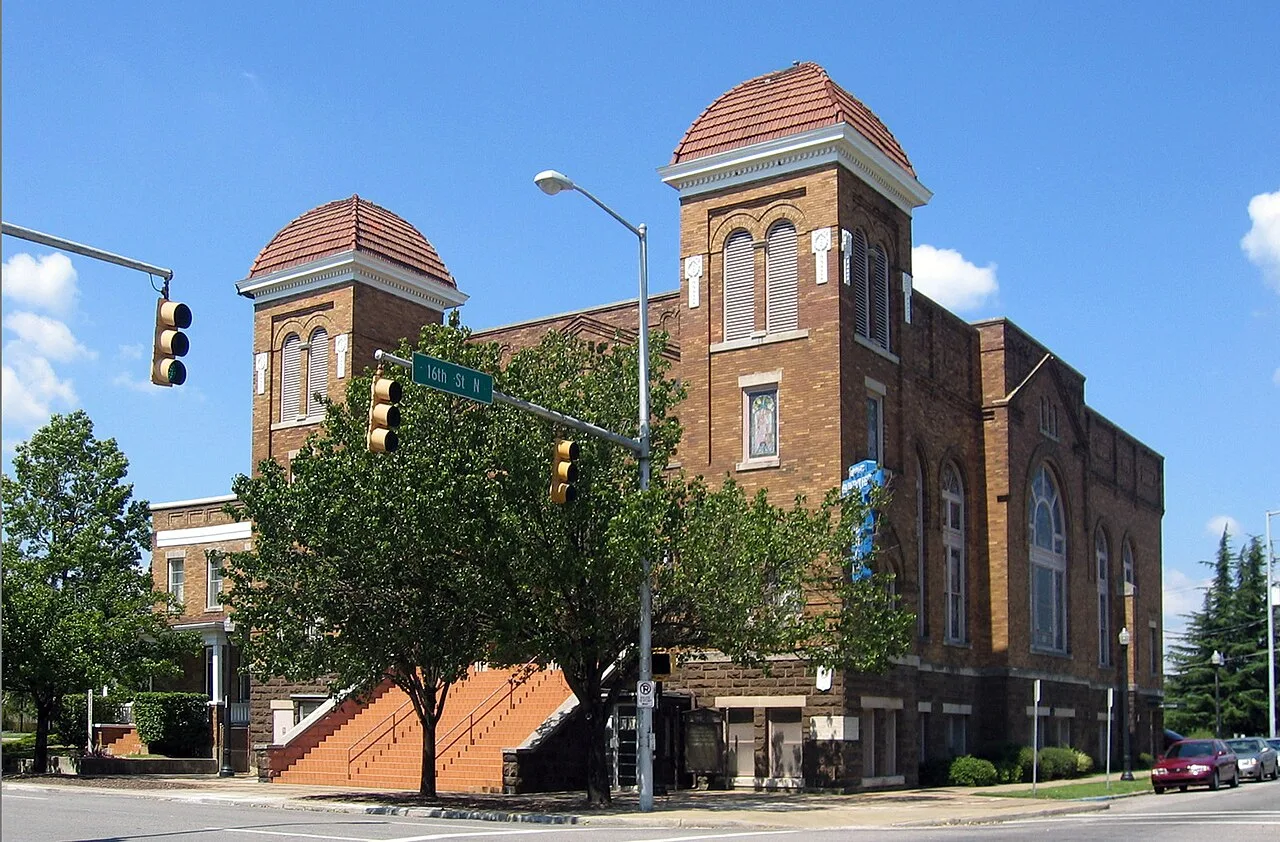
The 16th Street Baptist Church in Birmingham, Alabama
The 16th Street Baptist Church · Birmingham

The trip in 60 seconds

Rough budget · family of 4

Planning ranges, not quotes, for a family of four. Museum admissions are the verified October 2026 rates; hotels swing by season and by March commemoration demand. Check hours and prices before departure.

$3.4K–$5.0K
Six days / five nights · flights & rental car excluded · family of 4
Lodging · 5 nights
$1,400–$2,200
Food & drink
$900–$1,400
Admissions · museums & sites
$250–$450
Gas · ~800 miles
$200–$320
Extras · books & records
$100–$200
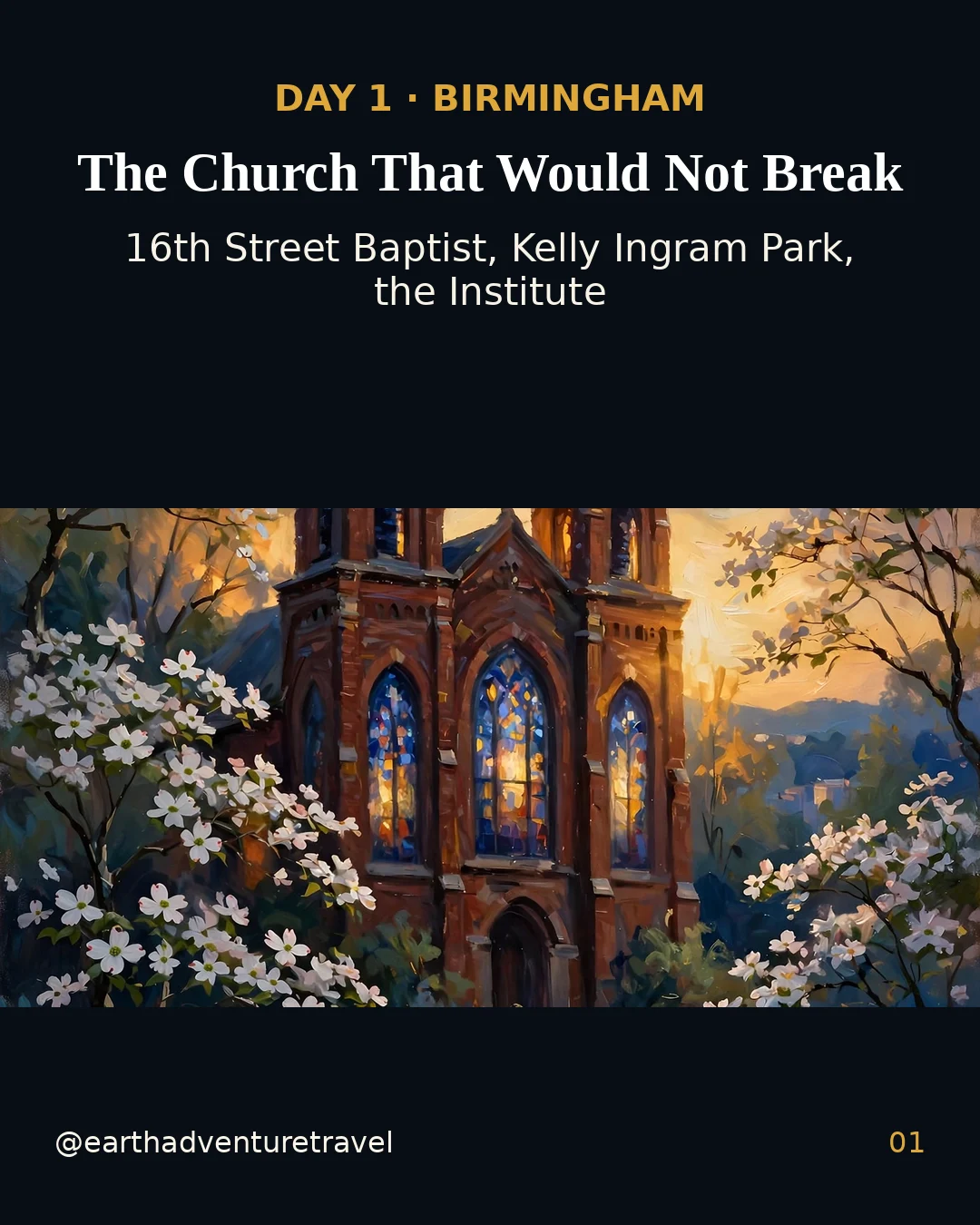
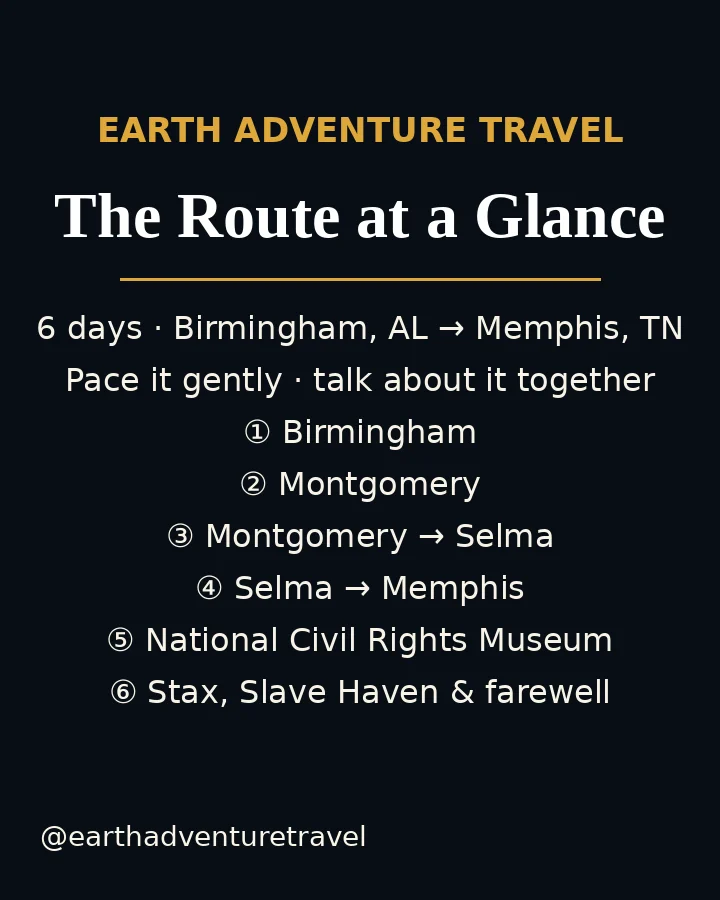
Saveable recap graphic for the six-day Civil Rights Trail journey
Saveable route recap · six days on the Civil Rights Trail

Day-by-day summary

The idea

This trip isn’t measured in miles. It’s measured in what your family carries home.

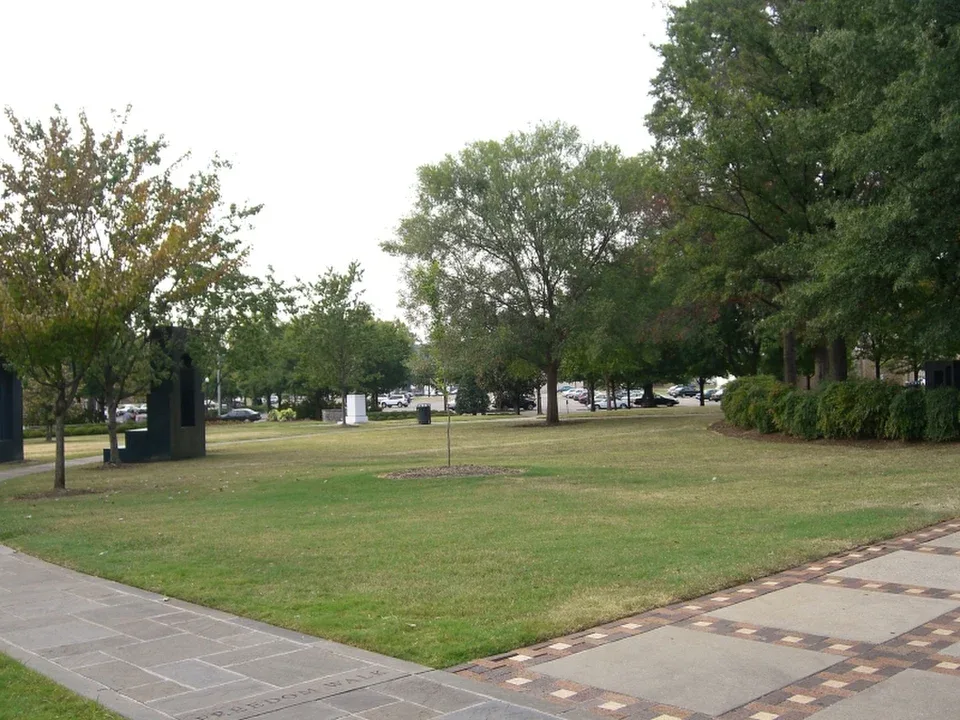
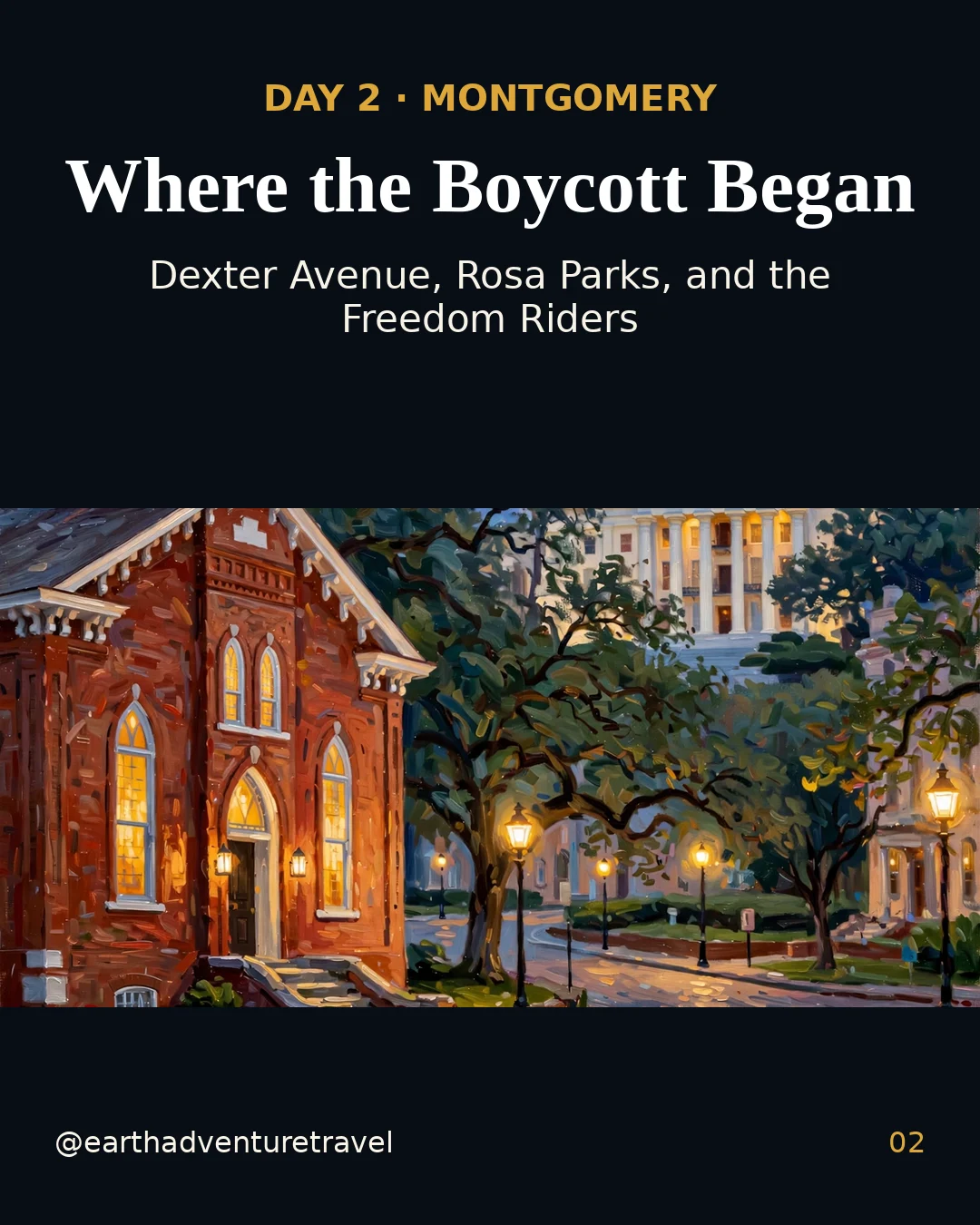
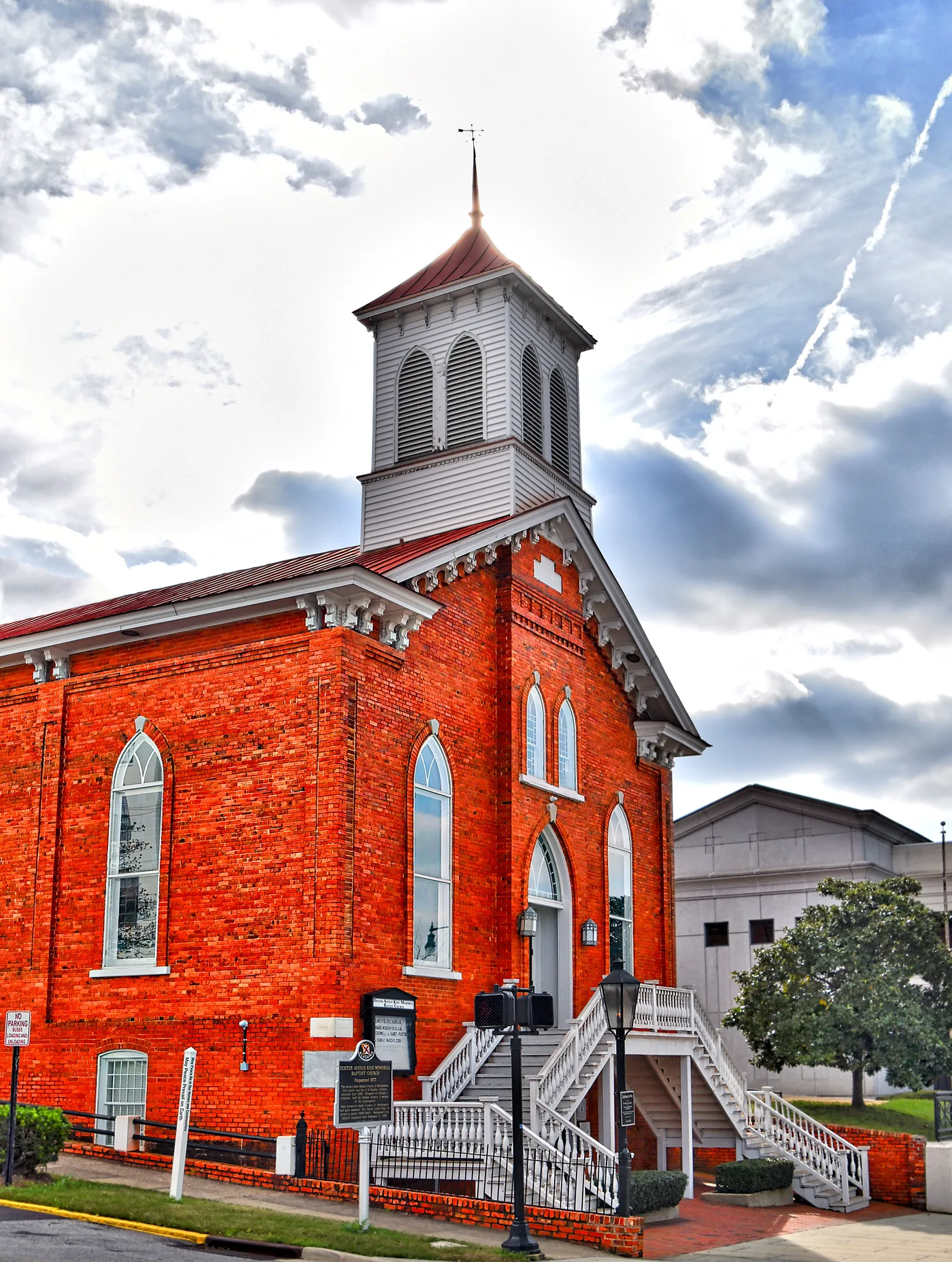
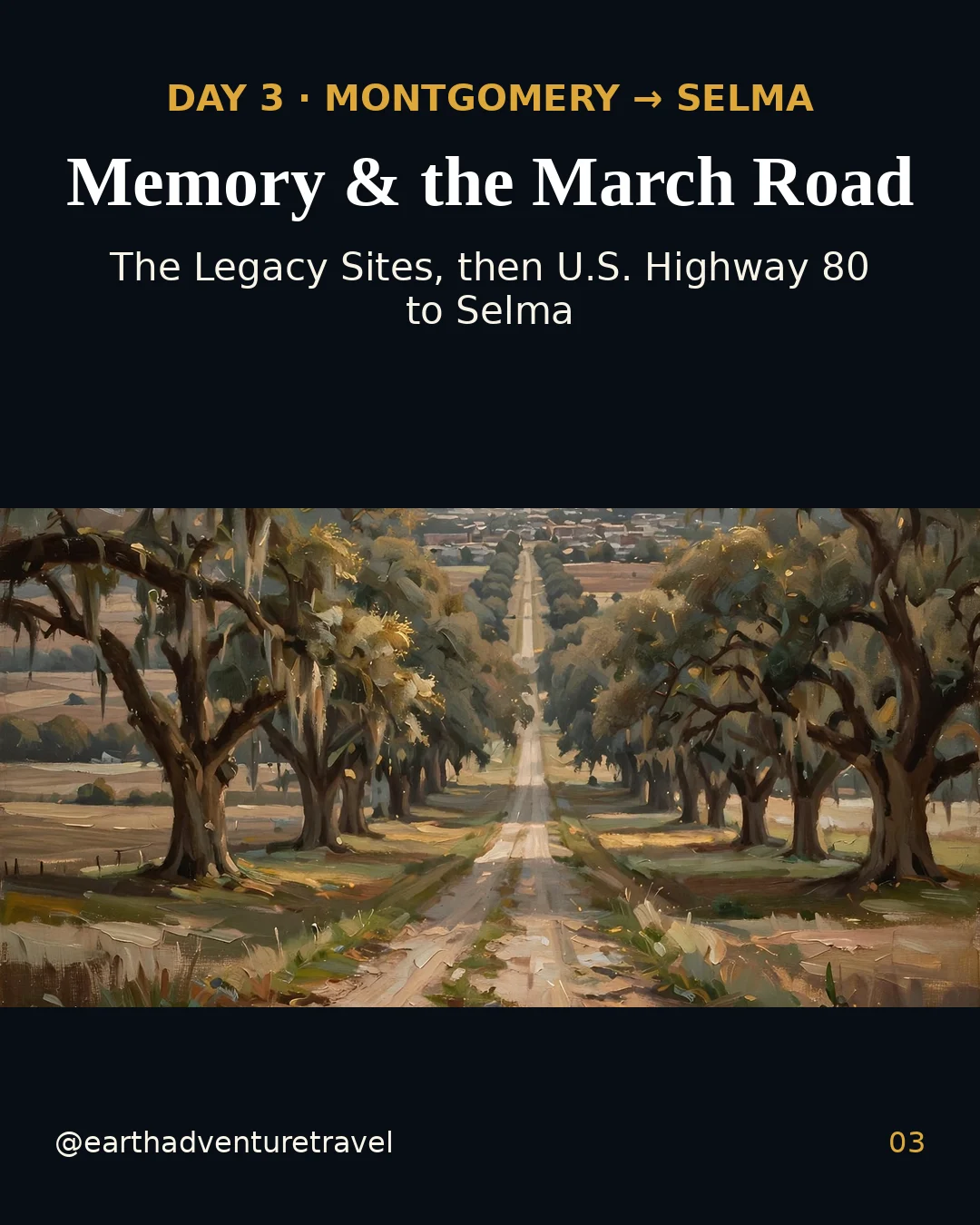
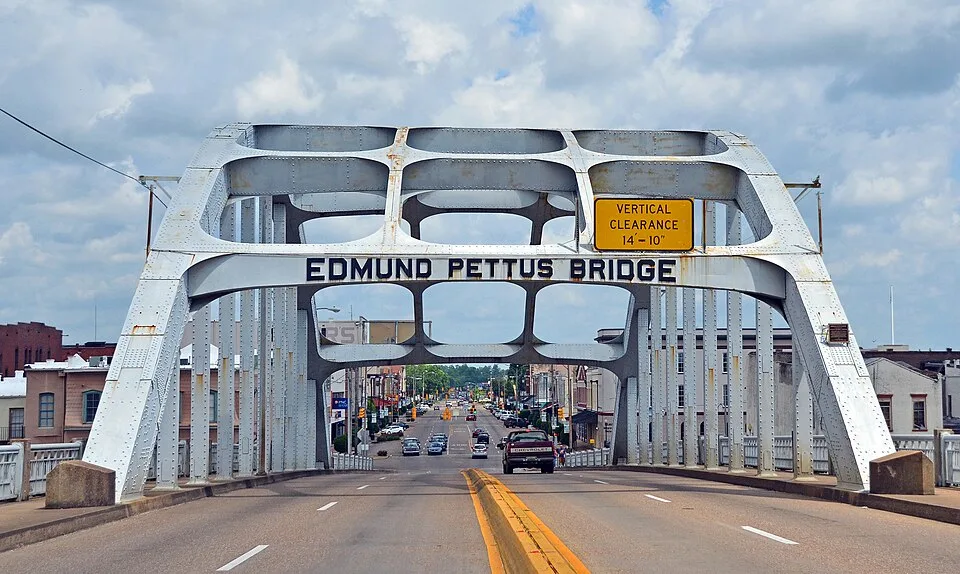
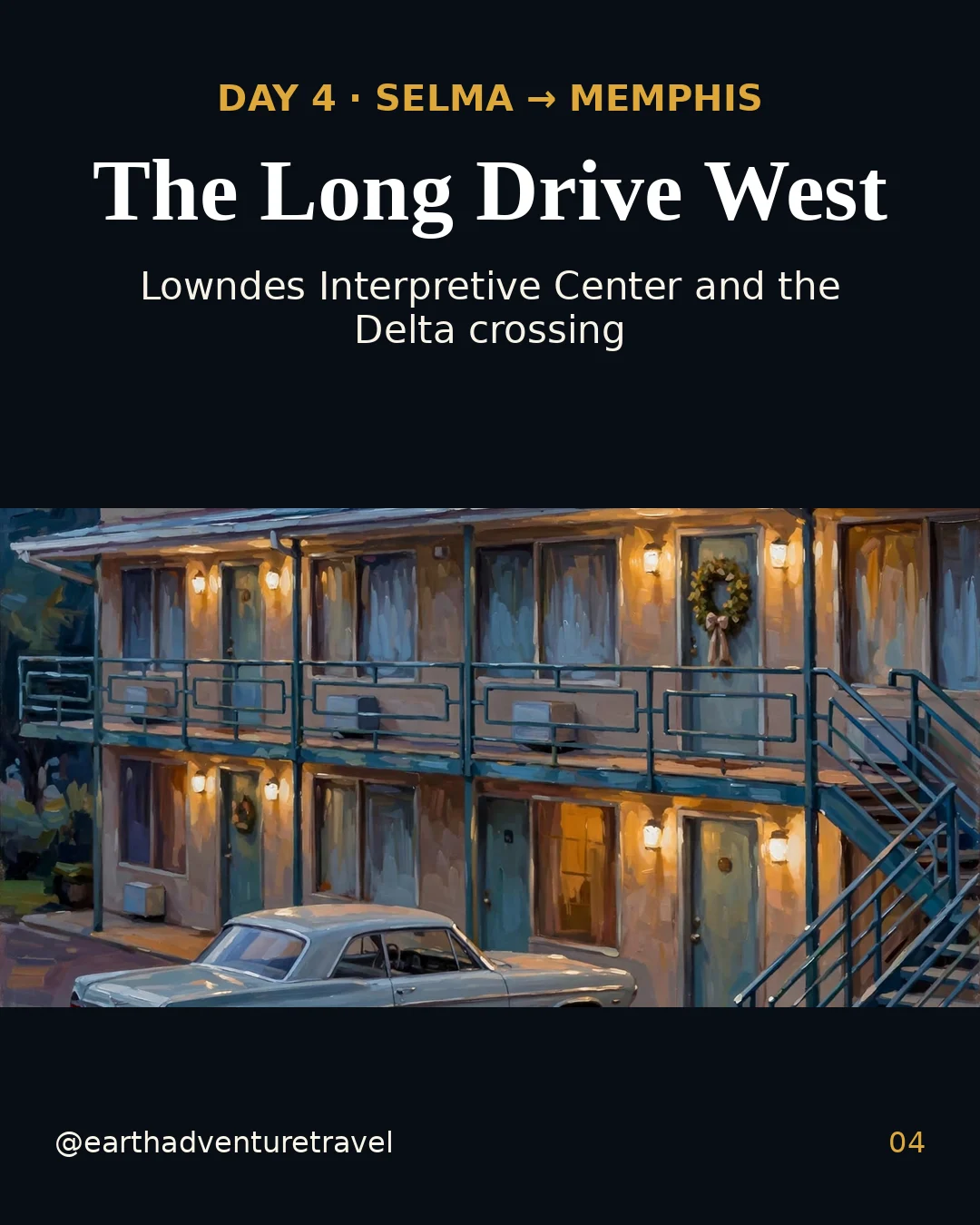
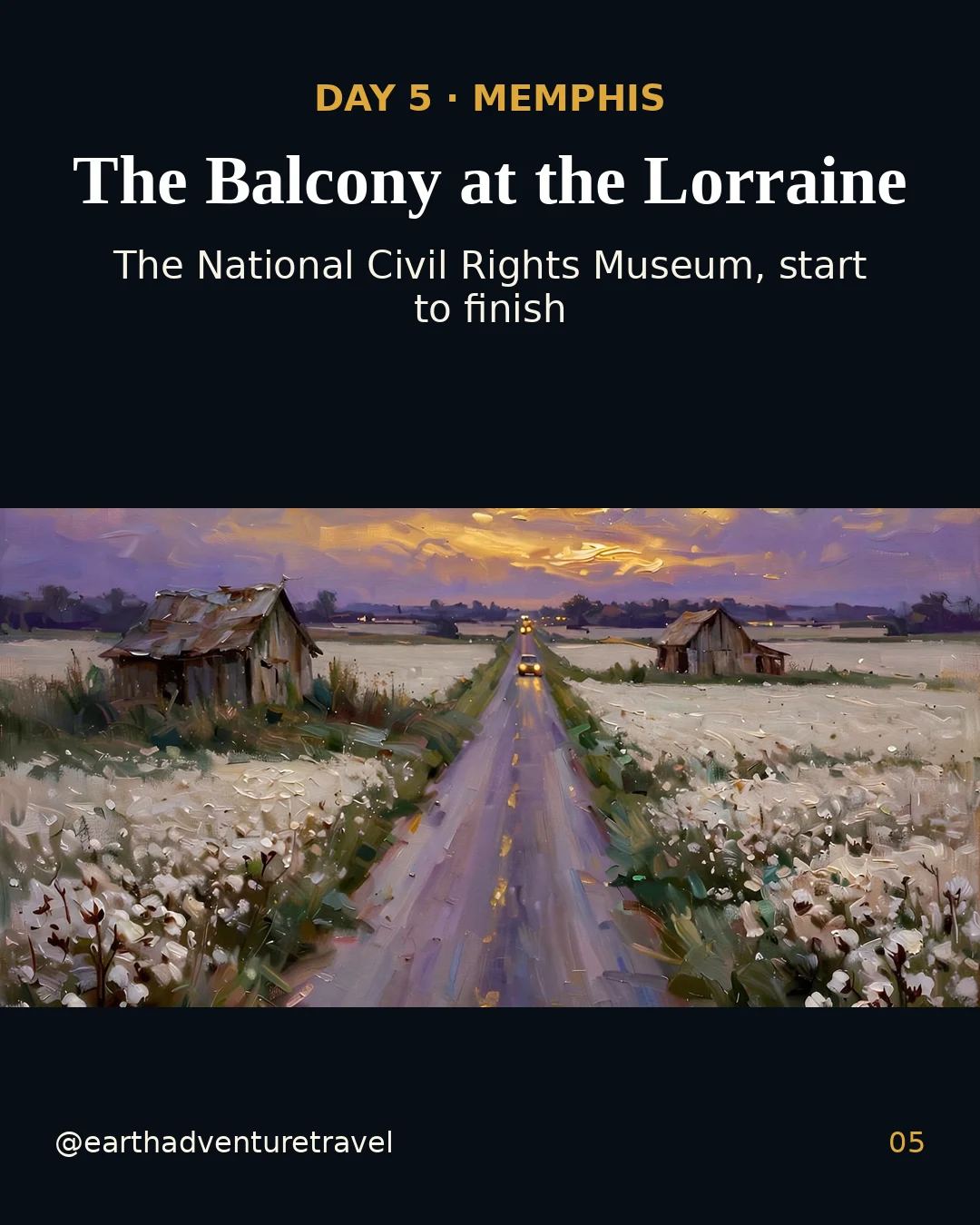
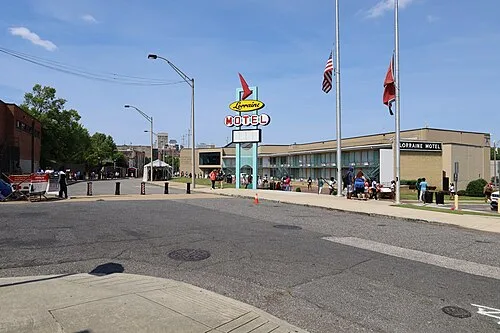
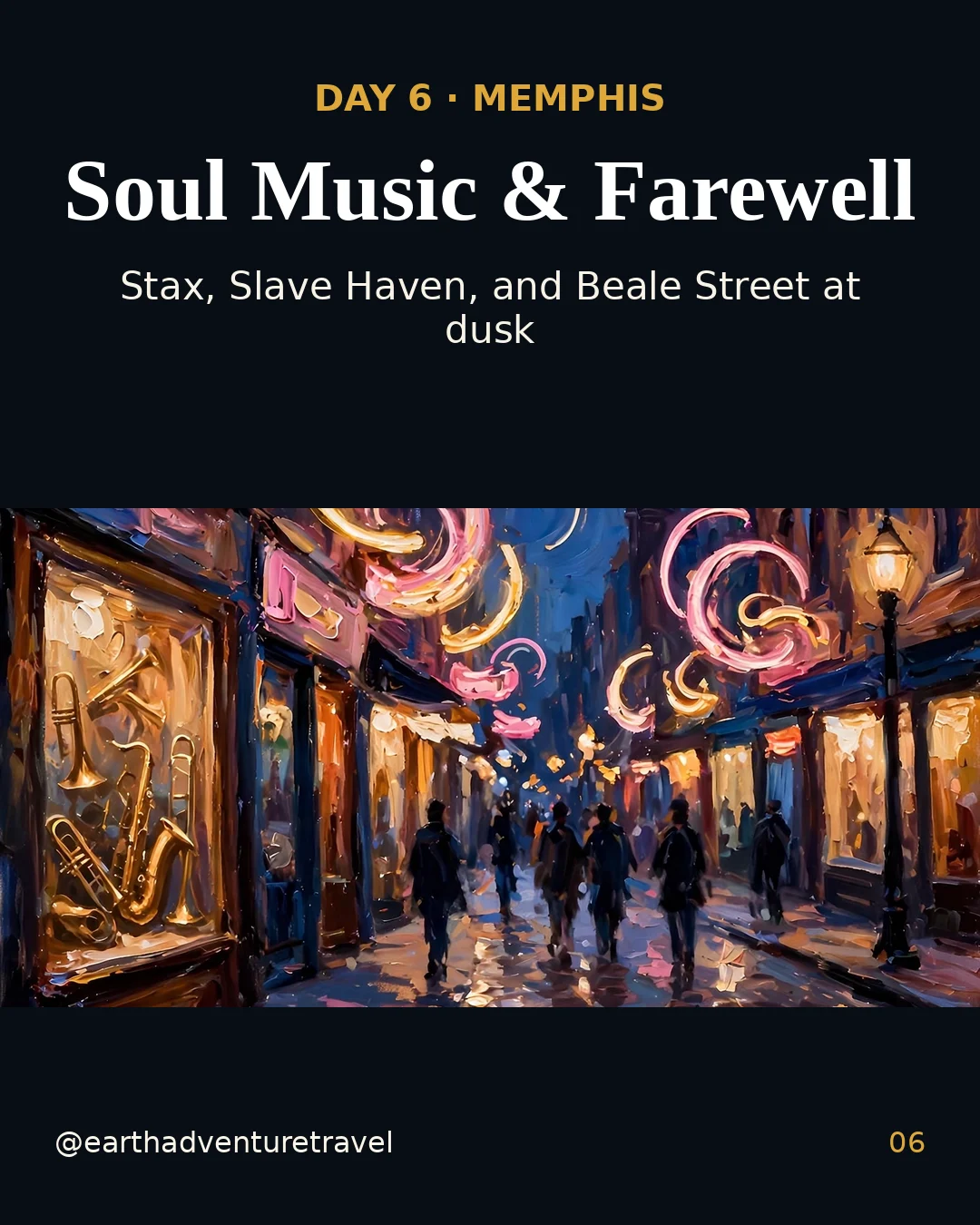
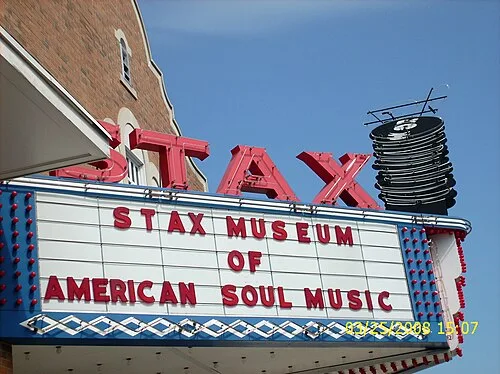
Here’s the direct answer: six days traces the movement's arc from Birmingham to Memphis. Day 1 starts at Birmingham's 16th Street Baptist Church (tours Tue–Sat 10–3, ~$10), Kelly Ingram Park (free), and the Birmingham Civil Rights Institute ($15). Day 2 is Montgomery: Dexter Avenue Church (free guided tours Tue–Fri, reserve online), the Rosa Parks Museum ($7.50), the Freedom Rides Museum ($5). Day 3 gives the morning to the EJI Legacy Sites ($5, closed Tuesdays), then drives US-80 to Selma for the Edmund Pettus Bridge at dusk. Day 4 crosses the bridge in morning light and drives ~240 miles to Memphis. Day 5 belongs to the National Civil Rights Museum at the Lorraine Motel ($25, closed Tuesdays). Day 6 ends in joy at the Stax Museum ($20) and Beale Street at dusk.

The route is paced for three generations: one to two sites a day, rest afternoons built in, and four bases across five nights (Birmingham, Montgomery, Selma, Memphis twice). The driving is modest except Day 4's long westward run (~240 miles), which is deliberately the lightest sightseeing day. Two planning facts shape everything: the Lorraine museum and the Legacy Sites both close on Tuesdays, so set your start day with a calendar in hand — and the 16th Street Church tours run Tuesday–Saturday, which pairs neatly.

A note on tone, because it matters: this itinerary doesn't perform grief and doesn't rush past it. The days are built so the hard sites get mornings and the group gets afternoons — and so the week ends with music, not mourning. Let the sites speak, let the generations separate inside the big museums and reconvene after, and let the kids ask the uncomfortable questions. That's what the trip is for.

54miles, Selma to Montgomery
6days across 3 cities
$5Legacy Sites admission
1965the Selma marches

The route

Six days on the road the movement made.

Use each day’s sites as the plan, not a quota. The museums keep morning hours and the bridge keeps all hours — start heavy, end light, and never stack two hard sites back to back. Check every site's closed day before you lock dates: Tuesdays close the two biggest museums on this route.

“Three generations, one road — this trip isn’t measured in miles. It’s measured in the stories you carry home together.”

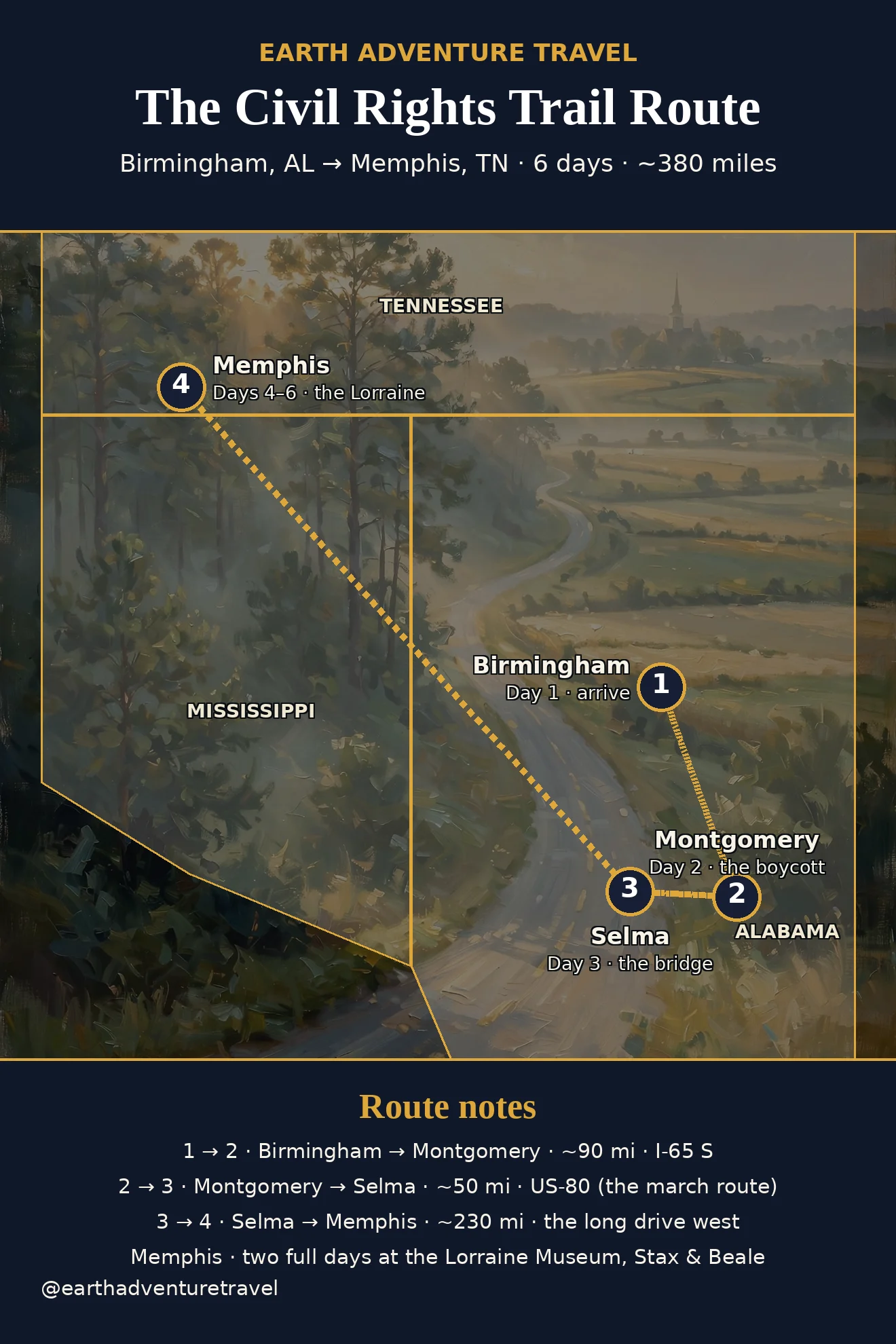
Illustrated route map: six days on the Civil Rights Trail from Birmingham to Memphis via Montgomery and Selma
Saveable route map · six days on the Civil Rights Trail

The people behind the plans

Who is Earth Adventure Travel?

We build detailed, research-first itineraries for every kind of crew — solo, couples, family, multigenerational. Our Verified Tours are the trips a team member has personally traveled; this Civil Rights Trail guide is a research-built itinerary, checked against official sources in October 2026.

More about us

Before you go

Pace it gently. Talk about it together.

These are planning ranges, not quotes, for a family of four. Museum prices are verified October 2026; hotel rates swing with season and March commemoration demand. Hours and prices should be checked again before departure.

Rough budget · family of 4

$3.4K–$5.0K
Six days / five nights · flights & rental car excluded · family of 4
Lodging · 5 nights
$1,400–$2,200
Food & drink
$900–$1,400
Admissions · museums & sites
$250–$450
Gas · ~800 miles
$200–$320
Extras · books & records
$100–$200

What earns space

  • Comfortable walking shoes — museum days run 3–4 hours on your feet
  • Layers — churches and museum galleries run cool; the Alabama sun does not
  • A journal or sketchbook per kid — heavy history processes better with a place to put it
  • Tissues — the Lorraine will get you; that's the point
  • Reusable water bottle — long walking days in Birmingham and Montgomery
  • A small daypack — museum lockers are limited and lines are slow
  • Sunscreen and a hat — the bridge walk and memorial grounds are fully exposed
  • Portable phone charger — audio tours and photos drain batteries fast
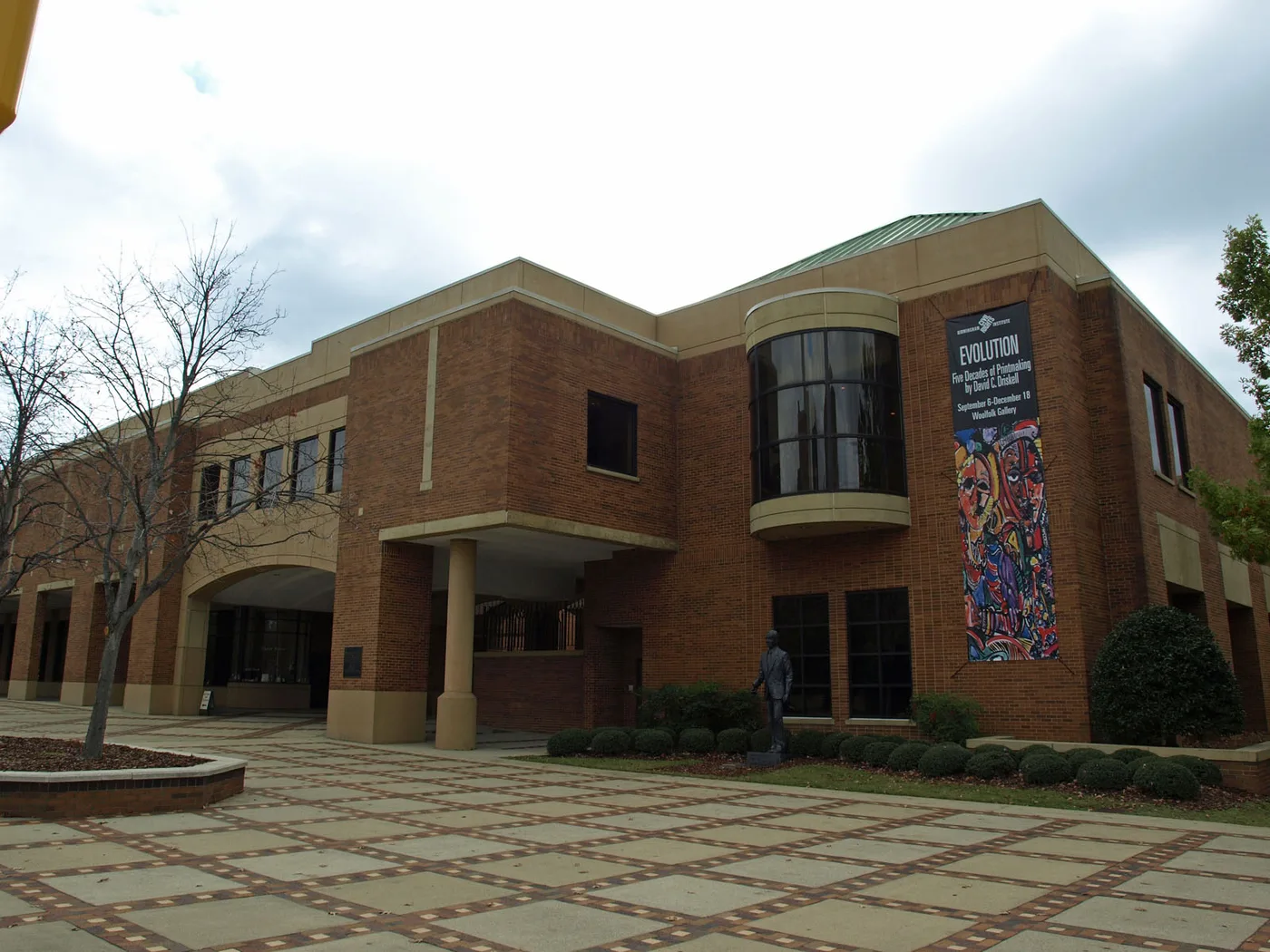
The Birmingham Civil Rights Institute
The Institute. A half-day on your feet — comfortable shoes are the most important thing you'll pack.
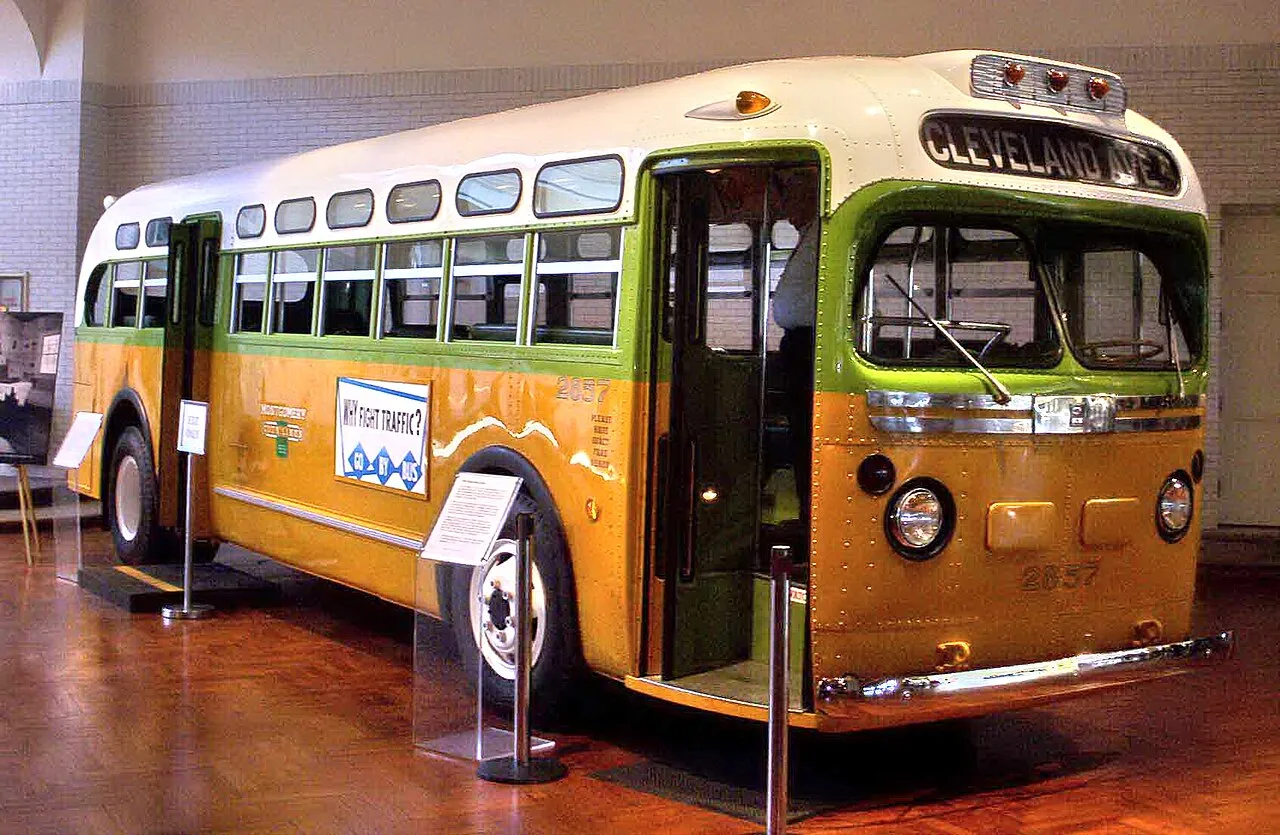
The Rosa Parks bus at the museum in Montgomery
The bus. Layers — the galleries run cool and you'll be inside for hours.
Illustrated six-day Civil Rights Trail route plan
Saveable route overview · six days on the Civil Rights Trail

Eat on the Trail

Birmingham: the Pizitz Food Hall (every generation finds something). Montgomery: Dexter Avenue cafes and the Alley Station district. Selma: keep it simple near the bridge. Memphis: B.B. King's Blues Club on Beale, Central BBQ downtown, and the Four Way in Soulsville (serving since 1946 — Dr. King ate here). The rule: eat near where you slept; the days are full enough.

Saveable recap graphic for the six-day Civil Rights Trail journey
Saveable route recap · six days on the Civil Rights Trail

The music coda

The week ends in joy on purpose. Beyond Stax and Beale: the Memphis Rock 'n' Soul Museum (the lighter afternoon), Sun Studio (tour the room where rock was born), and the Blues Hall of Fame downtown. Each is a half-day — don't stack one onto Lorraine day.

Quick answers

Planning notes

Is the Civil Rights Trail appropriate for kids?

Yes, with honest framing — and this itinerary suggests ages 10 and up for the heaviest sites (the Legacy Museum, the Lorraine's final galleries). Younger kids do well at Kelly Ingram Park, the bridge walk, and Stax. The pacing — one to two sites a day with rest afternoons — is designed so nobody has to absorb it all at once. Let kids ask uncomfortable questions; that's what the trip is for.

How much does the 6-day trip cost for a family of 4?

Roughly $3,400–$5,000 excluding flights and the rental car: $1,400–$2,200 for five nights' lodging, $900–$1,400 for food, $250–$450 for museum admissions, and $200–$320 for gas over ~800 miles. Museum admissions are modest — most are $5–$25 — which keeps the week affordable for three generations.

Why does the order of sites matter?

The itinerary follows the movement's emotional arc: Birmingham (the cost), Montgomery (the organizing), Selma (the march), Memphis (the loss) — and ends with Stax and Beale Street (the joy it made possible). Starting at the 16th Street Baptist Church before the Institute isn't logistical; it's the difference between information and understanding.

Which sites are closed on Tuesdays?

Two big ones: the National Civil Rights Museum in Memphis and the EJI Legacy Sites in Montgomery both close Tuesdays. The 16th Street Baptist Church tours run Tuesday–Saturday, and the Freedom Rides Museum is closed Sunday–Monday. Set your start day with a calendar — the itinerary is built so Day 3 (Legacy Sites) and Day 5 (Lorraine) avoid Tuesdays if you start on a weekend.

How much walking is involved?

Moderate. The museums are indoor and self-paced (2–4 hours each, with benches); the Edmund Pettus Bridge walk is about a mile round trip, flat; the memorial grounds in Montgomery involve some hills. Wheelchairs are available at the major museums — call ahead.

Is one day enough in Selma?

For the sites, yes — the bridge, the National Voting Rights Museum, and the trail markers fit in a day. But the overnight earns you the bridge at dusk AND in morning light, which are the two most moving hours of the week. Don't day-trip it from Montgomery if you can avoid it.

Where should a multigenerational group stay?

Birmingham: The Redmont Hotel or Elyton Hotel (downtown, walkable). Montgomery: Renaissance Montgomery or Trilogy Hotel. Selma: Hampton Inn or Holiday Inn Express (simpler, but the bridge walks are worth it). Memphis (2 nights): The Peabody or The Guest House at Graceland. Book adjoining rooms where you can.

How do we talk to kids about what they'll see?

Let the sites do the heavy lifting — the museums are designed for it, with family guides at the big ones. Before the Legacy Museum and the Lorraine, tell kids plainly: people were hurt here because of the color of their skin, and people fought to change that. Then let them ask. The journal in the packing list helps.

Can you take photos inside the museums?

It varies: the Freedom Rides Museum prohibits interior photography; the National Civil Rights Museum allows non-flash photos in most galleries; churches ask for reverence over cameras during tours. When in doubt, ask the docent — and put the phone away at the Lorraine balcony regardless.

What's the driving like between cities?

Easy interstate and highway miles: Birmingham to Montgomery ~90 minutes, Montgomery to Selma ~50 minutes on US-80 (the march route itself), Selma to Memphis ~4 hours. Day 4 is the only long drive, and it's deliberately the lightest sightseeing day.

Last look

Start at the church. End with music. Mind the Tuesdays.

BirminghamBCRI $15/$13 · 16th St tours Tue–Sat 10–3
MontgomeryDexter free guided Tue–Fri · Freedom Rides $5
Legacy Sites$5 · under 6 free · closed Tuesdays
SelmaBridge free, always open · US-80, 54 miles
The LorraineNCRM $25 · closed Tuesdays · allow 3–4 hrs
FarewellStax $20 · Beale at dusk · MEM 20 min

Why trust this guide

References

Last verified: October 2026How we verify

Key sources behind the research for this itinerary.

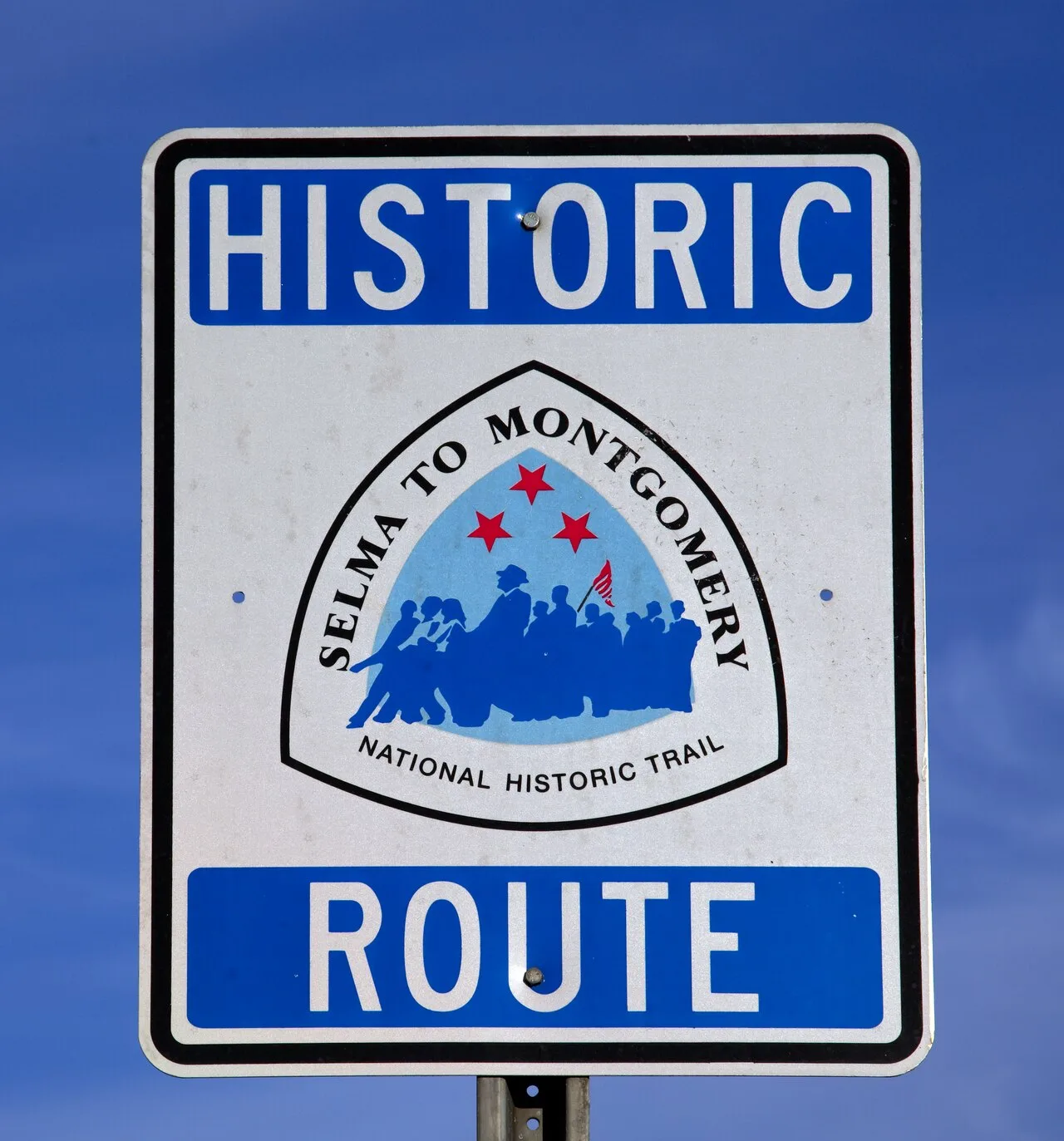
NPS · Selma to Montgomery National Historic Trail (official) ↗nps.gov/semo — confirmed the 54-mile trail route and the free Lowndes Interpretive Center, Oct 2026
Birmingham Civil Rights Institute (official) ↗bcri.org — confirmed $15 adult / $13 senior & student admission, free for 3 and under, Oct 2026
16th Street Baptist Church (official) ↗16thstreetbaptist.org — confirmed tour schedule Tuesday–Saturday 10–3, Oct 2026
Dexter Avenue King Memorial Baptist Church (official) ↗dexterkingmemorial.org — confirmed Mon–Sat 10–4 tours and free guided tours Tue–Fri (reserve online), Oct 2026
Rosa Parks Museum (official) ↗troy.edu/rosaparks — confirmed $7.50 adult / $5.50 child & senior admission, Oct 2026
EJI Legacy Sites (official) ↗legacysites.eji.org — confirmed $5 admission, under 6 free, closed Tuesdays, Oct 2026
National Civil Rights Museum (official) ↗civilrightsmuseum.org — confirmed $25/$23/$22 admission and Tuesday closure, Oct 2026
Stax Museum of American Soul Music (official) ↗staxmuseum.com — confirmed $20 admission, Oct 2026

The trip index

Choose the landscape. Then choose the pace.

Every itinerary gives you a realistic route, daily rhythm, planning notes, and the details that make a family trip work.

Use the filters above to see the routes that match.

No exact match—yet.
Clear a filter to see the closest routes already in the library.