PeruCouplesHistoric & Cultural

Seven days · Cusco, the Sacred Valley, Machu Picchu & Rainbow Mountain

A 7-Day Machu Picchu Journey for Two

Cusco's colonial streets, the Sacred Valley's Inca terraces, two entries to the citadel — one golden afternoon, one misty dawn — a climb up Huayna Picchu, and a day among Rainbow Mountain's mineral stripes. Seven days in Peru, planned around altitude, tickets, and each other.

Historic & Cultural RoutesHiking & TrekkingFood & Drink TrailsInternational

7 days / 6 nightsBest May–OctCouplesEstimate: $3.4K–$4.6K for 2
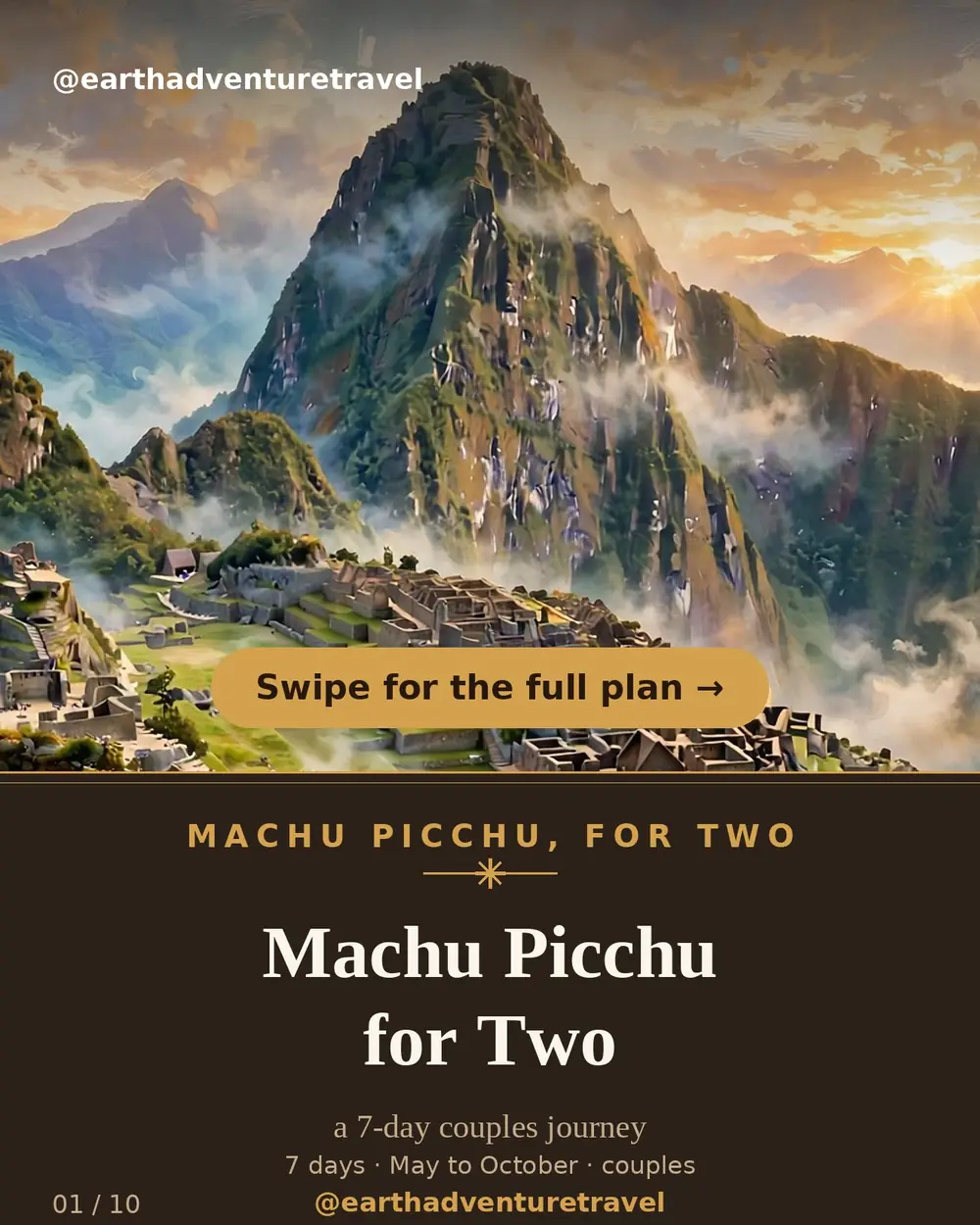
Illustrated Machu Picchu couples guide cover: the citadel at dawn with Huayna Picchu
Original itinerary artwork
Machu Picchu with Huayna Picchu rising behind it
On this page

At a glance

Machu Picchu for Two

Seven days, two entries to the citadel, one dawn on Huayna Picchu: Cusco's streets, the Sacred Valley's terraces, the train through the cloud forest, and a buffer day built in for weather. Everything is sequenced around altitude — low first, high later.

Best timingMay–June & SeptemberDry season, clearest views; April & October are the sweet spot for fewer crowds
Trip length7 days / 6 nightsCusco 2 → Sacred Valley 1 → Aguas Calientes 1 → Cusco 3
Getting thereFly Lima (LIM) → Cusco (CUZ)90-min flight; book the morning arrival for a full acclimation day
Getting aroundTrains + private driversPeruRail/Inca Rail to the citadel; no roads reach it
Rough budget$3,400–$4,600 for twoMid-range, international flights excluded — see the full breakdown below
Good to knowTickets are timed & personalBook entry 3–4 months out; passport must match exactly

The idea

Earn the view twice

Most visitors see Machu Picchu once, in a morning crush, and leave. This plan gives you two entries on two days: a golden afternoon on Circuit 2 when the crowds thin, and a misty dawn the next morning with Huayna Picchu above you. The citadel is a different place at 6am and 4pm — you should meet both versions.

Everything is sequenced around altitude: land high in Cusco (3,400m) but move low fast — the Sacred Valley at 2,800m lets you sleep and breathe while you acclimate, and the citadel itself sits at just 2,430m. Book entry and Huayna Picchu 3–4 months out; trains 6 weeks. The Inca built this place for the patient — arrive like one.

2026 GUIDELast verified: October 2026
2entries to the citadel
~$40entry, 2026 price
2,430mcitadel altitude
3–4months to book ahead

Day by day

The seven-day route

Tap a day to open the full plan — what it costs, where to stay, and the pro tips that make it work.

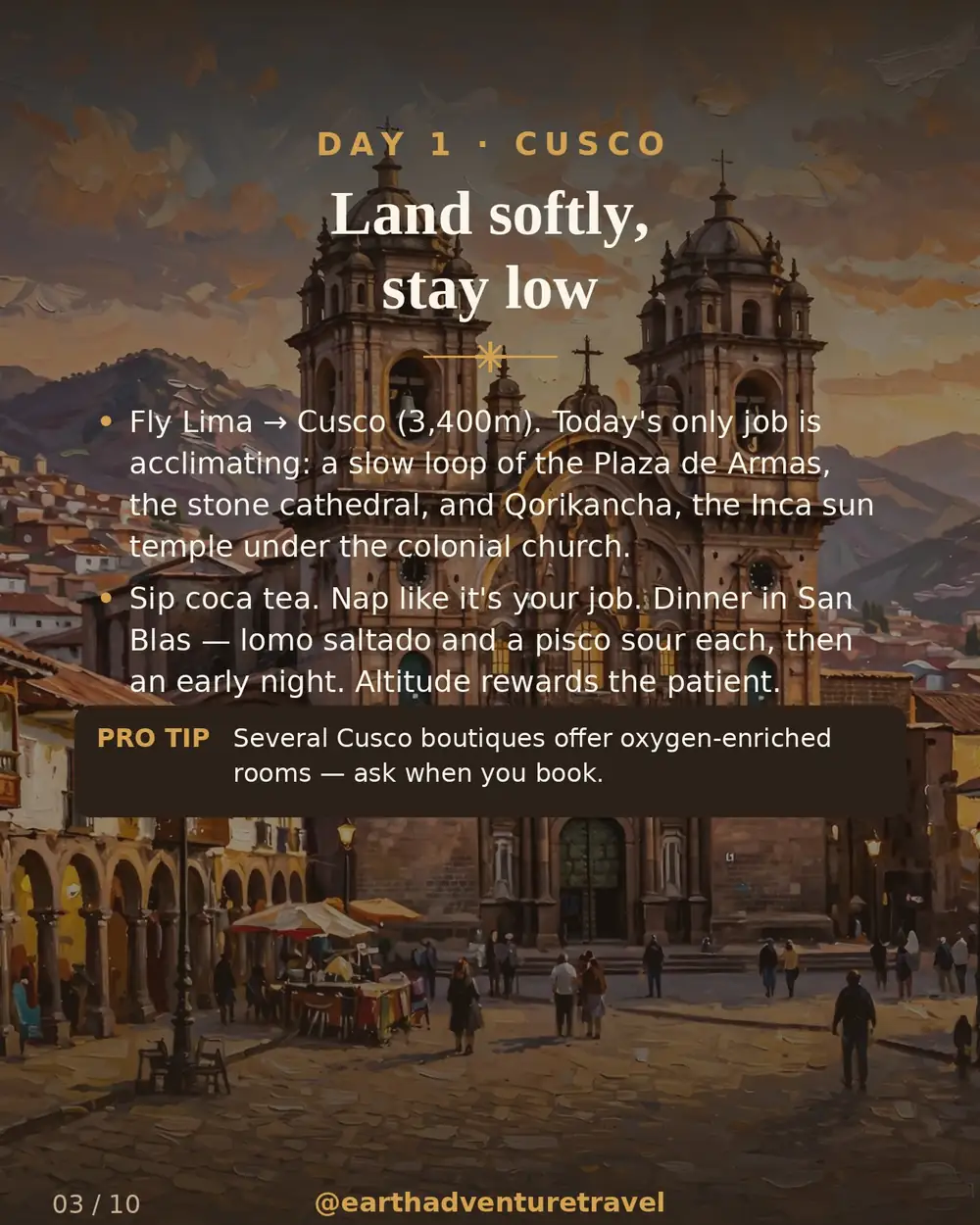
Illustrated day 1: Cusco's colonial plaza at golden hour
Cusco's Plaza de Armas and cathedral at dusk

Fly Lima to Cusco (about 90 minutes; book the morning arrival so day one is a full acclimation day, not a travel day). Cusco sits at 3,400 meters — higher than anywhere else on this trip — and the only job today is letting your body catch up. Walk slowly. Drink water constantly. Say yes to the coca tea every hotel offers; it's genuinely useful, not a tourist gimmick.

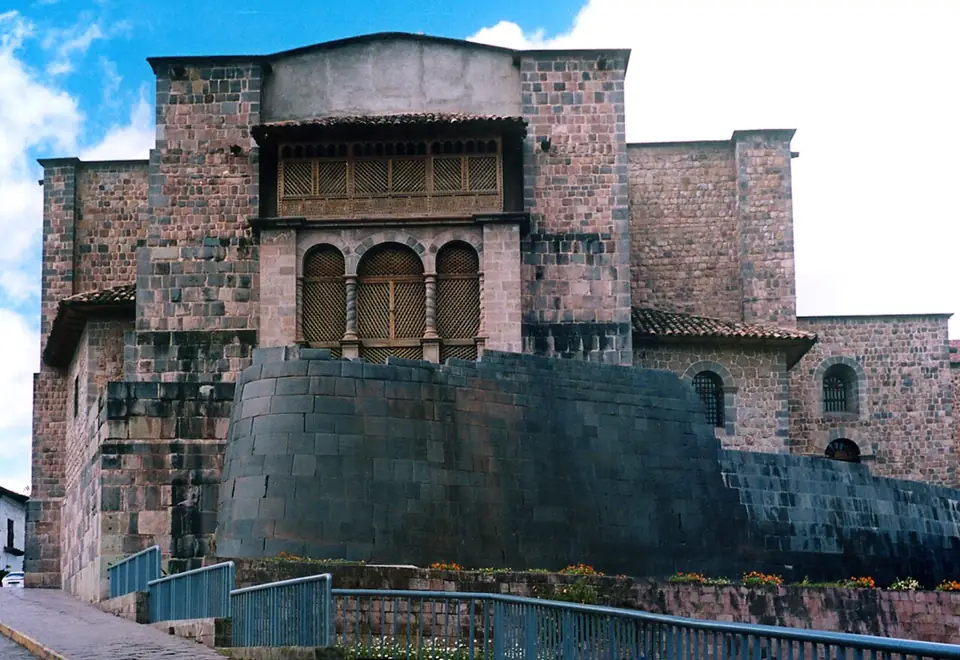
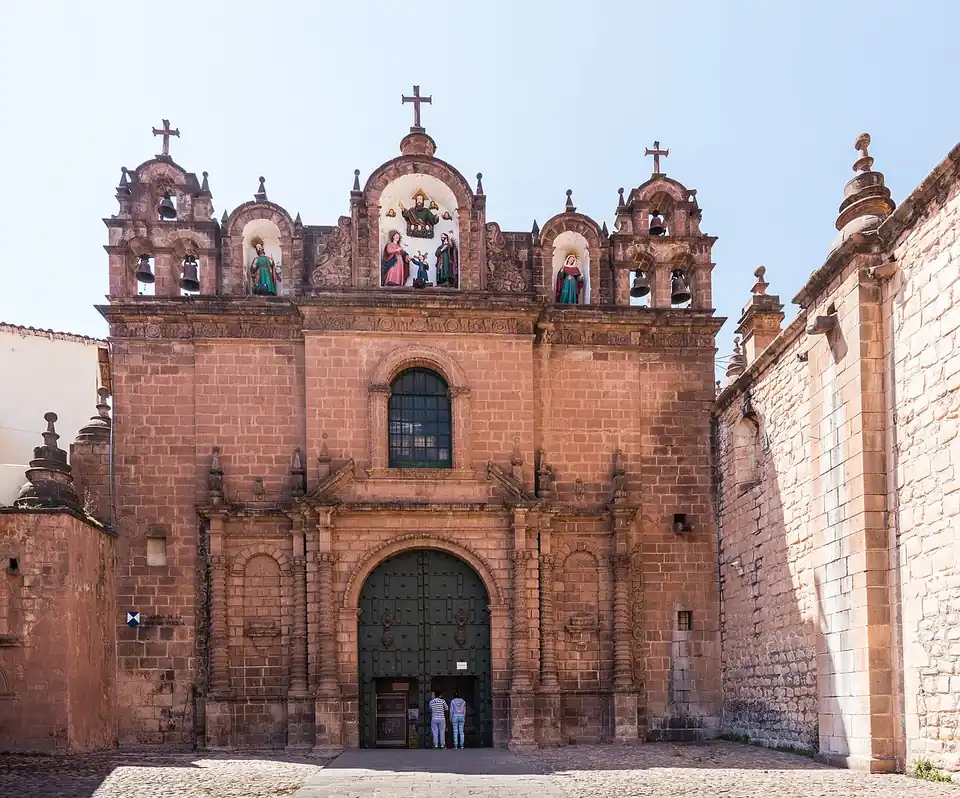
When you're ready for a gentle loop, start at the Plaza de Armas: the massive stone cathedral, the colonial arcades, the flower sellers on the steps. Then walk ten unhurried minutes to Qorikancha, the Inca Temple of the Sun, where the Spanish built their church directly on top of the finest Inca stonework in the city — the contrast is the whole story of Cusco in one building (~$8 entry).

Where to stay

Casa Cartagena (boutique, courtyard pool, oxygen-enriched rooms on request), Antigua Casona San Blas (colonial house, fireplaces, San Blas views), or Tierra Viva Cusco Centro (solid mid-range, two blocks from the plaza). All three sit in the historic center, so nothing today requires a taxi.

Pro tip

Book a hotel with oxygen-enriched rooms if you're altitude-anxious — several Cusco boutiques offer them, and the first night is when it matters most. Diamox (acetazolamide) helps too; talk to your doctor before you fly, not after you land.

Evening: wander the whitewashed lanes of San Blas, the artisans' quarter, as the light goes gold over the red tile roofs. Dinner at a courtyard restaurant — lomo saltado and a pisco sour each (one, not three; alcohol hits twice as hard at altitude). Then an early night. Altitude rewards the patient, and tomorrow you descend to air you can actually breathe.
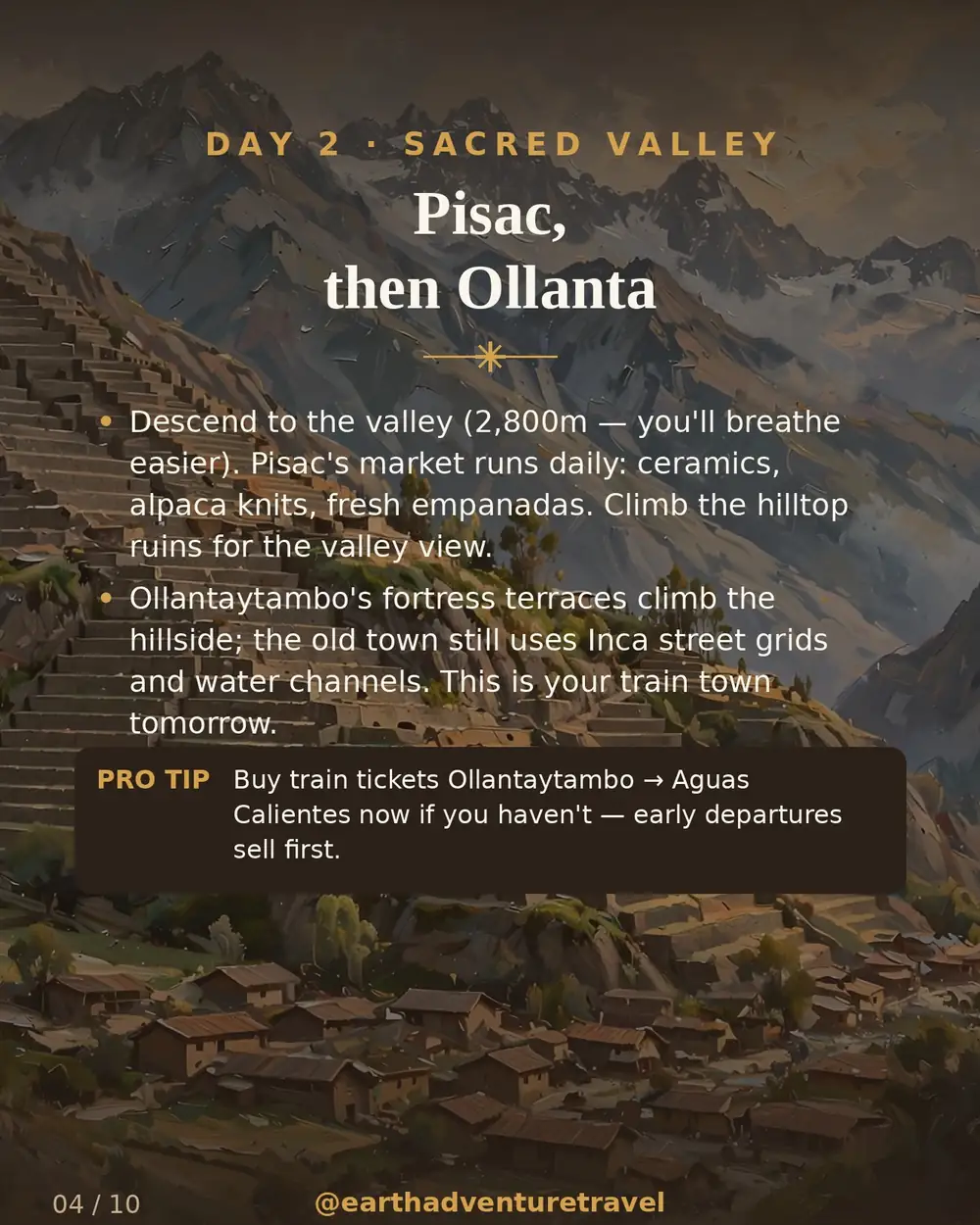
Illustrated day 2: Ollantaytambo's Inca terraces
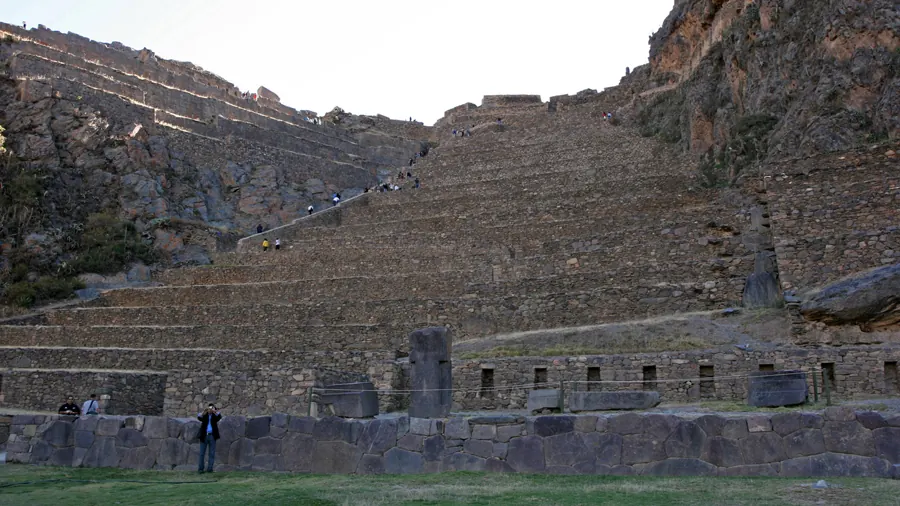
The Inca terraces of Ollantaytambo fortress

Descend to the Sacred Valley (about 1 hour by private driver, ~$40 for the car) and notice the difference immediately: at 2,800 meters you'll breathe easier, sleep deeper, and walk faster. This is the acclimation strategy working — two nights low before the citadel, not one heroic push.

First stop: Pisac. The market runs daily (not just Sundays) — ceramics, alpaca knits, silver, and fresh empanadas from the wood ovens. Then climb the hilltop ruins above town (~$12 with the tourist ticket): agricultural terraces in perfect curves, a ceremonial center, and the valley spread out a thousand feet below. It's a worthy warm-up for what's coming.

Where to stay

El Albergue (inside the old Ollantaytambo train station — charming, quiet, and you wake up steps from your train), Las Qolqas Eco Resort (riverside, fire pits, mountain views), or Hotel Pakaritampu (family-run, gardens, great breakfast). Stay in Ollantaytambo — it's your train town tomorrow.

Pro tip

Buy your train tickets Ollantaytambo → Aguas Calientes now if you haven't — the early departures sell first, and tomorrow's plan depends on an early train. PeruRail and Inca Rail both run the route; round trips typically run $110–$190 per person.

Afternoon: the Ollantaytambo fortress itself — massive terraces climbing the hillside, the Temple of the Sun's half-finished megaliths, and the old town below, which still uses the original Inca street grid and water channels. It's a living Inca town, not a museum. Dinner early; the train leaves at dawn.

Illustrated day 3: the Sun Gate framing Machu Picchu
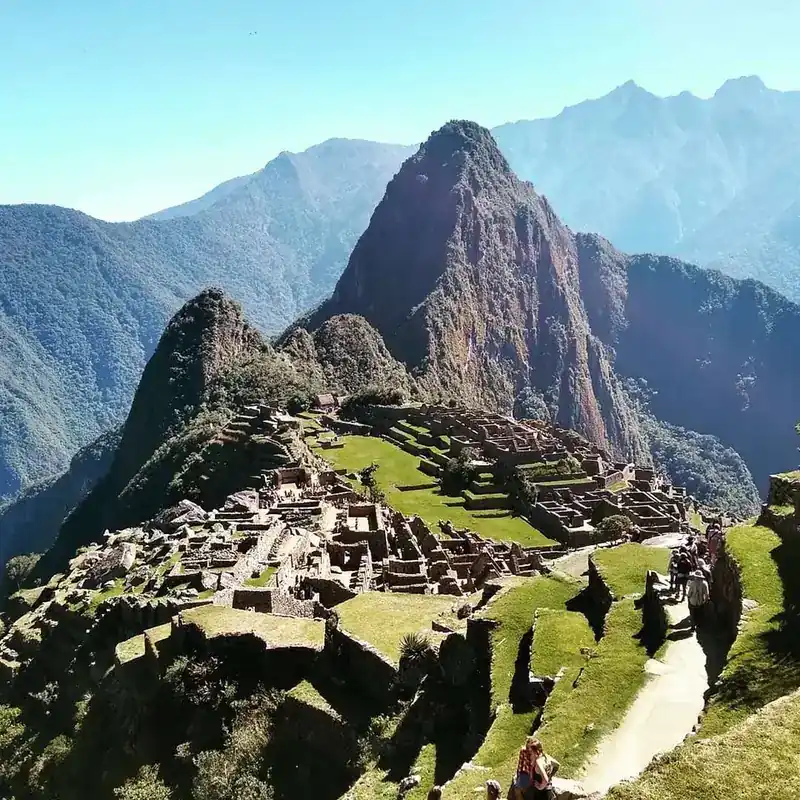
Agricultural terraces below the Machu Picchu citadel

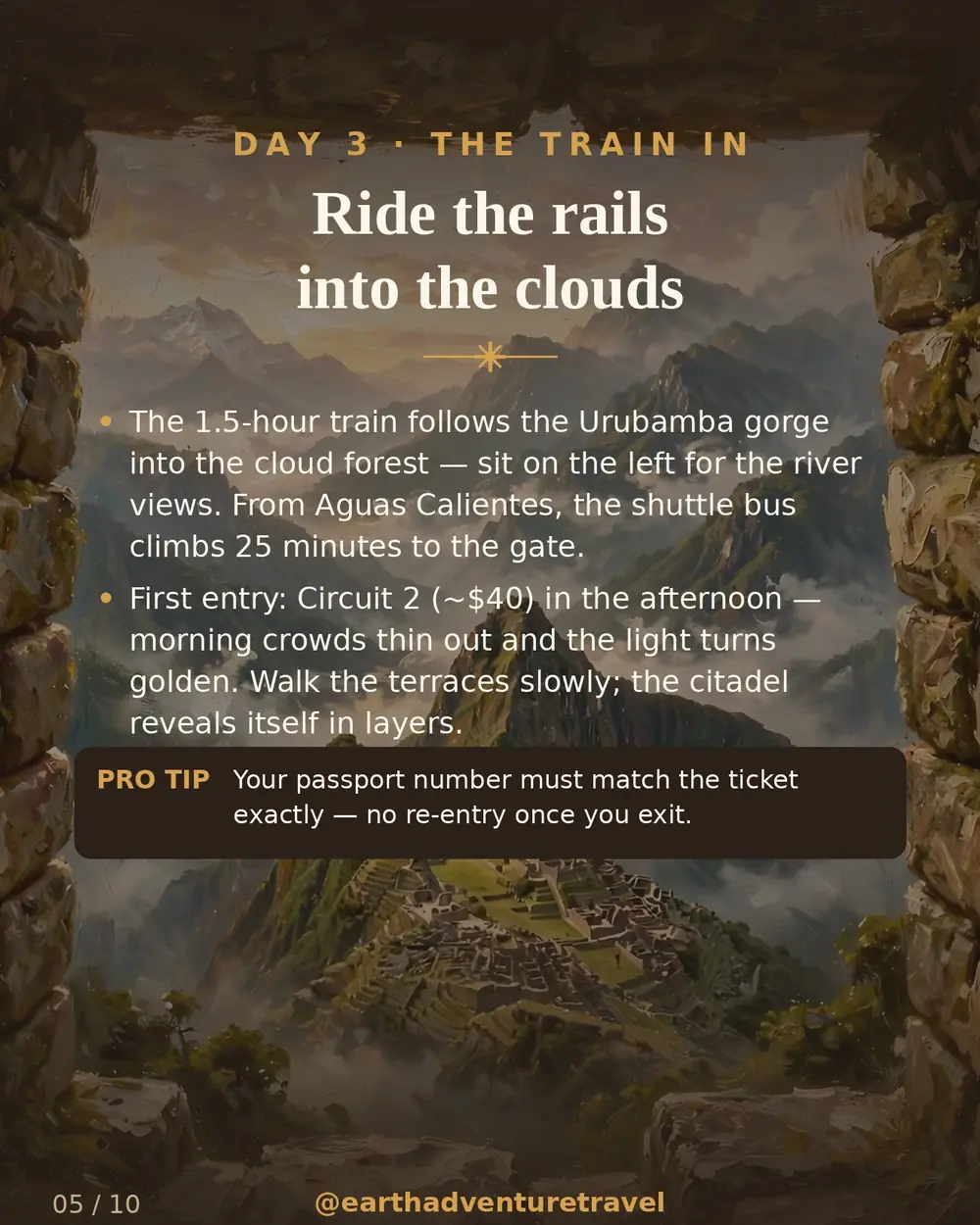
The 1.5-hour train from Ollantaytambo follows the Urubamba river gorge as the Andes collapse into cloud forest — waterfalls, orchids, mist on the windows. Sit on the left side for the best river views. There is no road to Machu Picchu; the train is the only way in (besides walking the Inca Trail), and the arrival feels earned.

From Aguas Calientes (Machu Picchu Pueblo), the shuttle bus climbs 25 minutes of switchbacks to the gate (~$24 round trip, or walk up in about 90 minutes if your legs are fresh). Enter on Circuit 2 in the afternoon slot (~$40, booked months ago on the official TuBoleto platform). Morning crowds thin out by 2pm, the tour groups leave, and the light turns golden across the stonework.

Where to stay

Inkaterra Machu Picchu Pueblo Hotel (the splurge — orchid trails, cloud-forest birdwatching, private plunge pools), El Mapi by Inkaterra (modern, great value, excellent restaurant), or a simple hostal near the station if you'd rather save the budget for the trains. One night here is all you need.

Pro tip

Your passport number must match your ticket exactly — double-check at purchase, because there's no fixing it at the gate. And there's no re-entry: once you exit the citadel, that ticket is done. Bring water, sun protection, and a poncho; the mountain makes its own weather.

Walk the terraces slowly. Circuit 2 is the most complete route — the classic postcard viewpoint, the main plaza, the Temple of the Sun, the Intihuatana stone. The citadel reveals itself in layers, and the afternoon light is the photographer's hour. Descend before the last bus; dinner in Aguas Calientes is better than its reputation suggests.

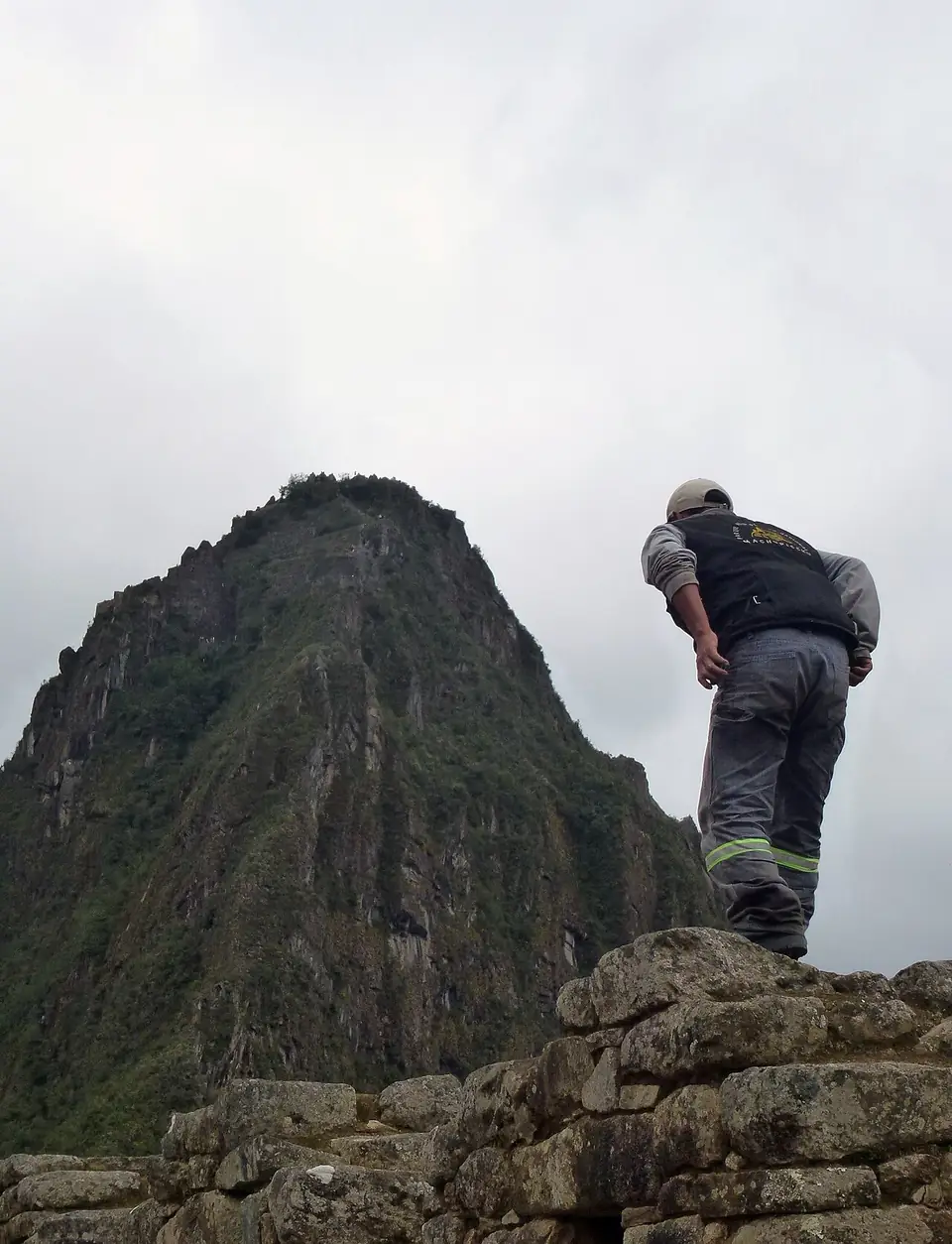
Illustrated day 4: Huayna Picchu's steep peak
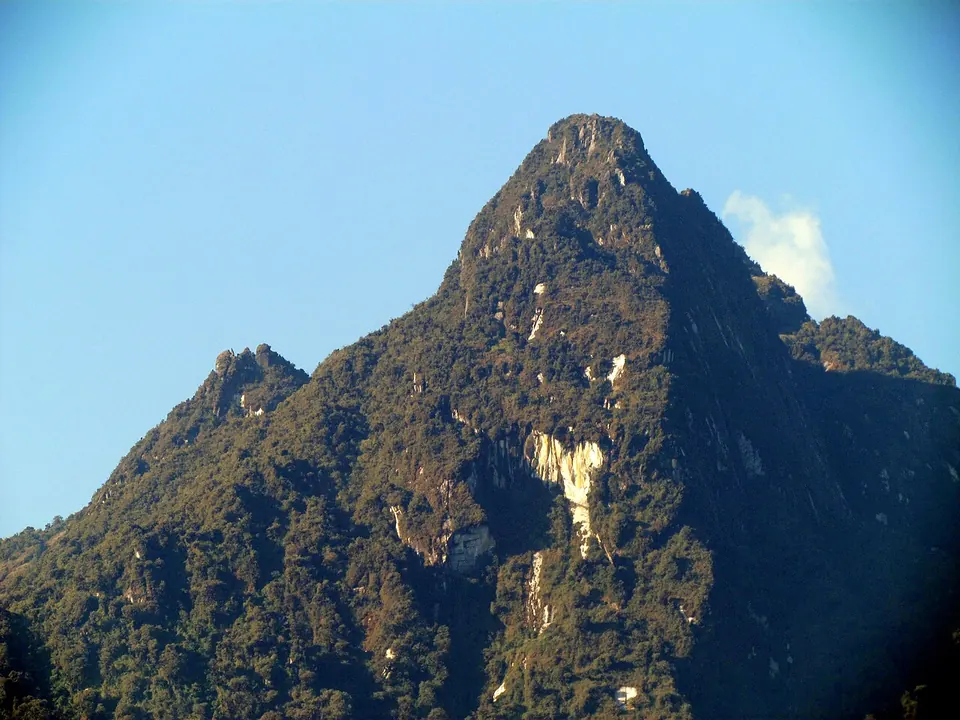
The view from the Huayna Picchu trail over the citadel

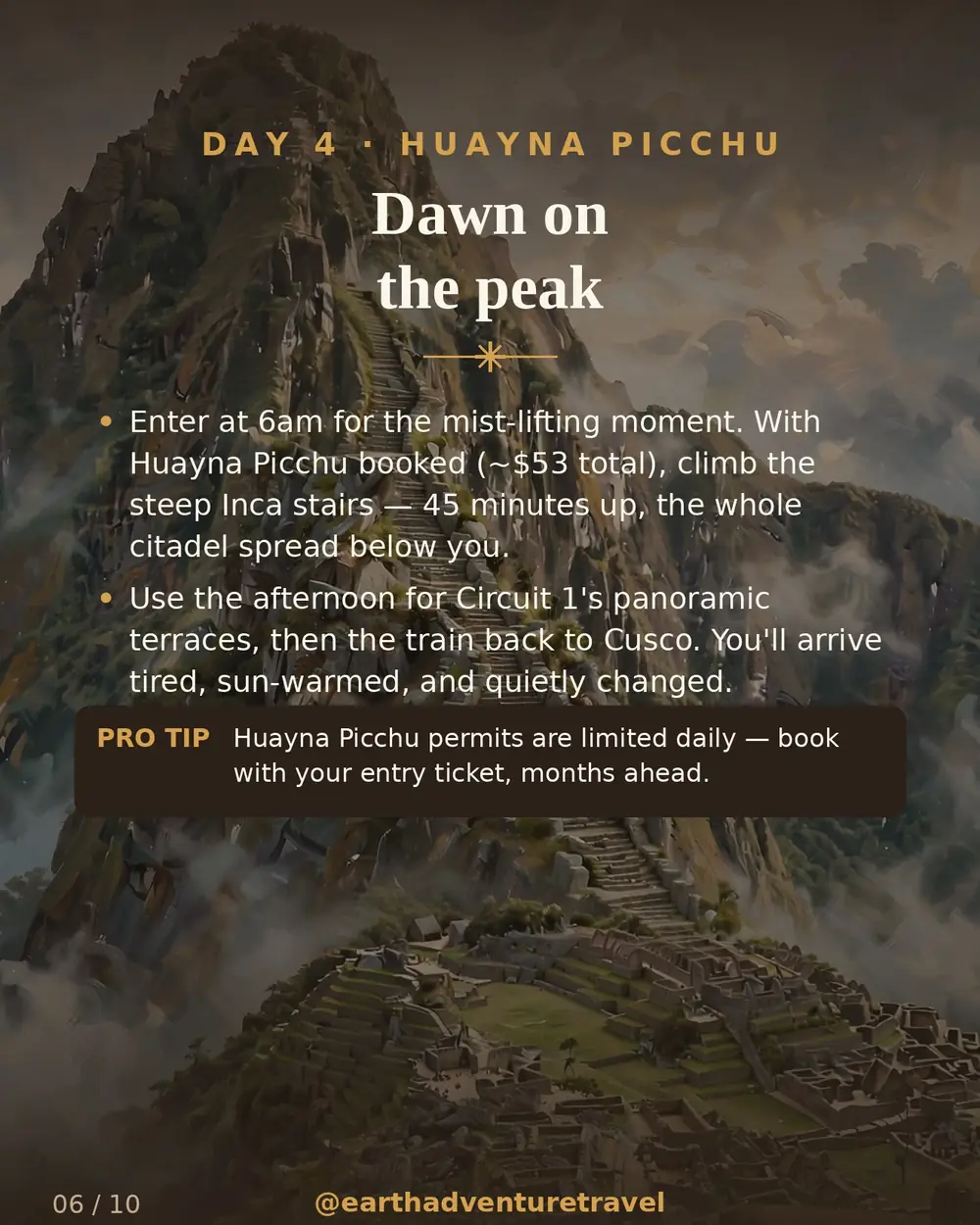
Enter at 6am for the mist-lifting moment — the classic view when the clouds part and the citadel appears all at once. This is why you came twice: dawn is a different place than afternoon, quieter, cooler, and briefly almost empty.

If you booked it (the ~$53 Huayna Picchu ticket, reserved months ahead — daily permits are strictly limited), climb the steep Inca stairs up the peak behind the ruins. It's 45–60 minutes of near-vertical stone steps, occasionally with a cable for the exposed sections, and the reward is the whole citadel spread 1,000 feet below you. Not for the vertigo-prone — and that's fine; the lower terraces are magnificent without it.

Where to stay

Back in Cusco tonight — same hotel as day one, no packing. The afternoon train returns you to Ollantaytambo or Poroy (near Cusco); a private transfer completes the journey. You'll arrive tired, sun-warmed, and quietly changed.

Pro tip

Huayna Picchu permits sell out months ahead — they must be booked with your entry ticket, not after. If they're gone, Machu Picchu Mountain (Circuit 1A) is a longer, higher, less crowded alternative with a 360° summit view.

Use any remaining afternoon for Circuit 1's panoramic terraces — the upper viewpoints the classic circuit skips. Then the train home through the gorge as the light fades. Two entries, two moods, one wonder of the world: this is the version of Machu Picchu most visitors never see.

Illustrated day 5: a San Blas street in Cusco
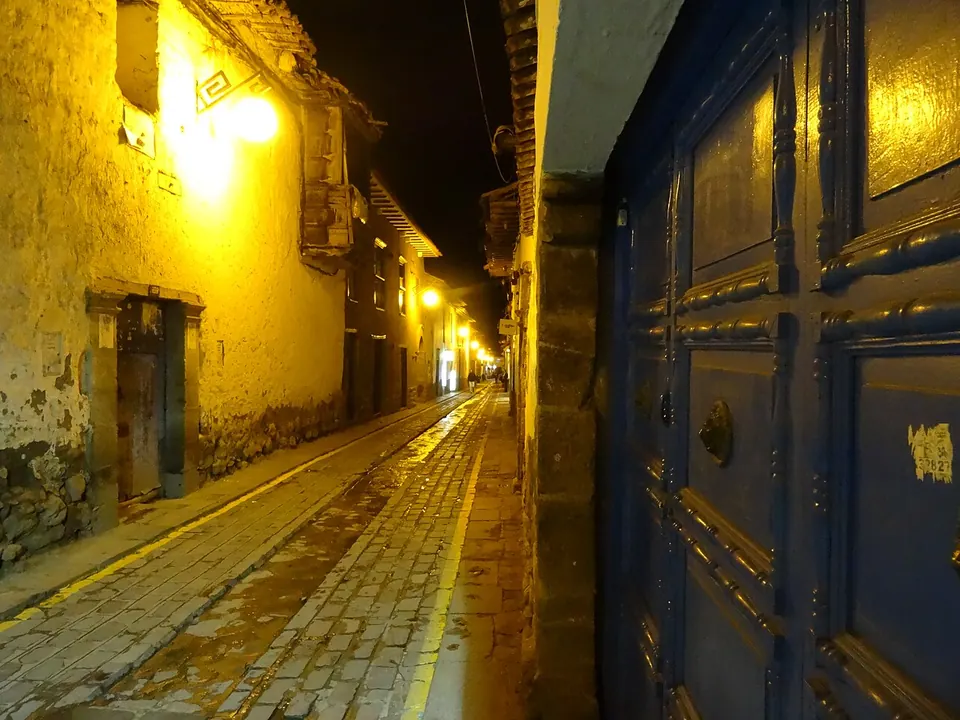
A cobblestone lane in Cusco's San Blas quarter

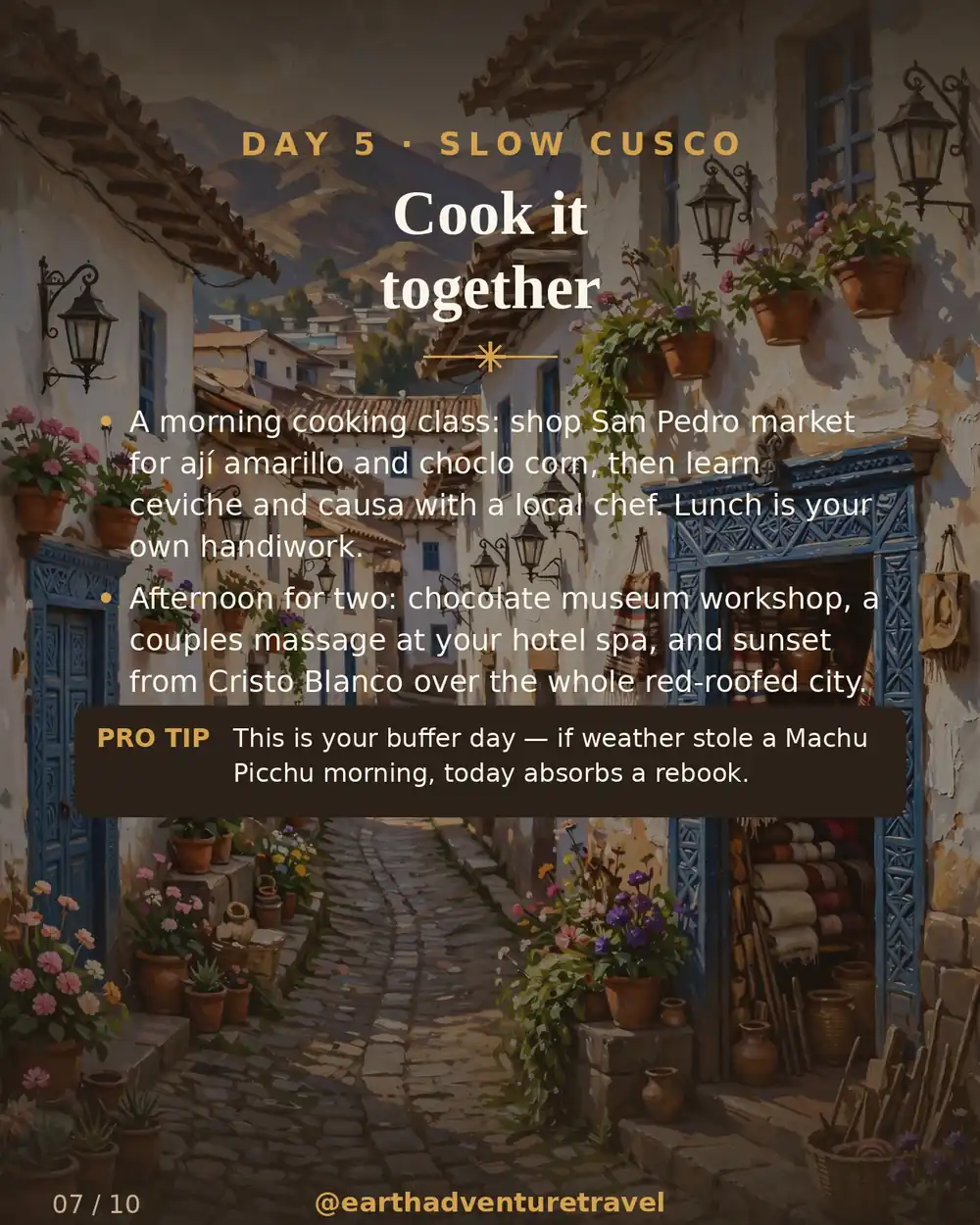
Sleep in — you've earned it. Today is deliberately unstructured: a buffer day that doubles as the trip's most romantic one. If weather stole a Machu Picchu morning, today can absorb a rebooked train; if not, it's yours.

Morning: a cooking class for two (~$60–$80 per person). Start at San Pedro market — ají amarillo, choclo corn the size of your thumb, thirty kinds of potato — then cook ceviche and causa with a local chef and eat your own handiwork for lunch. It's the most fun you'll have with an apron on.

Where to stay

Same Cusco base — no packing, no moving. Three nights in one hotel is a gift on a trip this logistically dense.

Pro tip

Book the cooking class for the morning slot — markets are liveliest before 10am, and you'll want the afternoon free. Most classes include the market tour; confirm when you book.

Afternoon for two: the chocolate museum workshop (make your own bars from bean to bar, and yes, you'll eat the mistakes), a couples massage at your hotel spa (your legs are still filing complaints about Huayna Picchu's stairs, and the altitude makes everything sorer), and sunset from Cristo Blanco — the white Christ statue above the city, with all of red-roofed Cusco spread below in the golden light. Dinner at Cicciolina (the cozy warren off the plaza, book ahead) or MAP Café (inside the Pre-Columbian Art Museum courtyard, glass box among Inca walls) for the trip's best meal. Order the tasting menu; you've earned it.

Illustrated day 6: Rainbow Mountain's striped slopes
The mineral-striped slopes of Rainbow Mountain (Vinicunca)

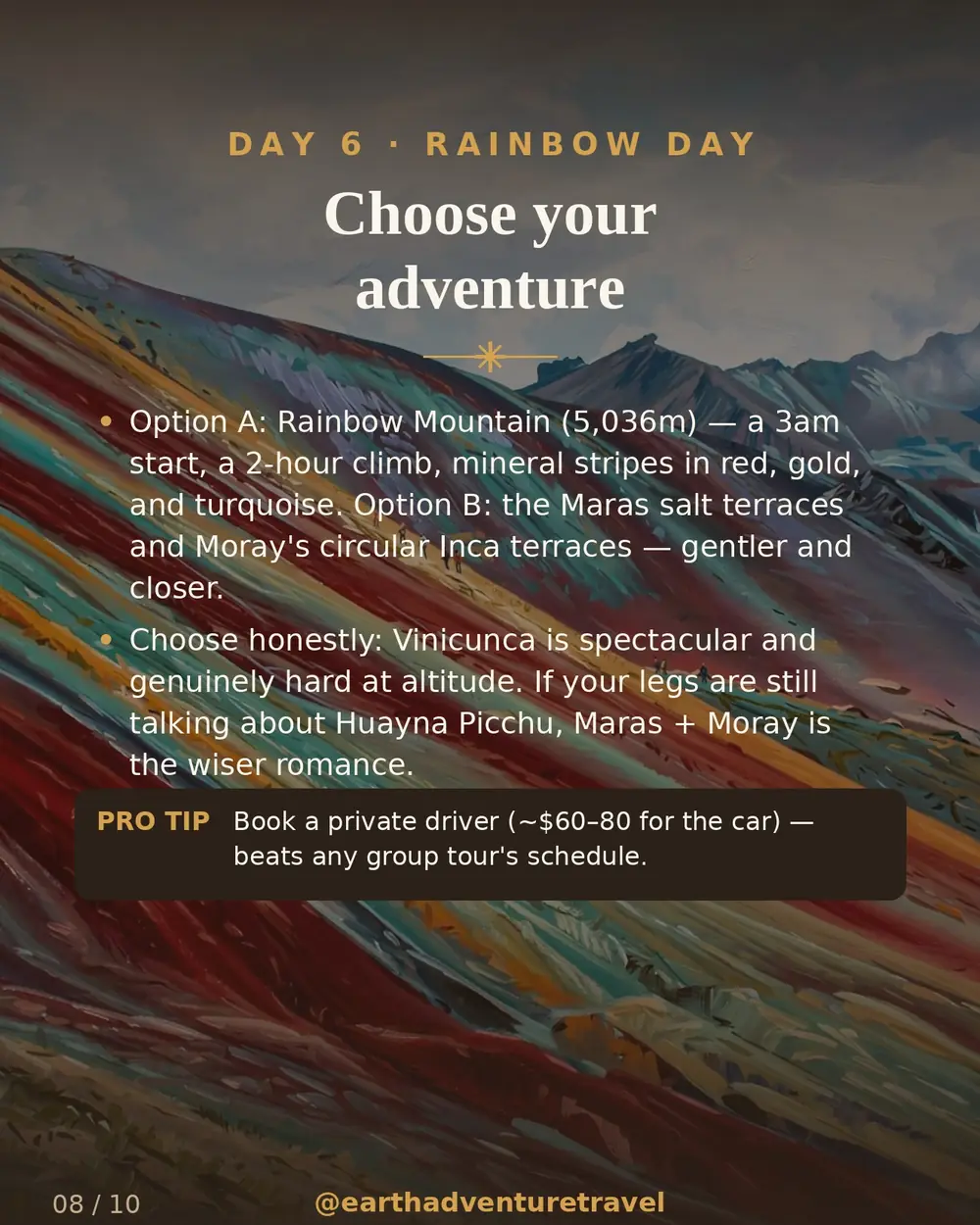
Option A: Rainbow Mountain (Vinicunca). A 3am start, a 3-hour drive, then a 2-hour climb to 5,036 meters — higher than you've ever stood. The reward: mineral stripes in red, gold, lavender, and turquoise, painted by oxidized iron and copper across the mountainside. It's genuinely spectacular and genuinely hard; the altitude is no joke even after five days of acclimating. Tour operators run it for ~$40–$60 per person including breakfast and lunch.

Option B: Maras + Moray. The salt terraces of Maras — thousands of white evaporation ponds cascading down the hillside, worked since Inca times — plus Moray's circular agricultural terraces, where the Inca ran crop experiments in concentric rings. Closer (under an hour from Cusco), gentler, half a day. A private driver for the day runs ~$60–$80 for the car.

Where to stay

Same Cusco base. By now the hotel staff knows your coffee order.

Pro tip

Choose honestly, not aspirationally. If your legs are still talking about Huayna Picchu, Maras + Moray is the wiser romance — and you'll be back at the hotel by 2pm with the whole afternoon free. Vinicunca demands a 3am alarm and real fitness at 5,000m.

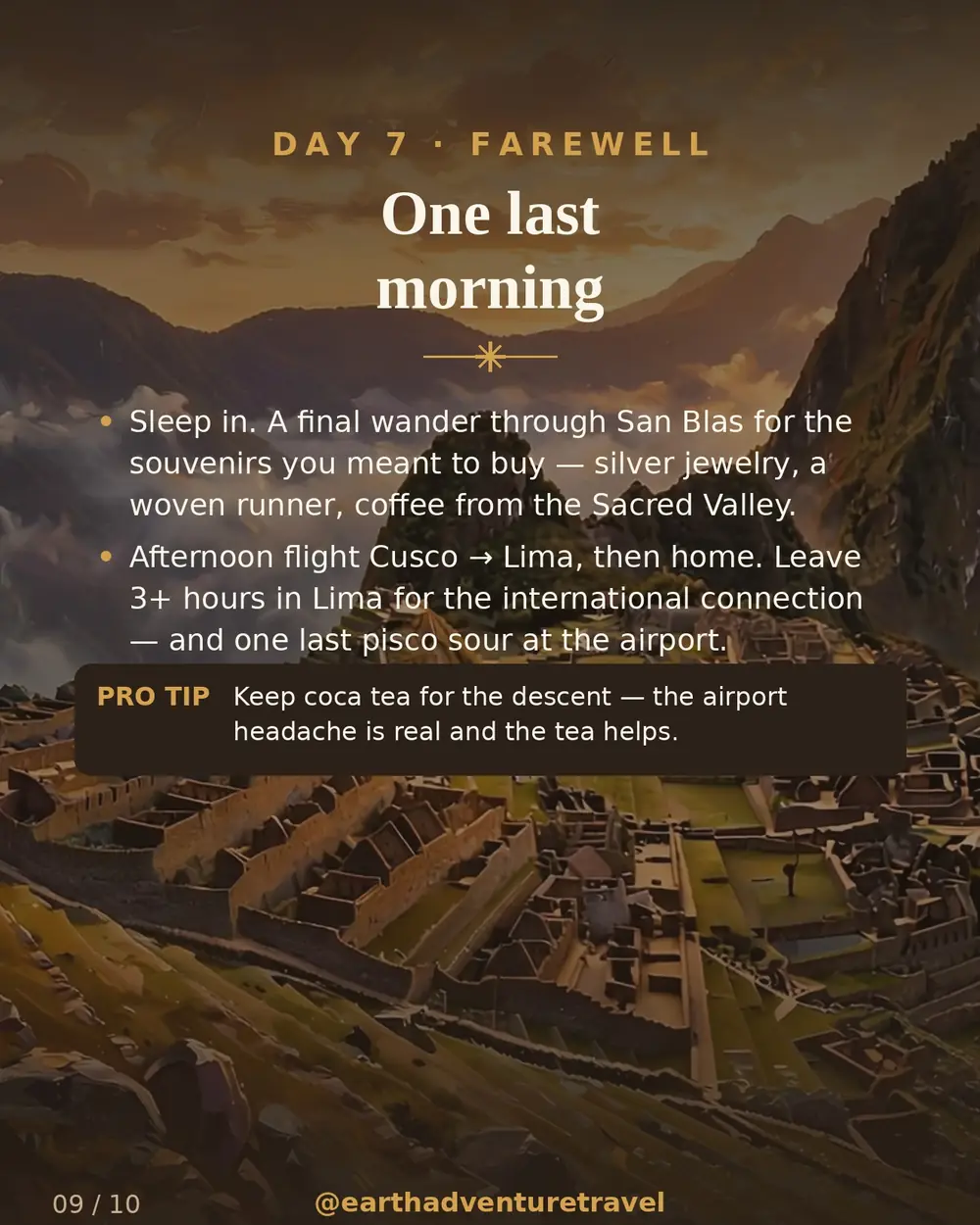
Whichever you pick, you're back in Cusco by mid-afternoon. Spend it the slow way: the Pre-Columbian Art Museum (small, perfect, air-conditioned), a final wander through San Blas for the souvenirs you meant to buy — silver jewelry, a woven runner, coffee from the Sacred Valley — and a farewell pisco sour as the sun drops behind the Andes.

Illustrated day 7: Machu Picchu at sunset from the terraces
Qorikancha, the Inca sun temple in Cusco

One last slow morning. If you missed anything — the San Blas church's carved pulpit, the twelve-angled stone on Hatun Rumiyoc street (the most famous single stone in the Inca world), a final coffee overlooking the plaza — now is the hour. Cusco is kindest before 10am, when the tour buses are still loading.

Afternoon flight Cusco → Lima (about 90 minutes), then home. Leave 3+ hours in Lima for the international connection — the airport is efficient but the distances are real, and you'll want one last pisco sour at the gate, not a sprint through immigration.

Where to stay

Homeward bound. If your connection forces an overnight, the Wyndham Costa del Sol is inside Lima airport — no taxi, no stress.

Pro tip

Keep coca tea for the descent — the drop from 3,400m can bring a real headache, and the tea genuinely helps. And keep your tourist ticket stubs: the Sacred Valley ticket covers 16 sites, and you'll want the list for next time.

You'll land home with the same question every Machu Picchu traveler asks: was it worth the planning? The 3am alarms, the timed tickets bought four months out, the altitude headaches, the stairs — all of it for a few hours among old stones. Standing on those terraces at dawn, the mist parting over five-hundred-year-old walls while the person you love most stands beside you — you already know the answer. Some trips are vacations. This one is a story you'll tell for decades.

"The citadel has waited five hundred years. It can wait while you hold hands."

Rough budget

What it costs for two

Mid-range, per couple, international flights excluded. Prices in USD; Peruvian sol conversions at ~3.8 PEN per dollar (October 2026).

Hotels (6 nights, mid-range)$900–$1,400
Machu Picchu entries (2 days × 2 people)$160–$215
Trains (round trip × 2 people)$220–$380
Lima–Cusco flights (round trip × 2)$200–$400
Food & drink (7 days)$500–$800
Drivers, tours, cooking class, Rainbow Mountain$400–$700
Shuttle buses, site entries, misc$150–$250
Total for two$3,400–$4,600

Plan & pack

Planning notes

Book first

Machu Picchu entry + Huayna Picchu 3–4 months out (official TuBoleto platform only); trains 6 weeks; Inca Trail permits 6+ months if you're trekking instead.

Altitude plan

Two nights low in the Sacred Valley (2,800m) before the citadel (2,430m). Water constantly, alcohol minimally, coca tea freely. Diamox: ask your doctor before you fly.

Rainy-season plan

November–March brings afternoon downpours. Pack a real rain shell and waterproof boots; book morning citadel entries (storms build after noon); the Inca Trail closes every February.

Packing

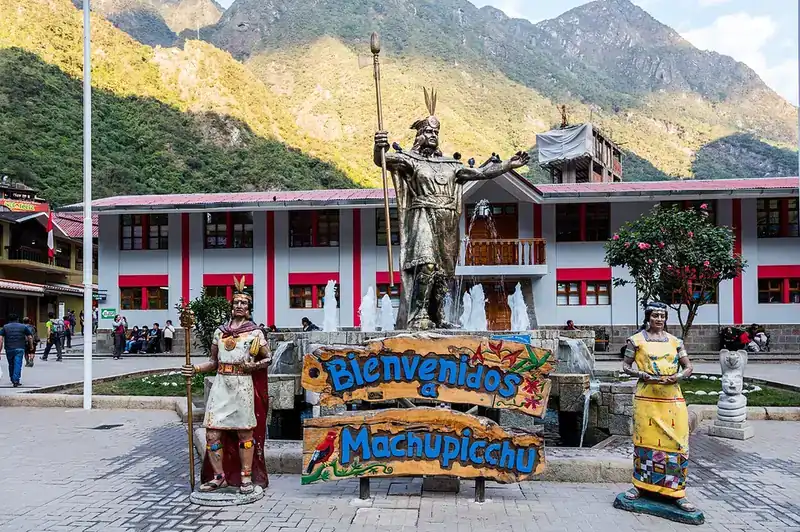
Aguas Calientes (Machu Picchu Pueblo) in the cloud forest
Aguas Calientes (Machu Picchu Pueblo) in the cloud forest — pack for its moods

Planning notes

Frequently asked questions

How far ahead do I need to book Machu Picchu tickets?

For high season (June–September), book 3–4 months ahead — Circuit 2 and Huayna Picchu sell out first. Shoulder months (April, October) need 4–6 weeks. Book only on the official TuBoleto platform (tuboleto.cultura.pe); third-party resellers add 50%+ markup.

What's the difference between the circuits?

Circuit 2 (Classic) is the most complete — the postcard viewpoint plus the full urban core — and the best pick for first-timers. Circuit 1 (Panoramic) covers the upper terraces and viewpoints without the lower citadel. Circuit 3 (Royalty) covers the lower sector and is the gateway for Huayna Picchu. Your circuit is locked at purchase; there's no switching inside.

Is Huayna Picchu worth it?

Yes, if you're fit and not vertigo-prone: 45–60 minutes up near-vertical Inca stairs for the definitive overhead view of the citadel. Permits are strictly limited daily and must be booked with your entry ticket months ahead. The alternative — Machu Picchu Mountain — is longer, higher, and less crowded.

How bad is the altitude, really?

Cusco (3,400m) is the crux; the citadel (2,430m) is easier than the city you sleep in. This itinerary's defense: two nights low in the Sacred Valley (2,800m) before the citadel, constant water, minimal alcohol, coca tea. Most healthy travelers feel off for a day, then fine. Talk to your doctor about Diamox before you fly.

Can I do the Inca Trail instead of the train?

The classic 4-day Inca Trail is a separate trip — it ends at the Sun Gate on day 4, and permits (500/day, ~200 tourists) sell out 6+ months ahead through licensed operators only ($650–$900+ per person). The 2-day Short Inca Trail ($475–$700) fits this itinerary's window better. Either way, book long before you book flights.

What's the best month to visit?

May–September (dry season) for the clearest skies — and the biggest crowds. April and October balance decent weather against lighter crowds. November–March is rainy (February is wettest; the Inca Trail closes all month, though the citadel stays open).

How do I get from Cusco to Machu Picchu?

Train from Ollantaytambo (1.5 hours, $110–$190 round trip via PeruRail or Inca Rail) to Aguas Calientes, then a 25-minute shuttle bus up to the gate. There's no road to the citadel. Staying in Ollantaytambo the night before the early train is the move.

Do I need a guide inside the citadel?

Officially, some circuits require a licensed guide at the entrance; Circuits 1 and 2 can be visited without one. In practice, a good guide transforms the visit — the stonework's stories aren't on plaques. Hire at the gate or through your hotel (~$80–$120 for a small group).

Is Rainbow Mountain worth the 3am alarm?

It's spectacular and genuinely hard — 5,036m after a 3am start. If you're fit and acclimated, yes. If your legs are still recovering from Huayna Picchu, the Maras salt terraces + Moray alternative is closer, gentler, and fascinating in its own right.

How much cash should I carry?

Cards work in Cusco, Aguas Calientes, and most hotels — but markets, small towns, tips, and mountain ATMs run on soles. Carry small bills; break large ones in Cusco, not in the mountains. Budget roughly $150–$250 in soles for the week.

Official trip checks

Sources & official links

The trip index

Choose the landscape. Then choose the pace.

Every itinerary gives you a realistic route, daily rhythm, planning notes, and the details that make a family trip work.

Use the filters above to see the routes that match.

No exact match—yet.

Clear a filter to see the closest routes already in the library.