MexicoCouplesBeach

Seven days · Tulum's ruins, cenotes, Sian Ka'an & Chichen Itza

A 7-Day Tulum Escape for Two

The clifftop ruins at 8am before the buses, cenotes of impossible blue, a silent float down a thousand-year-old Maya canal, a pyramid you can still climb, sea turtles in chest-deep water, and Chichen Itza by the new Maya Train. Seven days on the Riviera Maya, built for two.

Beach & CoastHistoric & Cultural RoutesSnorkeling & WaterInternational

7 days / 6 nightsBest Nov–AprCouplesEstimate: $2.8K–$4.0K for 2
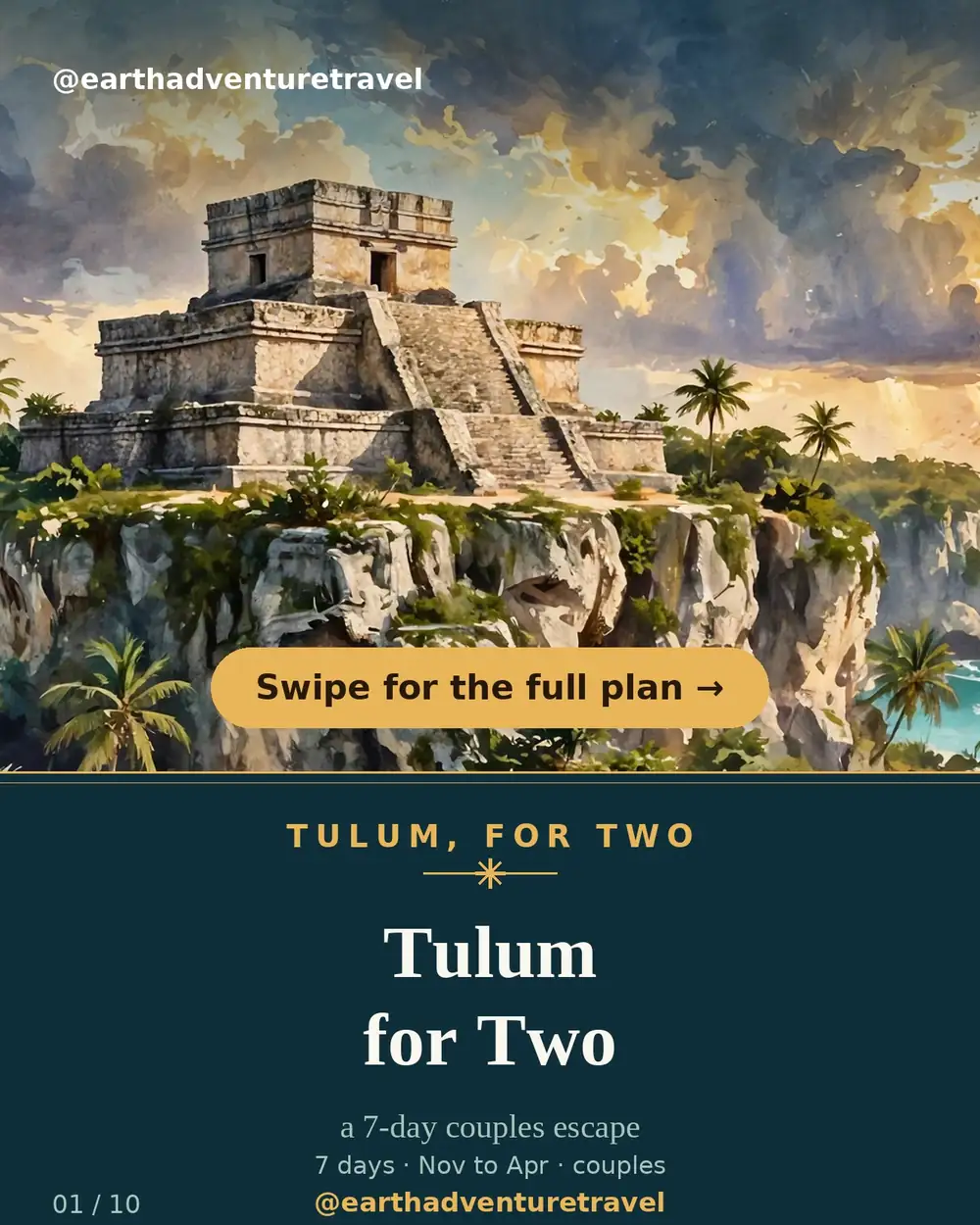
Illustrated Tulum couples guide cover: El Castillo on its cliff above the Caribbean
Original itinerary artwork
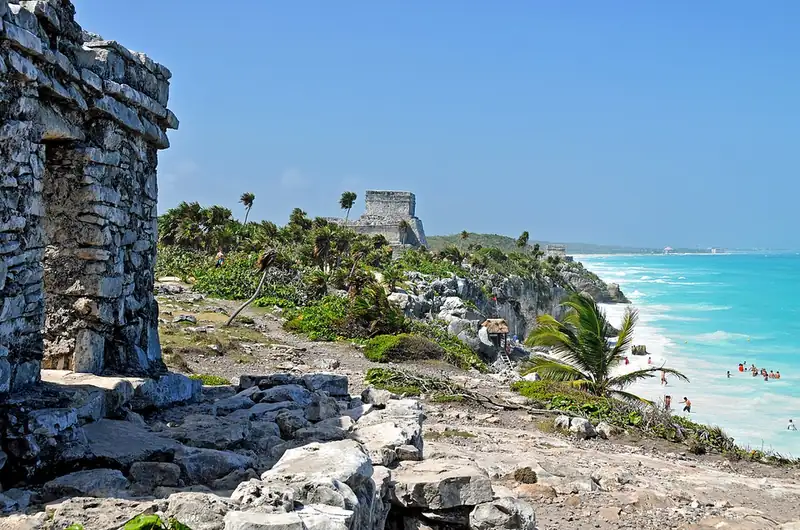
El Castillo above the Caribbean at Tulum
On this page

At a glance

Tulum for Two

Seven days, no rental car needed: the ruins at opening, three cenotes, a biosphere float, a climbable pyramid, turtles at Akumal, and Chichen Itza by train. Every day pairs one adventure with one long, horizontal afternoon.

Best timingNovember–AprilDry days, calm seas, no sargassum; May–October is hotter and rainier
Trip length7 days / 6 nightsAll 6 nights in Tulum — one base, zero packing
Getting thereFly Cancún (CUN)Tren Maya or ADO bus south to Tulum (~1.5h)
Getting aroundBikes + colectivos + Tren MayaNo rental car needed; bikes cover the beach zone
Rough budget$2,800–$4,000 for twoMid-range, international flights excluded — see the full breakdown below
Good to knowCash is kingPesos for ruins, cenotes, and beach clubs — cards fail in the jungle heat

The idea

Ruins in the morning, reef by afternoon

Tulum is the rare destination where the culture and the beach are the same trip — the only major Maya city built on the Caribbean coast, with cenotes in the jungle behind it and a biosphere reserve at its back door. The trick is timing: ruins at 8am opening, cenotes before 10am, and every afternoon surrendered to the sea.

The rules: stay in the beach zone (bikes, not taxis); carry pesos in cash (card readers die in the jungle heat); book Sian Ka'an small-group (the big boats ruin the silence); and take the Tren Maya to Chichén Itzá instead of the 5am bus. One base, six nights, zero packing.

2026 GUIDELast verified: October 2026
8amruins opening — be there
~$14Tulum ruins, all fees
0rental cars needed
6nights, one hotel

Day by day

The seven-day route

Tap a day to open the full plan — what it costs, where to stay, and the pro tips that make it work.

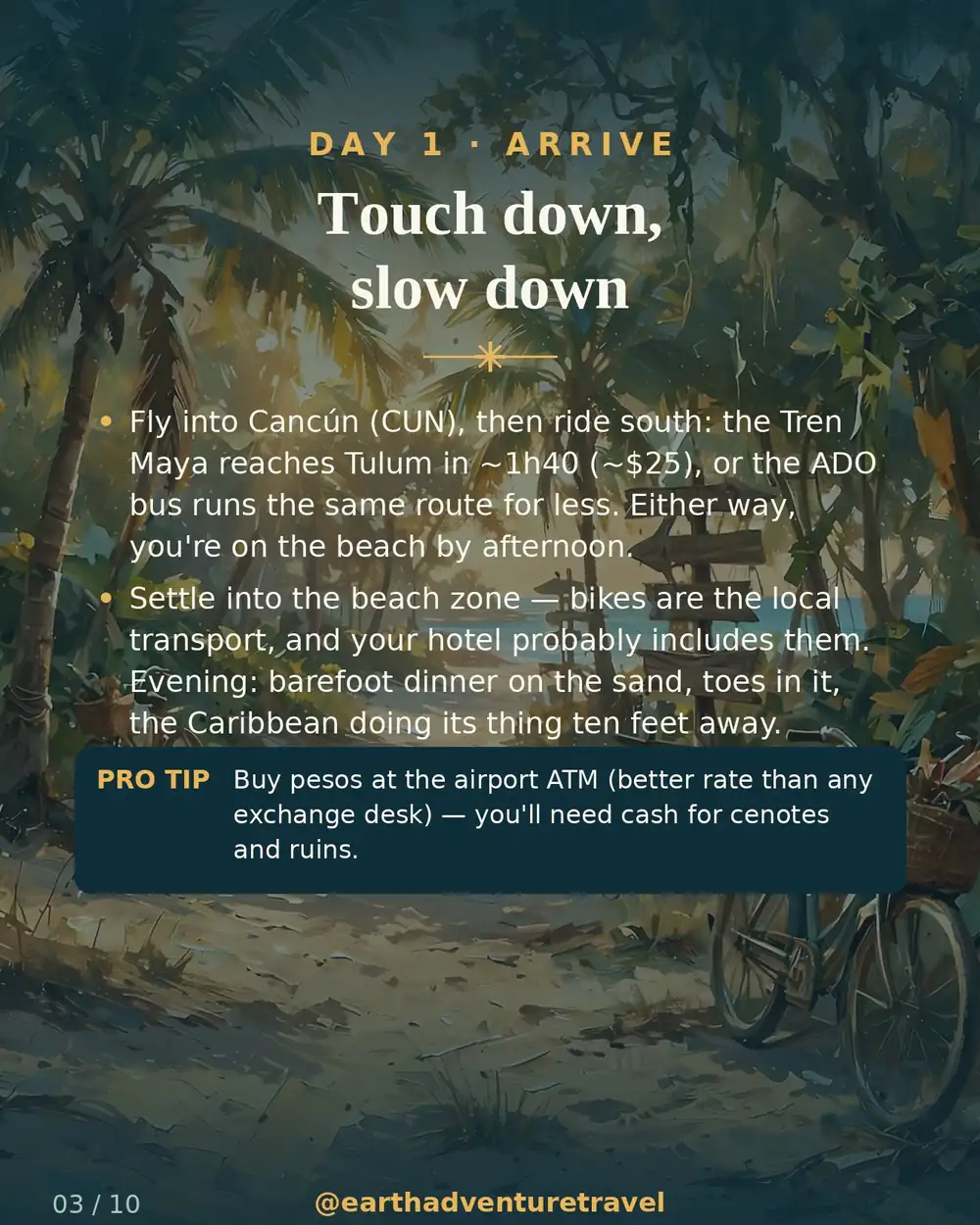
Illustrated day 1: Tulum's beach road at golden hour
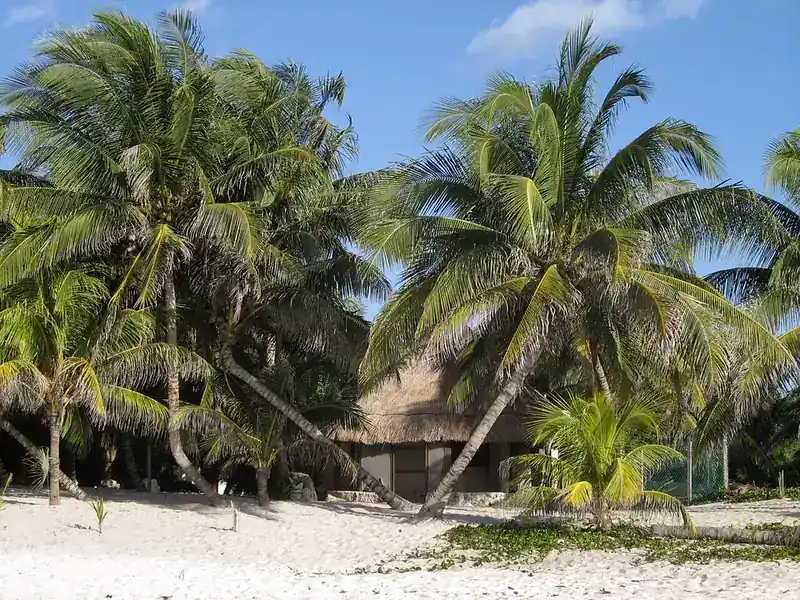
The beach zone in Tulum
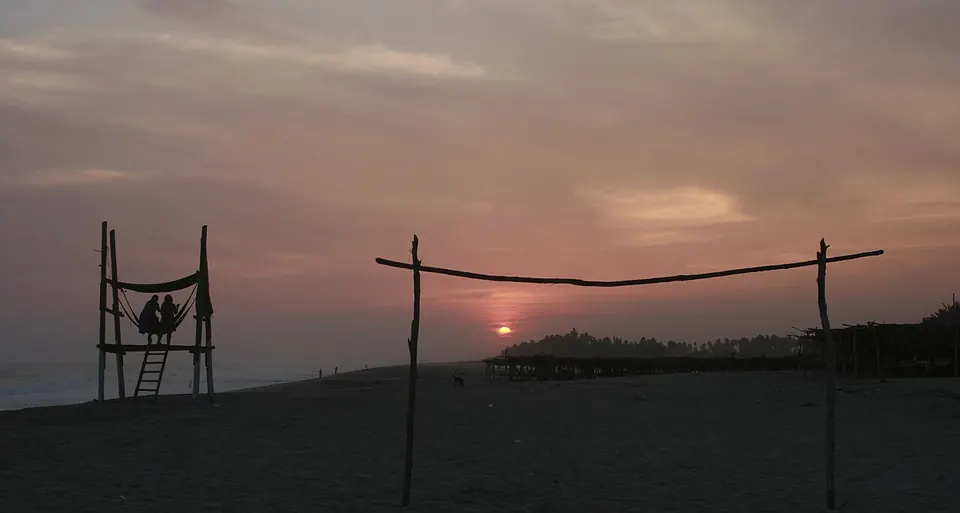
The beach zone in Tulum at sunset

Fly into Cancún (CUN), clear immigration, and head straight for the Tren Maya station at the airport — the new train reaches Tulum in about 1 hour 40 minutes (~$25 international tourist fare, panoramic windows, USB charging, café car). The ADO bus runs the same route for less if you'd rather save the pesos; either way, you're on the beach by mid-afternoon.

Tulum has two parts: the pueblo (town, cheaper, livelier) and the beach zone (a 10km strip of sand, jungle, and boho hotels). For couples, the beach zone wins — and bikes are the local transport. Your hotel almost certainly includes them; the whole strip is flat and rideable.

Where to stay

Casa Malca (art-filled, beachfront, the famous Pablo Escobar mansion turned gallery-hotel), Azulik (adults-only, treehouse villas, no WiFi — the splurge), or Hotel Tiki Tiki (boutique, great value, two blocks from the sand). Book the beach zone, not the pueblo — you'll thank yourself every sunset.

Pro tip

Buy pesos at the airport ATM (decline the conversion offer — your bank's rate is better). You'll need cash for cenotes, ruins, colectivos, and beach clubs; card readers fail regularly in the jungle heat.

Evening: barefoot dinner on the sand. The beach zone's restaurants range from toes-in-the-sand taco stands to candlelit tasting menus — start simple tonight at Antojitos la Chiapaneca in the pueblo (the locals' taco spot) or splurge beachside at Arca. The Caribbean is ten feet away, doing its thing. You're here.
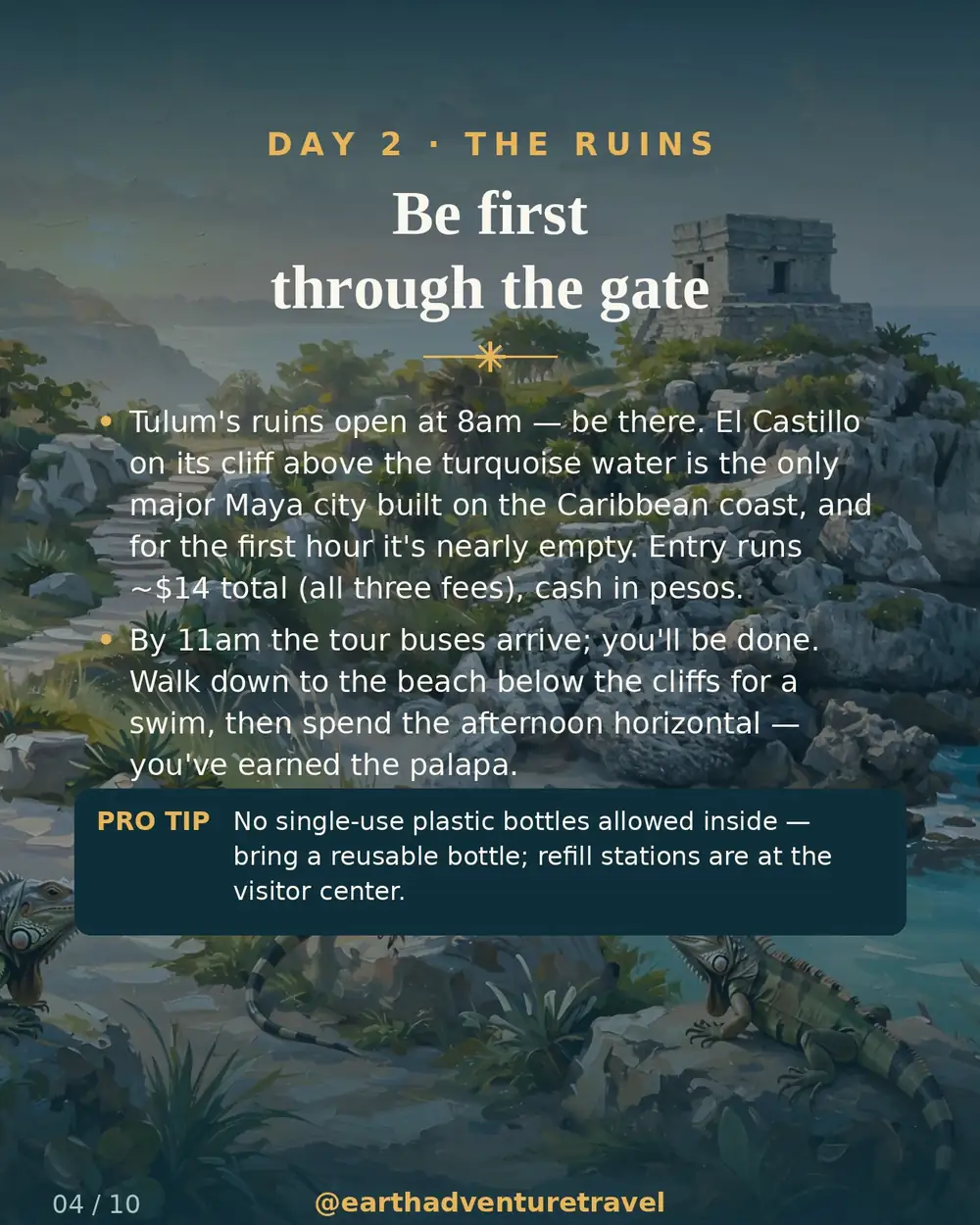
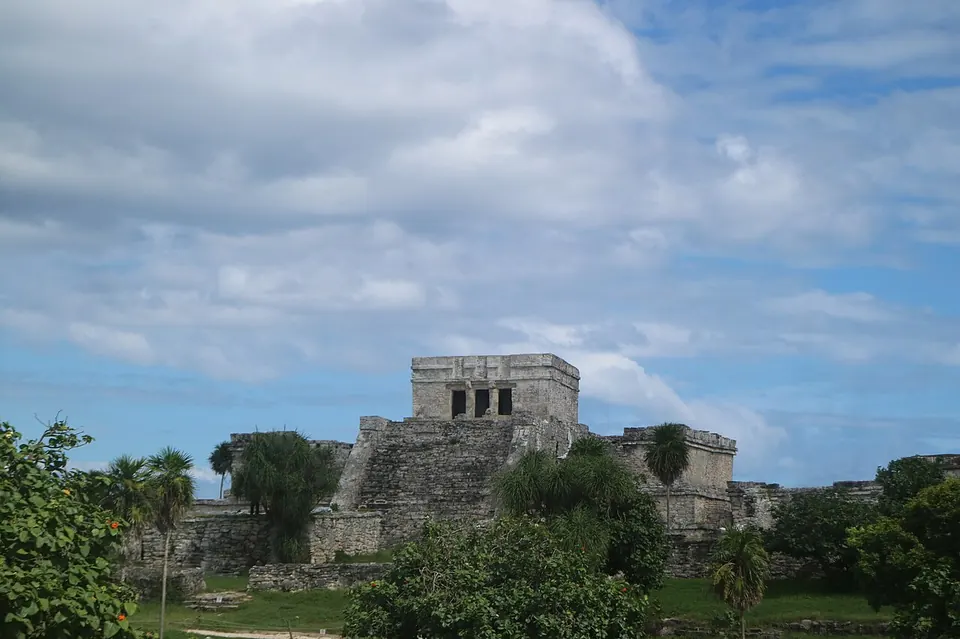
Illustrated day 2: Tulum's ruins at sunrise
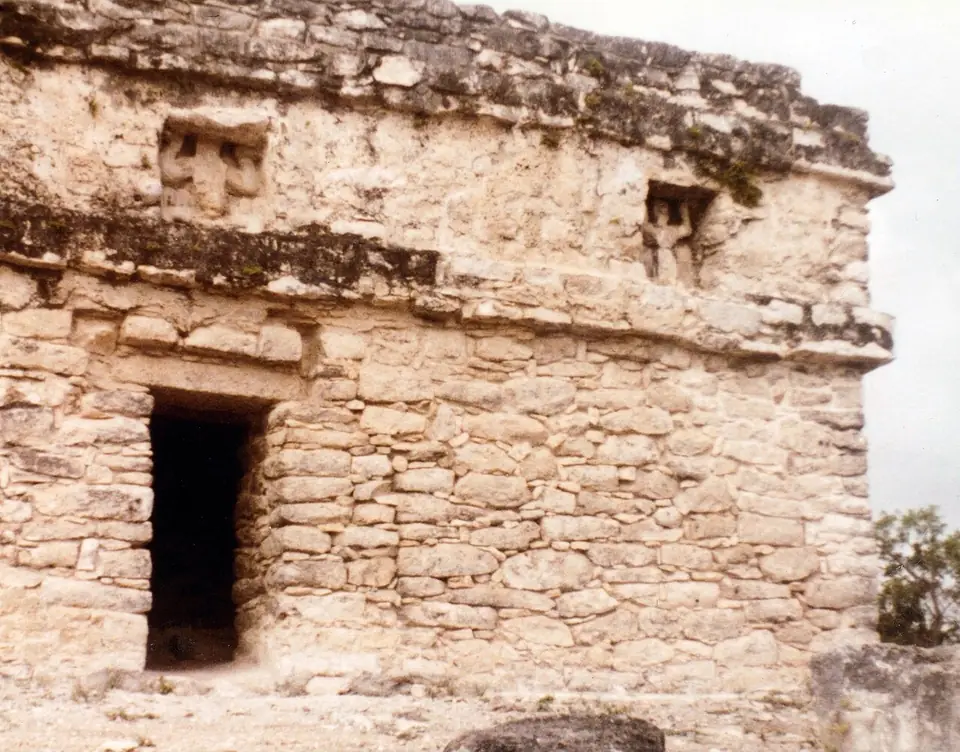
El Castillo, the clifftop temple at Tulum

The ruins open at 8am — be there. El Castillo on its limestone cliff above the turquoise water is the only major Maya city built directly on the Caribbean coast, and for the first hour it's nearly empty: iguanas on the warm stones, the sea breeze, the whole trading-port city to yourselves. By 10:30 the tour buses from Cancún and Playa del Carmen arrive; you'll be finishing.
Entry runs about $14 total for foreign visitors (all three fees: archaeological zone, national park, and Jaguar Park — cash in pesos, since the July 2026 fee overhaul). The site takes about an hour: the Castillo, the Temple of the Frescoes, the House of the Columns. You can't climb anything — the structures are strictly off-limits — but the clifftop setting is the real monument.

Where to stay

Same beach-zone base — six nights, one hotel, zero packing. This is the trip's great luxury.

Pro tip

No single-use plastic bottles inside the ruins — security will confiscate them. Bring a reusable bottle; refill stations are at the visitor center. And wear your swimsuit under your clothes: the beach below the cliffs is open for swimming (closes 4:30pm).

Walk down to Playa Ruinas, the beach below the cliffs, for a swim in the shadow of the Castillo — then spend the afternoon horizontal. The palapa, the book, the nap: this is the day's second half, and it's not optional. Dinner in the pueblo tonight for variety — the food is better and half the price of the beach zone.

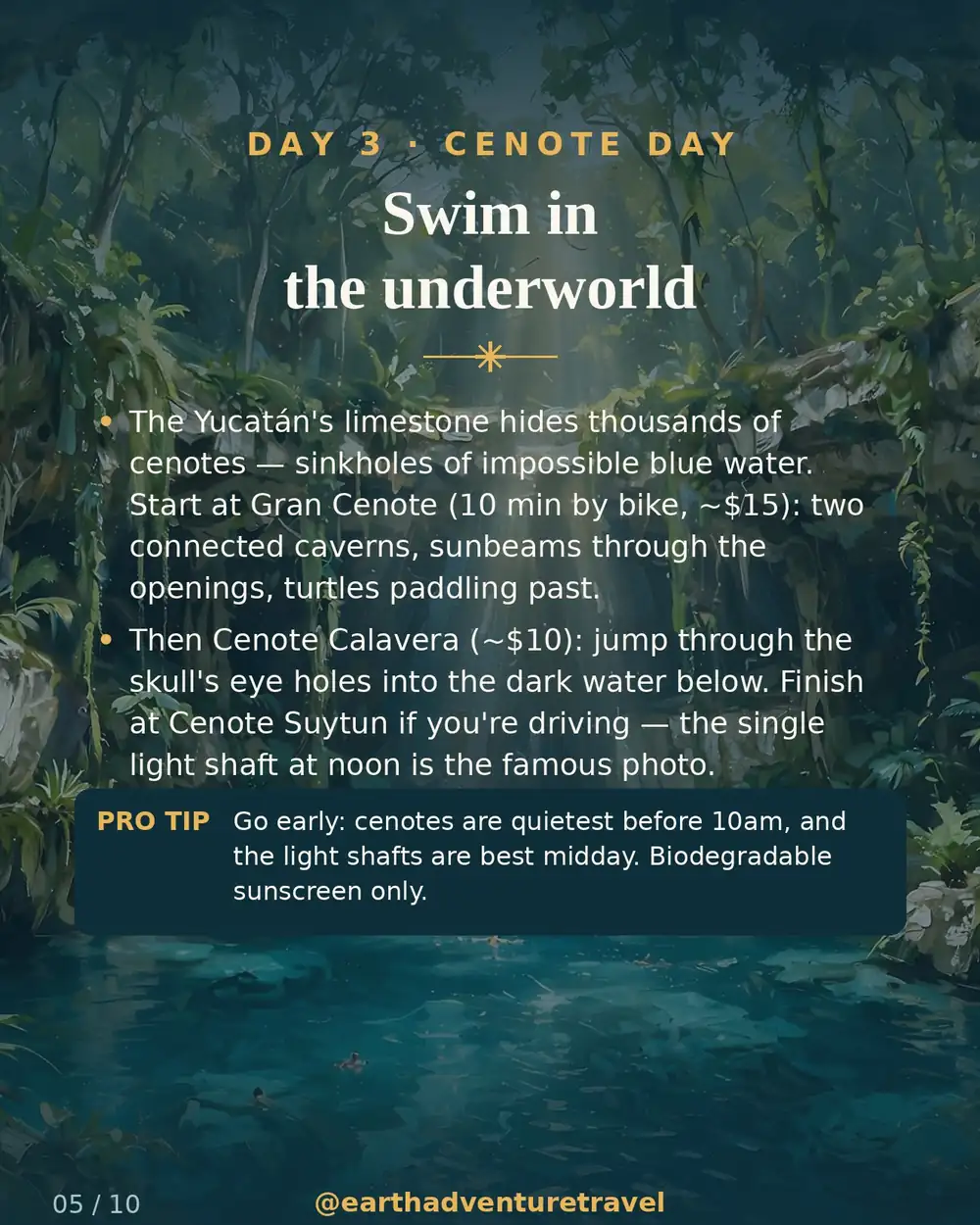
Illustrated day 3: a jungle cenote with sunbeams
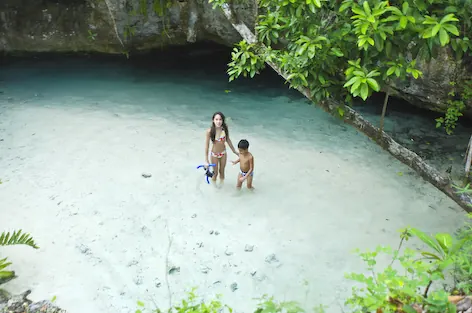
Swimming in Gran Cenote's clear water

The Yucatán's limestone hides thousands of cenotes — sinkholes of impossible blue water, sacred to the Maya as entrances to the underworld. Today you swim in them. Start at Gran Cenote (10 minutes by bike from town, ~$15): two connected caverns, sunbeams piercing the openings, turtles paddling past your mask. Go before 10am and you'll share it with a handful of people.

Then Cenote Calavera (~$10, "the skull"): a dark pool in the jungle floor with holes in its roof — jump through the skull's eye sockets into the water below. It's the adrenaline counterpoint to Gran Cenote's serenity. If you're driving (rent a car for the day, ~$50, or take a colectivo), finish at Cenote Suytun: a single perfect shaft of light hitting the water at noon, the most photographed cenote in Mexico.

Where to stay

Same beach-zone base. Rinse the cenote water off under the outdoor shower and nap.

Pro tip

Biodegradable sunscreen only — regular sunscreen is banned in cenotes (it kills the delicate ecosystem), and you'll be asked to shower before entering. Honestly, the jungle canopy shades most of them anyway; the hat matters more than the lotion.

Three cenotes is a full day; don't stack a fourth. The light does strange things in that water, and you'll want to remember it rather than rush it. Evening: the beach zone's cenote-to-table dinner scene — fresh fish, mezcal cocktails, sand between your toes. Try Casa Jaguar for the jungle setting.

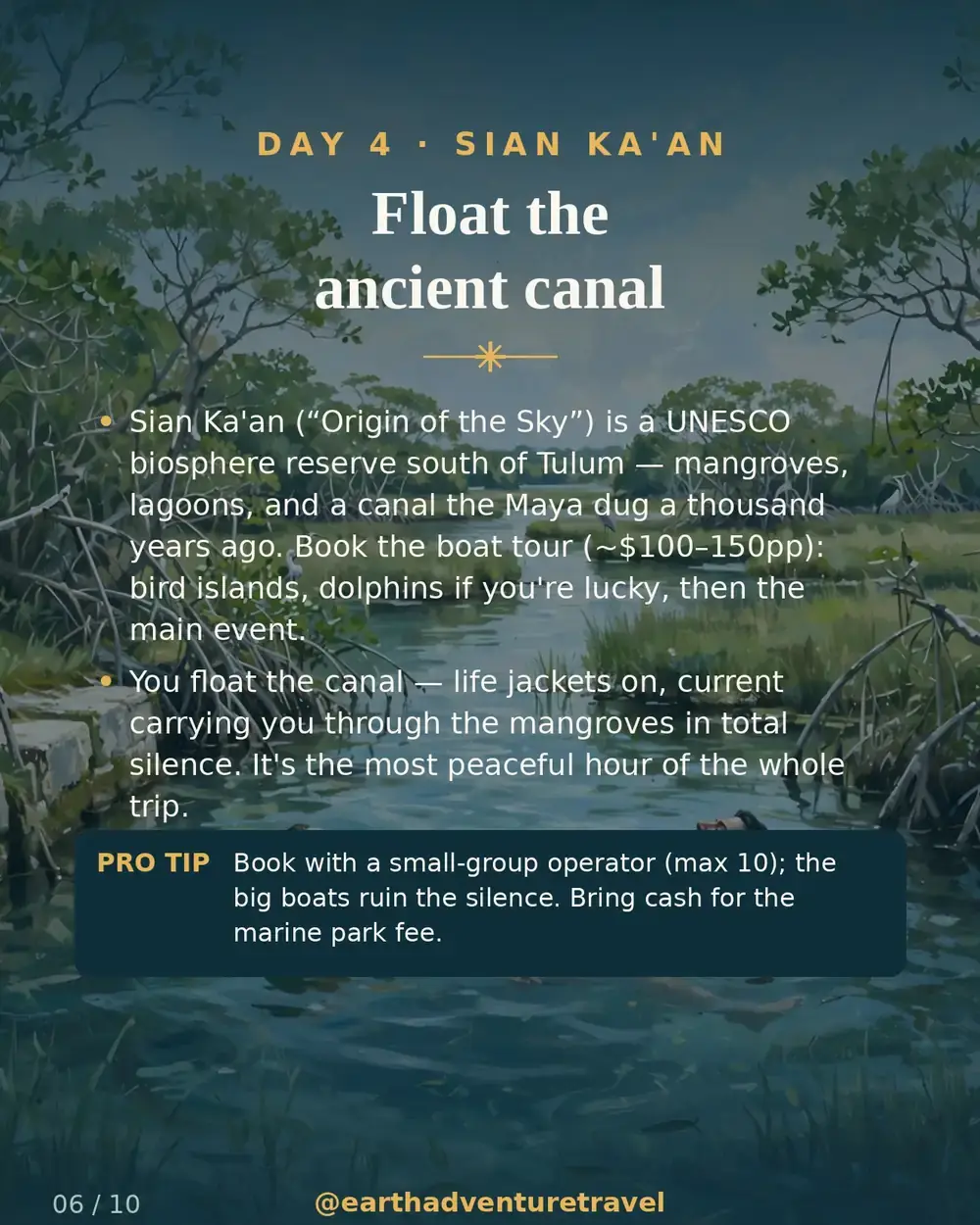
Illustrated day 4: floating the Sian Ka'an canal
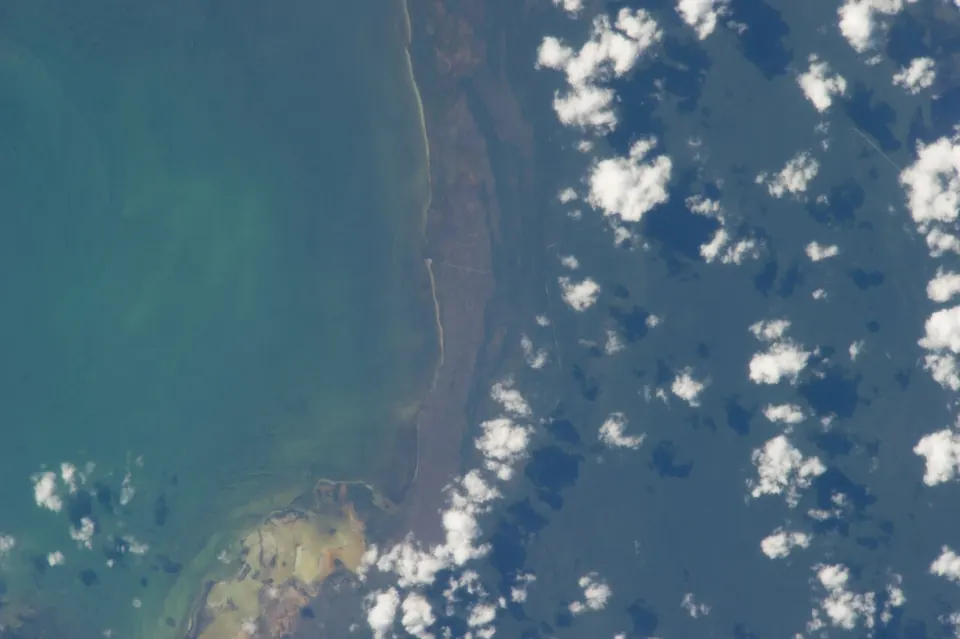
The wetlands of the Sian Ka'an Biosphere Reserve

Sian Ka'an ("Origin of the Sky") is a UNESCO biosphere reserve at Tulum's back door — 1.3 million acres of mangroves, lagoons, and reef. Book the boat tour (~$100–$150 per person, full day with lunch): bird islands dense with herons and roseate spoonbills, dolphins if you're lucky, and water so clear the boat seems to float on air.

Then the main event: the ancient Maya canal. A thousand years ago the Maya dug this channel through the mangroves to connect the lagoons — and today you float it. Life jackets on, arms crossed, the current carrying you in total silence past herons and orchids. It's the most peaceful hour of the whole trip, and the moment couples talk about for years.

Where to stay

Same beach-zone base. You'll be back by 4pm, salt-crusted and blissed out.

Pro tip

Book with a small-group operator (max 10 people) — the big boats ruin the canal's silence, which is the entire point. Confirm the marine park fee is included; if not, bring cash for it. Waterproof phone pouch: non-negotiable.

This is a no-phone hour if you can manage it — the canal deserves your full attention, and the photos never capture the silence anyway. The water is so still that the mangroves reflect perfectly; herons stand motionless as you drift past. Couples consistently call this the most unexpectedly romantic hour of their Tulum trip — not the beach clubs, not the ruins, but floating hand-in-hand through a thousand-year-old waterway. Evening: low-key. The beach, a cold beer, an early night. Tomorrow you climb a pyramid.

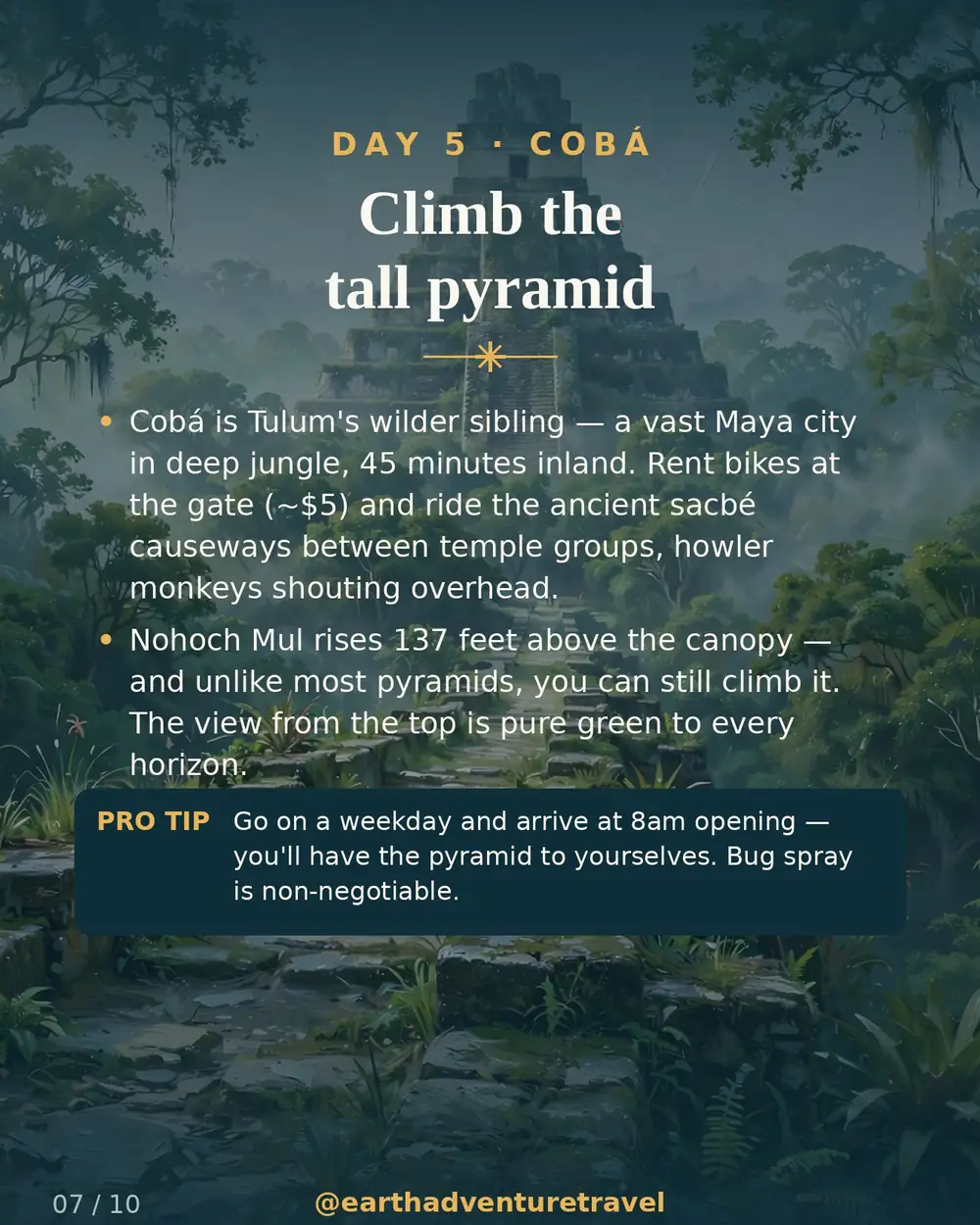
Illustrated day 5: Nohoch Mul pyramid above the jungle
Nohoch Mul pyramid rising above the jungle at Coba
Nohoch Mul pyramid rising above the jungle at Cobá

Cobá is Tulum's wilder sibling — a vast Maya city in deep jungle, 45 minutes inland, where the ruins are still half-swallowed by green. Rent bikes at the gate (~$5) and ride the ancient sacbés (white stone causeways) between temple groups, howler monkeys shouting overhead and motmots flashing turquoise through the trees.

Nohoch Mul rises 137 feet above the canopy — and unlike almost every other major pyramid in Mexico, you can still climb it. The 120 steep steps are a workout; the view from the top is pure green to every horizon, the jungle unbroken in all directions. It's the closest you'll come to seeing the Maya world as the Maya saw it.

Where to stay

Same beach-zone base. The contrast — pyramid at noon, beach by four — is the day's quiet thrill.

Pro tip

Go on a weekday and arrive at 8am opening — you'll have the pyramid to yourselves for the climb. Bug spray is non-negotiable in the jungle; the mosquitoes are legendary. Bring twice the water you think you need.

Entry is about $10; the whole half-day (with bikes and a colectivo or private driver, ~$40) runs under $75 for two — the cheapest big adventure of the trip. The site also hides two small cenotes (Multum Ha and Choo Ha) a short bike ride from the main group; bring your swimsuit and cool off after the climb. Back in Tulum by mid-afternoon: the beach, the book, the nap. Dinner at Kitchen Table in the pueblo — the chef's tasting menu is the best value fine dining on the Riviera Maya, and the garden setting is pure romance.

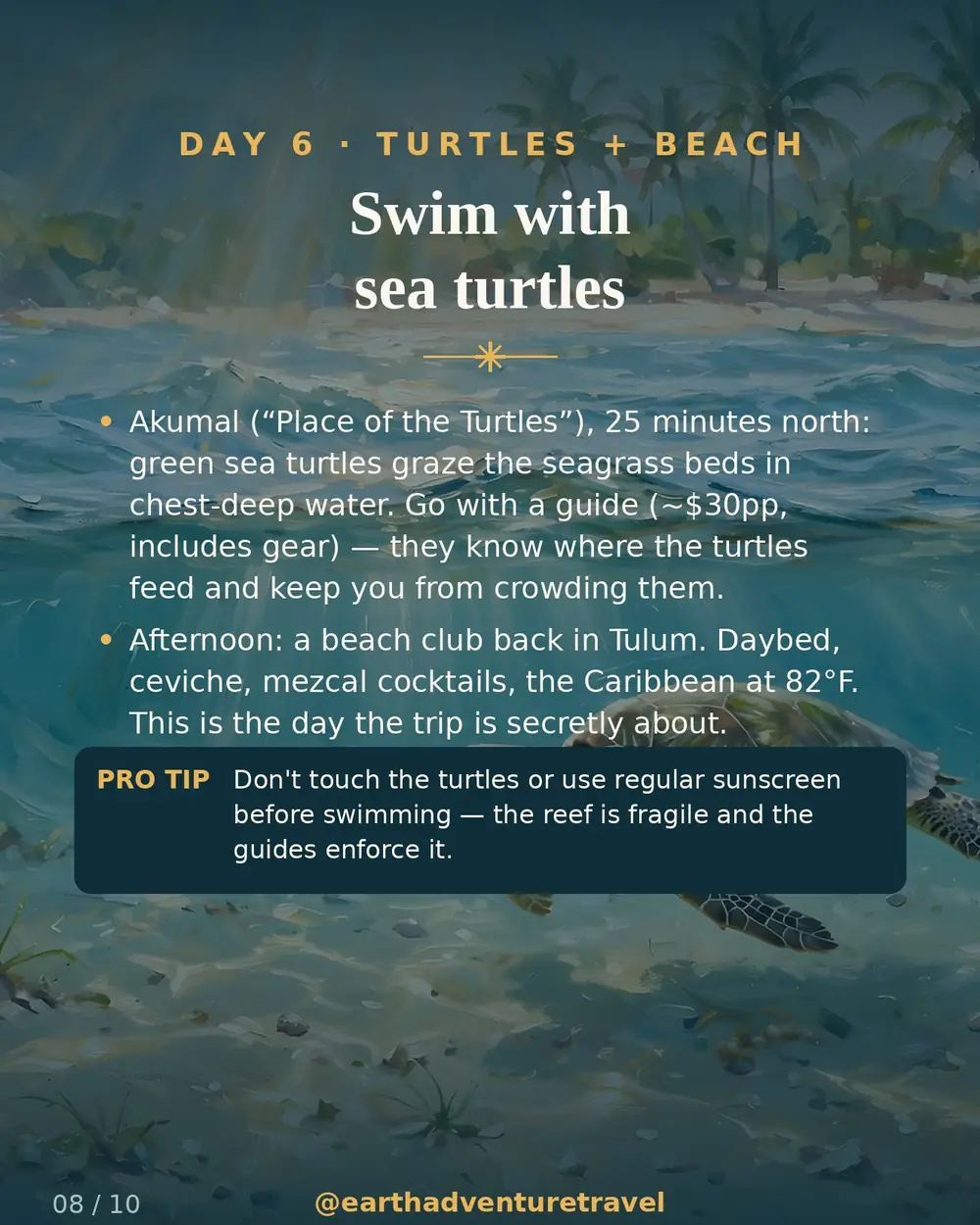
Illustrated day 6: a sea turtle at Akumal
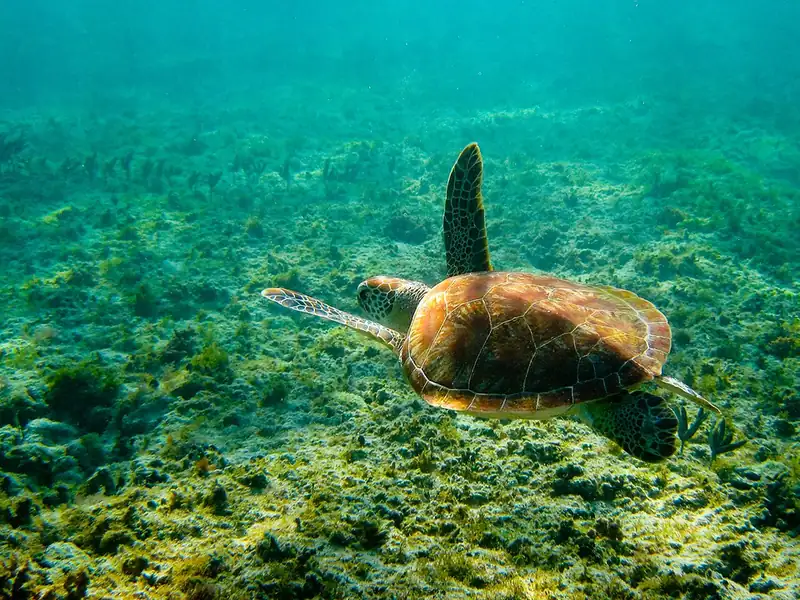
A green sea turtle grazing off Akumal

Akumal ("Place of the Turtles"), 25 minutes north by colectivo: green sea turtles graze the seagrass beds in chest-deep water, close enough to watch their ancient faces work the grass. Go with a guide (~$30 per person, gear included) — they know where the turtles feed, keep the group from crowding them, and the fee supports the local conservation cooperative.

Morning snorkel, then back to Tulum for the afternoon this trip is secretly about: a beach club. Daybed, ceviche, mezcal cocktails, the Caribbean at 82°F. Vagalume and Mia are the current favorites — arrive by 1pm for the best beds, order the aguachile, and don't check the time. Most clubs waive the daybed fee with a minimum spend (~$50–$80 per person), which you'll hit by the second round of cocktails and the shared ceviche platter anyway.

Where to stay

Same beach-zone base. Last full beach day — make it count.

Pro tip

Don't touch the turtles — it's illegal and the guides enforce it. Don't wear regular sunscreen before swimming either; the reef is fragile. The turtles don't care about your photos; float still, and they'll come to you.

This is the day to do nothing beautifully. No ruins, no schedule, no 8am alarm. The turtles in the morning are the only plan, and even that feels like floating — twenty minutes in the water, a dozen turtles, then back to the sand. Order the second cocktail. Stay for the sunset; the beach clubs face west over nothing but water and sky, and the light goes full watercolor. Dinner wherever the sand looks softest — tonight, the trip's rhythm is the only itinerary.

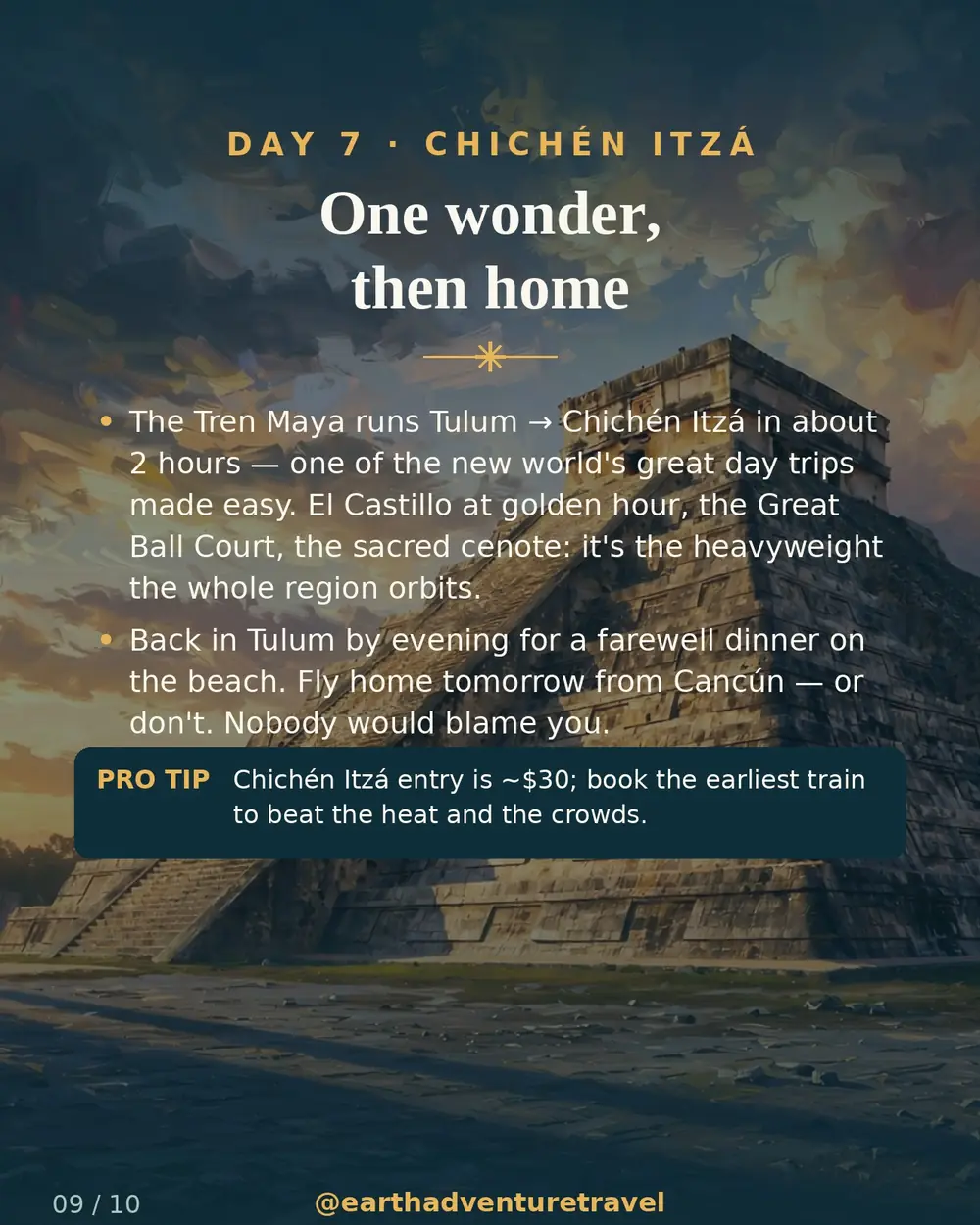
Illustrated day 7: Chichen Itza at golden hour
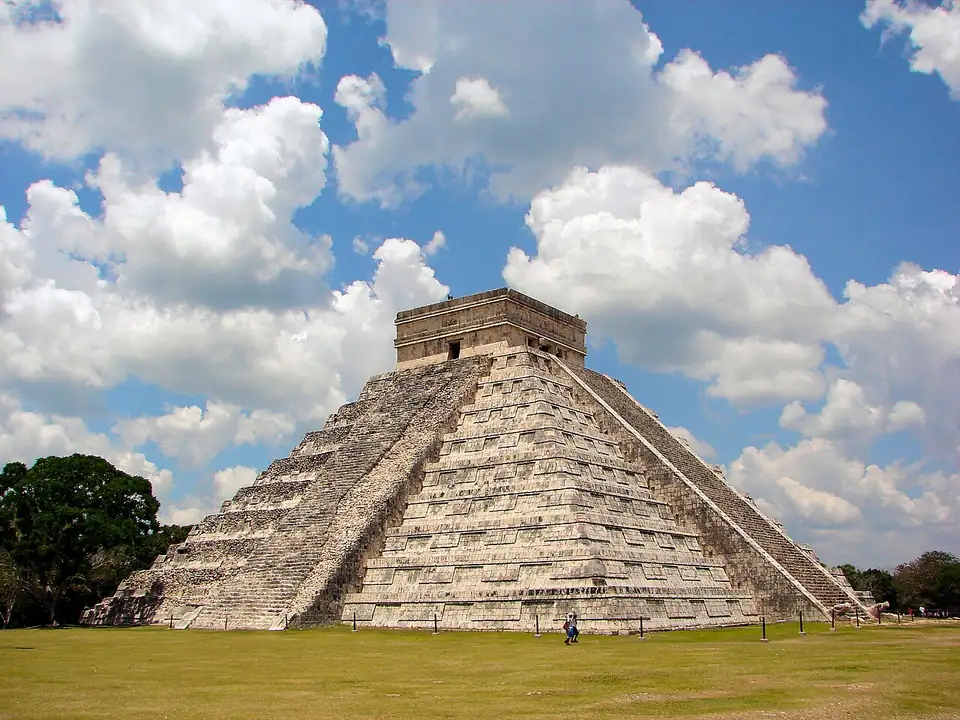
El Castillo at Chichen Itza
El Castillo at Chichén Itzá

The Tren Maya runs Tulum → Chichén Itzá in about 2 hours — one of the new world's great day trips, made easy. El Castillo at golden hour, the Great Ball Court (the largest in Mesoamerica — clap at one end and the echo returns nine times), the sacred cenote where offerings were made. It's the heavyweight the whole region orbits, and it earns the reputation.

Entry is about $30 per person; book the earliest train to beat both the heat and the crowds. A guide at the gate (~$40 for two, split with another couple if you're social) transforms the stones into stories — the equinox serpent, the ball game's stakes, the observatory's alignments.

Where to stay

Same beach-zone base, one last night. Fly home tomorrow from Cancún — or don't. Nobody would blame you.

Pro tip

Buy Tren Maya tickets at the station, not online in advance — they're train-specific and non-refundable, so a delayed morning costs you the fare. The station is 10 minutes from the beach zone by taxi; the shuttle to the ruins runs every 20 minutes.

Back in Tulum by evening for a farewell dinner on the beach — Arca for the splurge (the wood-fired tasting menu is the beach zone's best), bare feet very much encouraged. Seven days: a clifftop city, three cenotes, a silent canal, a climbed pyramid, turtles, and a wonder of the world. Walk the sand one last time after dinner — the moon on the water, the ruins dark on their cliff to the north. The flight home is tomorrow. The salt in your hair is tonight.

"Tulum gives you the ruins and the reef in the same day. The only hard part is choosing which one to dream about."

Rough budget

What it costs for two

Mid-range, per couple, international flights excluded. Prices in USD; peso conversions at ~19 MXN per dollar (October 2026).

Hotels (6 nights, beach zone)$900–$1,500
Food & drink (7 days)$600–$900
Tren Maya + ADO + colectivos$150–$250
Ruins entries (Tulum, Cobá, Chichén Itzá × 2)$110–$150
Cenotes (3 × 2 people)$70–$100
Sian Ka'an tour (× 2)$200–$300
Akumal snorkel + beach clubs (× 2)$120–$200
Total for two$2,800–$4,000

Plan & pack

Planning notes

Book first

Beach-zone hotel (they sell out in high season); Sian Ka'an small-group tour; Chichén Itzá train — buy at the station, day-of.

Sargassum season

May–October can bring seaweed to the beaches. November–April is the clean-water window — one more reason it's the best season.

Rainy-day plan

Afternoon storms pass fast. If a day washes out, the Tulum ruins museum (air-conditioned, at Jaguar Park) and a cooking class in the pueblo fill it well.

Packing

Tulum's turquoise coastline from above
Tulum's turquoise coastline — pack light, you'll live in swimwear

Planning notes

Frequently asked questions

When is the best time to visit Tulum?

November–April: dry days, calm seas, no sargassum seaweed. May–October is hotter, rainier, and can bring seaweed to the beaches. December–March is peak season — book hotels early.

How much does the Tulum ruins entry cost in 2026?

About $14 total for foreign visitors, covering all three fees (archaeological zone, national park, Jaguar Park) after the July 2026 fee overhaul. Cash in pesos only. Hours are 8am–5pm; be there at opening.

Do I need a rental car in Tulum?

No. Bikes cover the beach zone, colectivos (shared vans) run the highway to Akumal and Playa del Carmen for a few dollars, and the Tren Maya handles Chichén Itzá. A rental car adds parking headaches without adding freedom.

How does the Tren Maya work for tourists?

Book at the station (tickets are train-specific and non-refundable, so don't buy before you land). International tourists pay the Tourist tier (~$25 Cancún Airport → Tulum, ~2h to Chichén Itzá) — bring your passport. Free shuttles connect the airport terminals to the train station.

Which cenotes should we visit?

Gran Cenote (easy, beautiful, bikeable), Calavera (jump through the skull — the thrill pick), and Suytun (the famous light shaft, needs a car or tour). Go before 10am for quiet water; the light shafts are best around noon.

Is Sian Ka'an worth the cost?

Yes — the canal float is the trip's most peaceful hour and unlike anything else on the Riviera Maya. Book a small-group operator (max 10); the big boats destroy the silence that's the whole point. ~$100–$150 per person for the full day.

Can you still climb the pyramids?

At Cobá's Nohoch Mul: yes — 120 steep steps, 137 feet, jungle to every horizon. At Tulum and Chichén Itzá: no — climbing is strictly forbidden to protect the structures. Cobá is the climb; plan for it.

Is Akumal's turtle snorkeling ethical?

With a licensed local guide: yes. The cooperative system limits group sizes, enforces no-touch rules, and funds conservation. Don't touch the turtles, don't wear regular sunscreen, and float still — they'll come to you.

Should we stay in the beach zone or the pueblo?

Beach zone for couples — you're steps from the sand, the restaurants, and the sunset, and bikes make it all accessible. The pueblo is cheaper and has better local food, but you'll taxi everywhere. For a 7-day trip, the beach zone's convenience wins.

How do we handle money?

Pesos in cash for ruins, cenotes, colectivos, beach clubs, and markets — card readers fail in the jungle heat. Get pesos from an airport ATM on arrival (decline the conversion offer). Cards work fine at hotels and nicer restaurants.

Official trip checks

Sources & official links

The trip index

Choose the landscape. Then choose the pace.

Every itinerary gives you a realistic route, daily rhythm, planning notes, and the details that make a family trip work.

Use the filters above to see the routes that match.

No exact match—yet.

Clear a filter to see the closest routes already in the library.