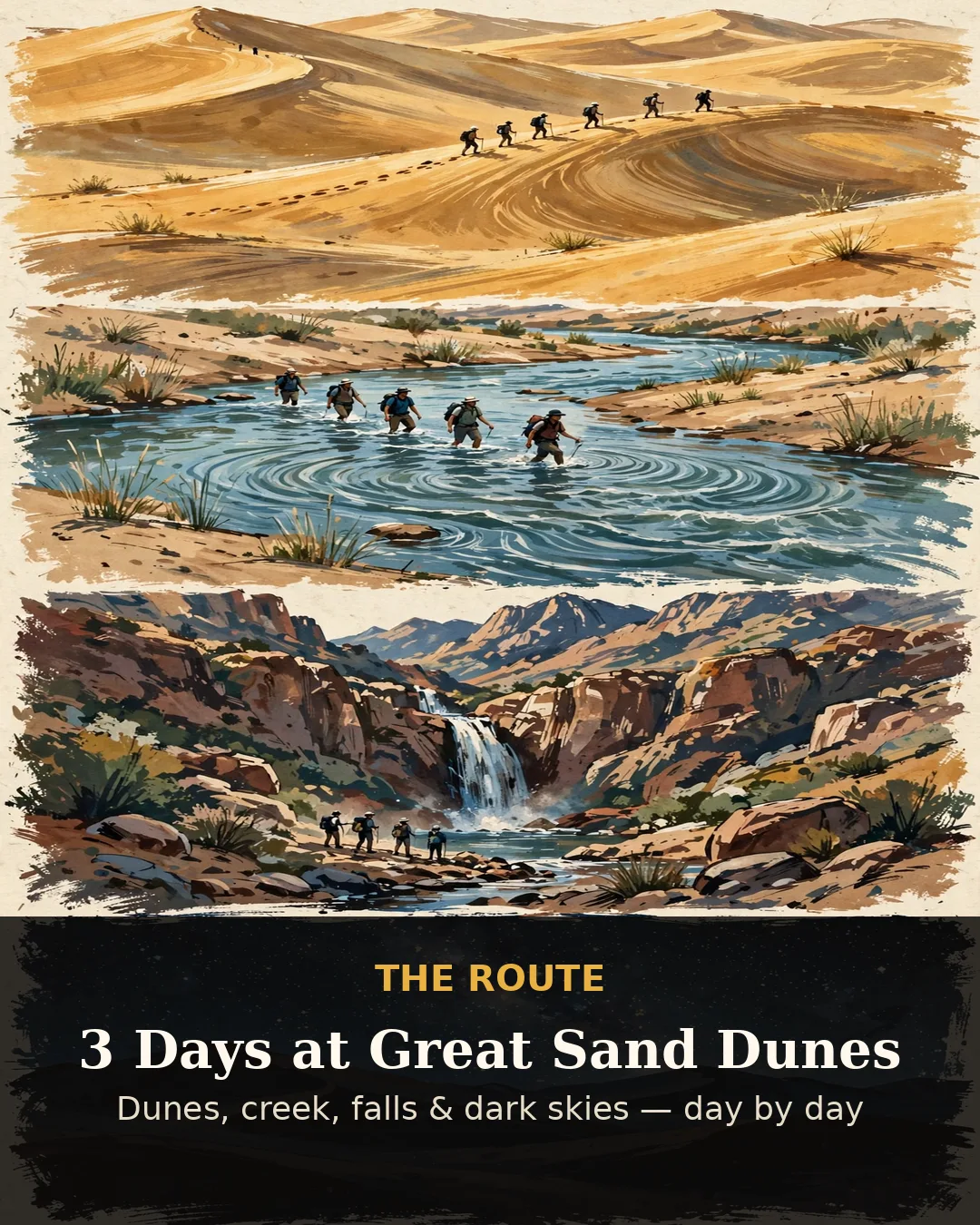
02Sledding · Medano Creek · dark sky
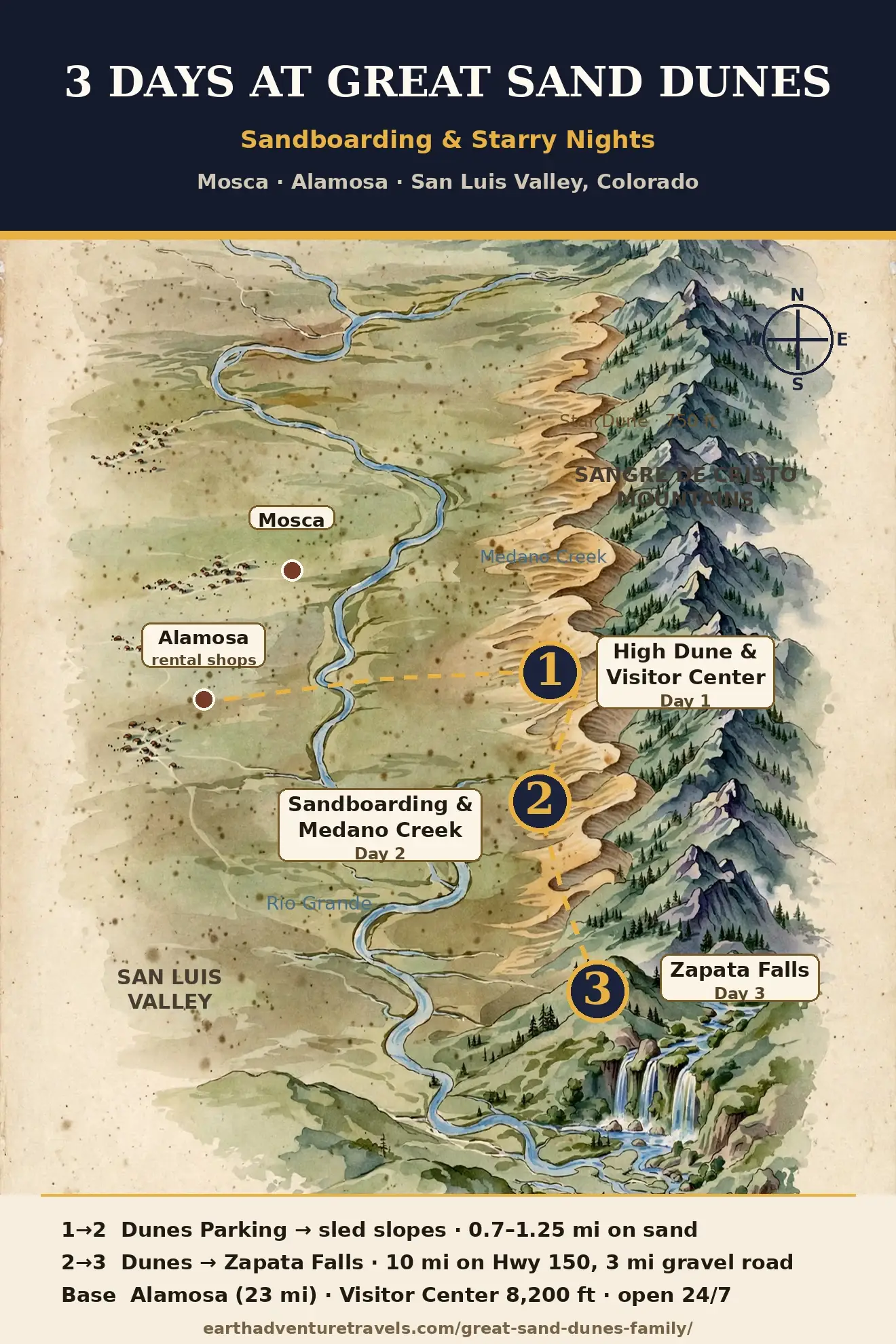
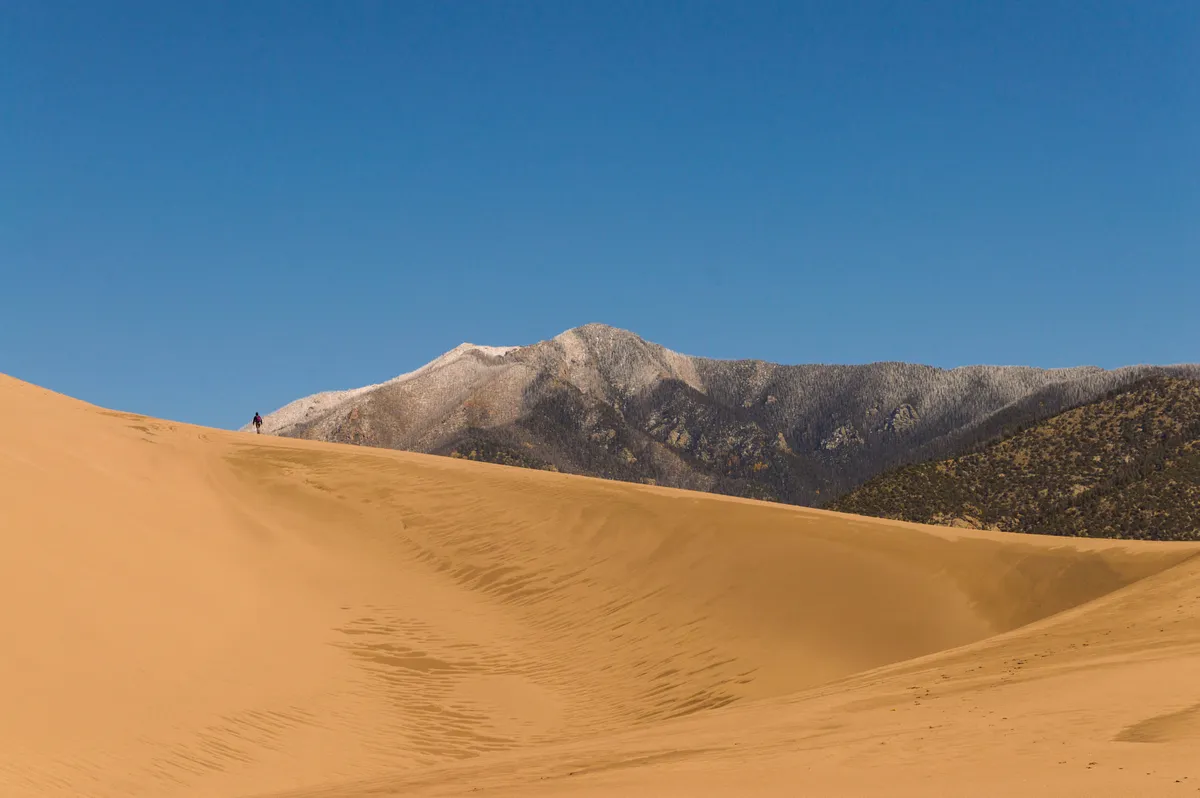
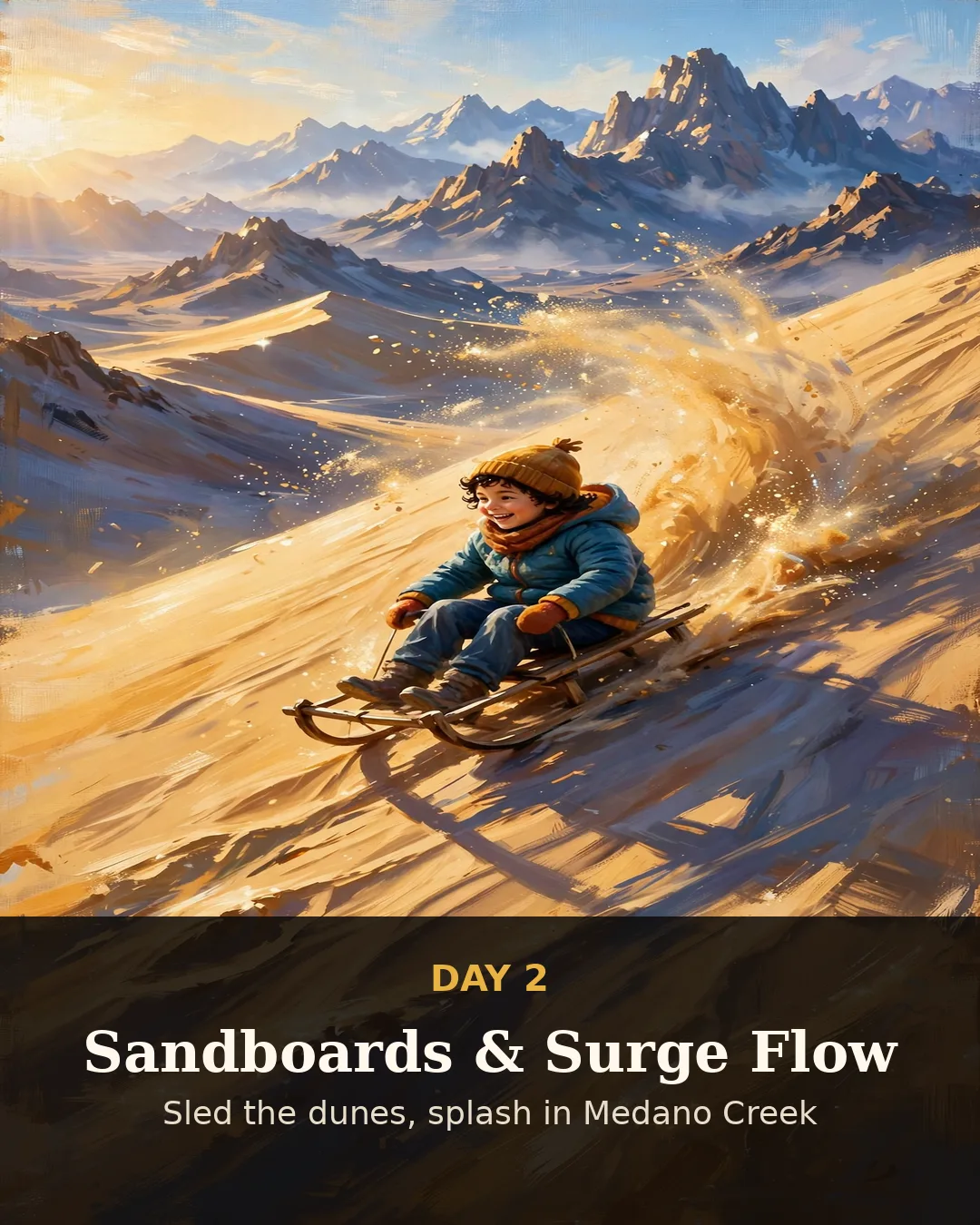
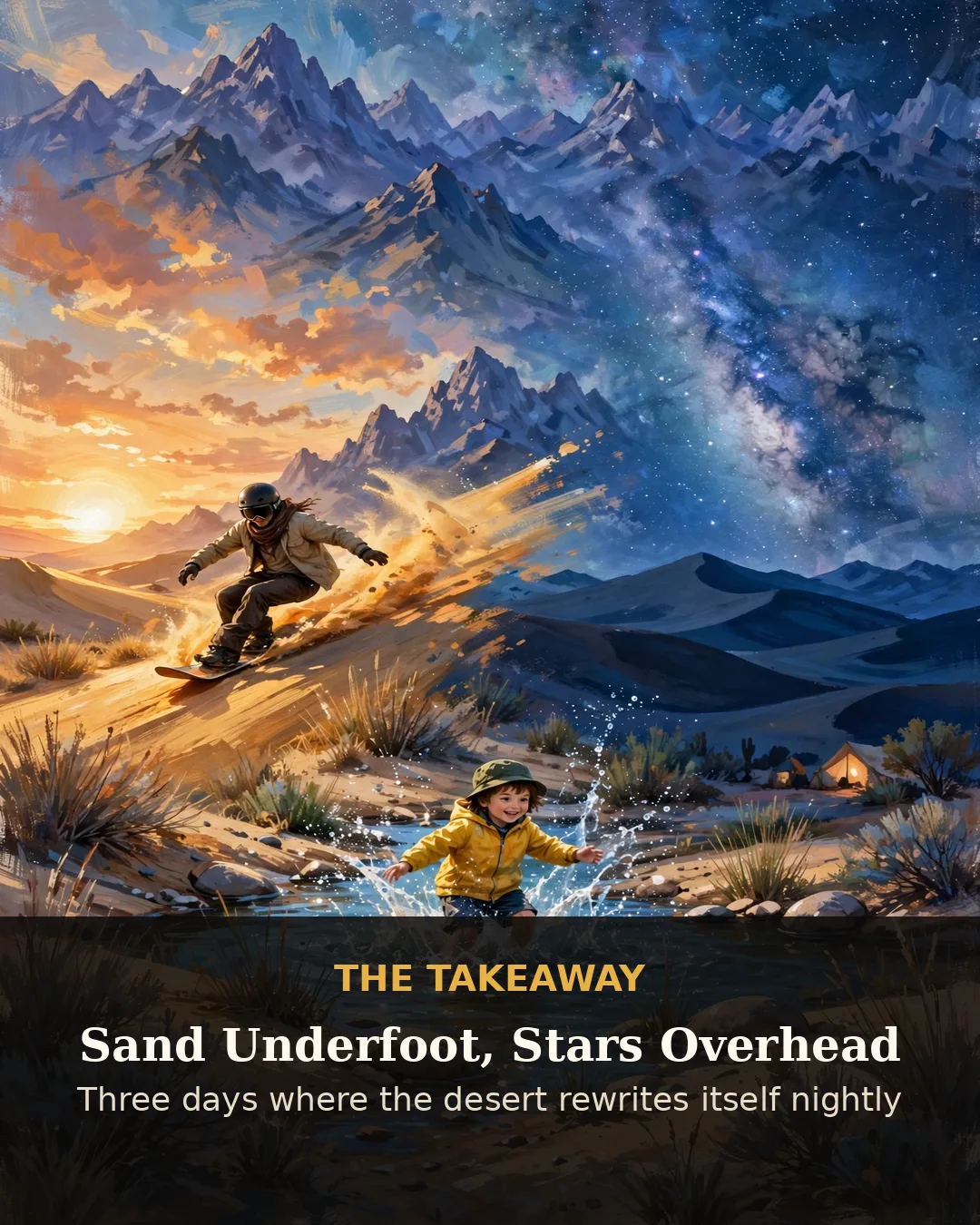
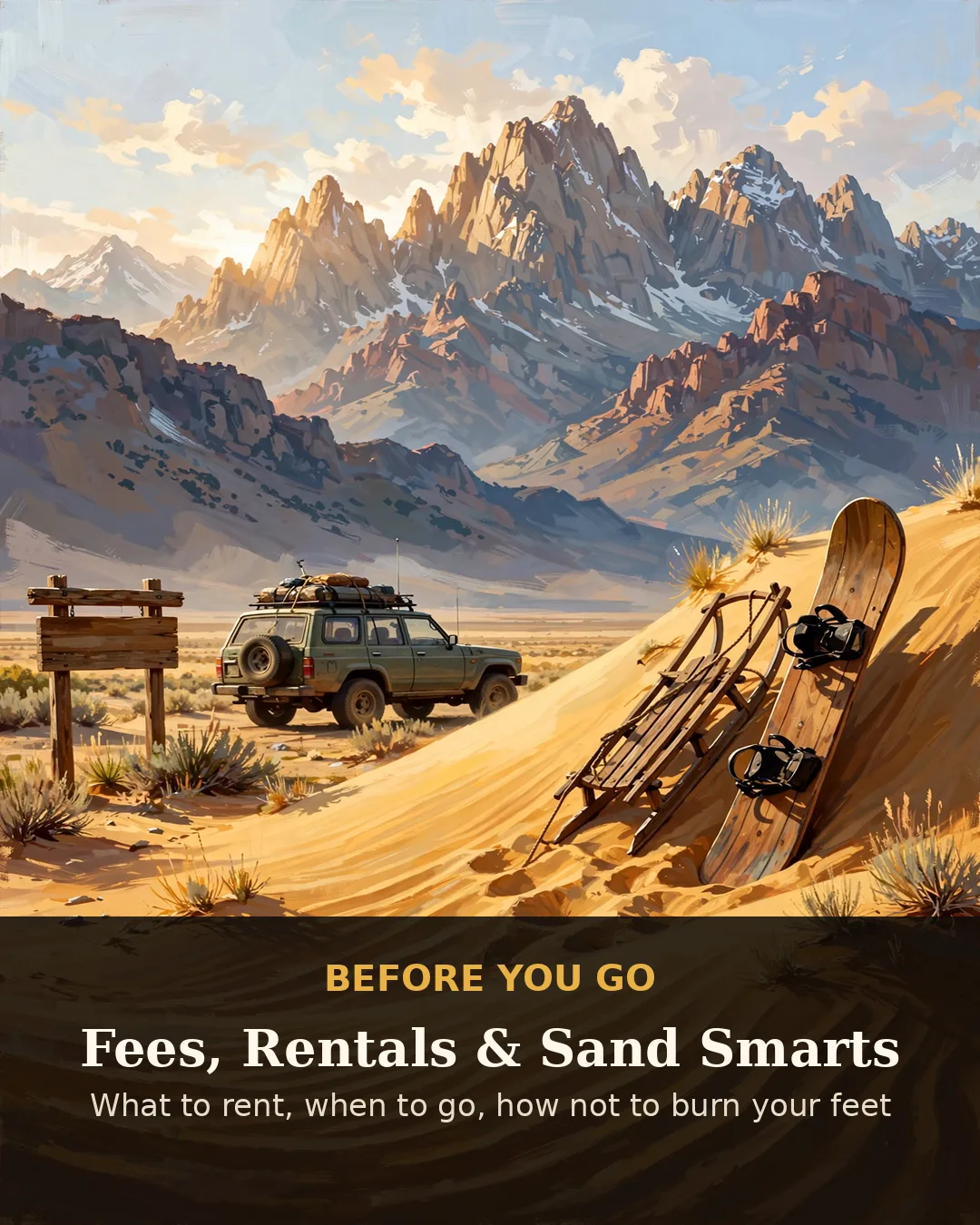
This is the big day, and it runs on sand temperature. The dune surface can reach 150°F on summer afternoons — hot enough to burn bare feet — so you're on the sand before 10 a.m. or after 4 p.m. Hike out to the slopes you scouted yesterday (0.7 miles to the smaller hills, 1.25 miles to the first high ridge). Wax the sled base generously — rental shops include the wax, and a fresh coat makes the difference between gliding and plowing. Sleds beat boards for kids: you sit, steer with your feet, and wipe out laughing. Sandboards are fun for teens and athletic adults, but they demand real balance, and rental bindings don't adjust to most shoes — riders usually go in socks.
How to pick a slope
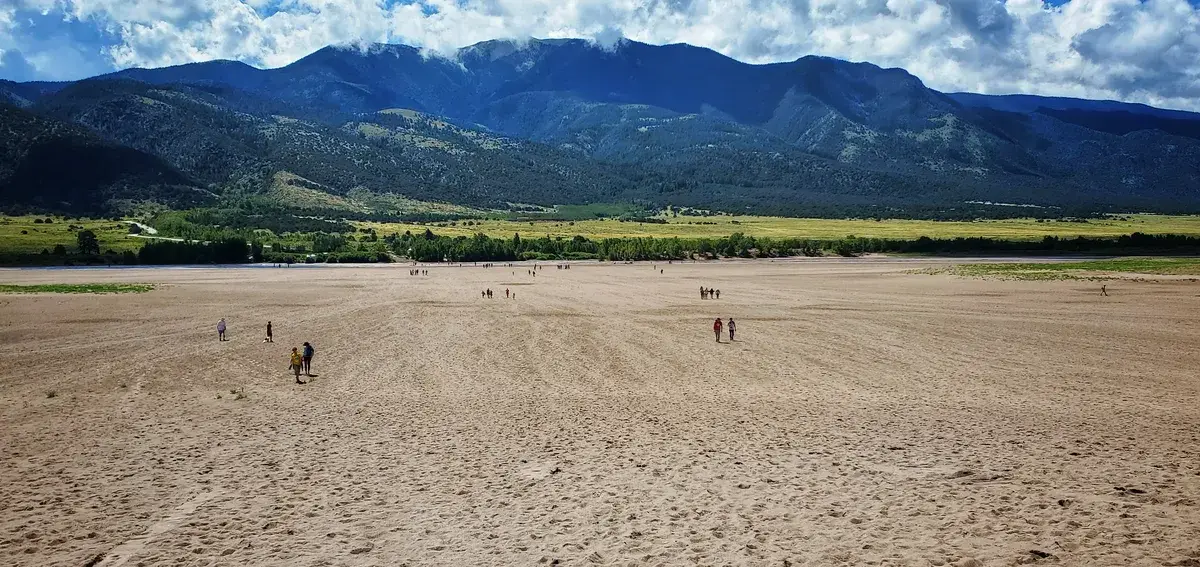
Look for a dune face with at least a 20-degree pitch and a clean runout — no vegetation at the bottom (sledding is allowed anywhere on the open sand, but stay off vegetated areas). The classic beginner move: climb halfway up a slope, sit on the sled, and test the speed before committing to the top. One adult should always be the designated climber-back-up-the-hill — kids will want "one more run" approximately forty times. Bring a small backpack with water and snacks; the round trip to the good slopes is 2–3 hours with a family.
- Best sledding: morning (cool, firm sand) or late afternoon after a rain shower — wet sand is faster
- What NOT to bring: snow sleds, snowboards, cardboard, and plastic saucers — they drag instead of sliding on dry sand
- Tired-kid option: the small slopes near the parking area are plenty for kids under 6
Midday: Medano Creek
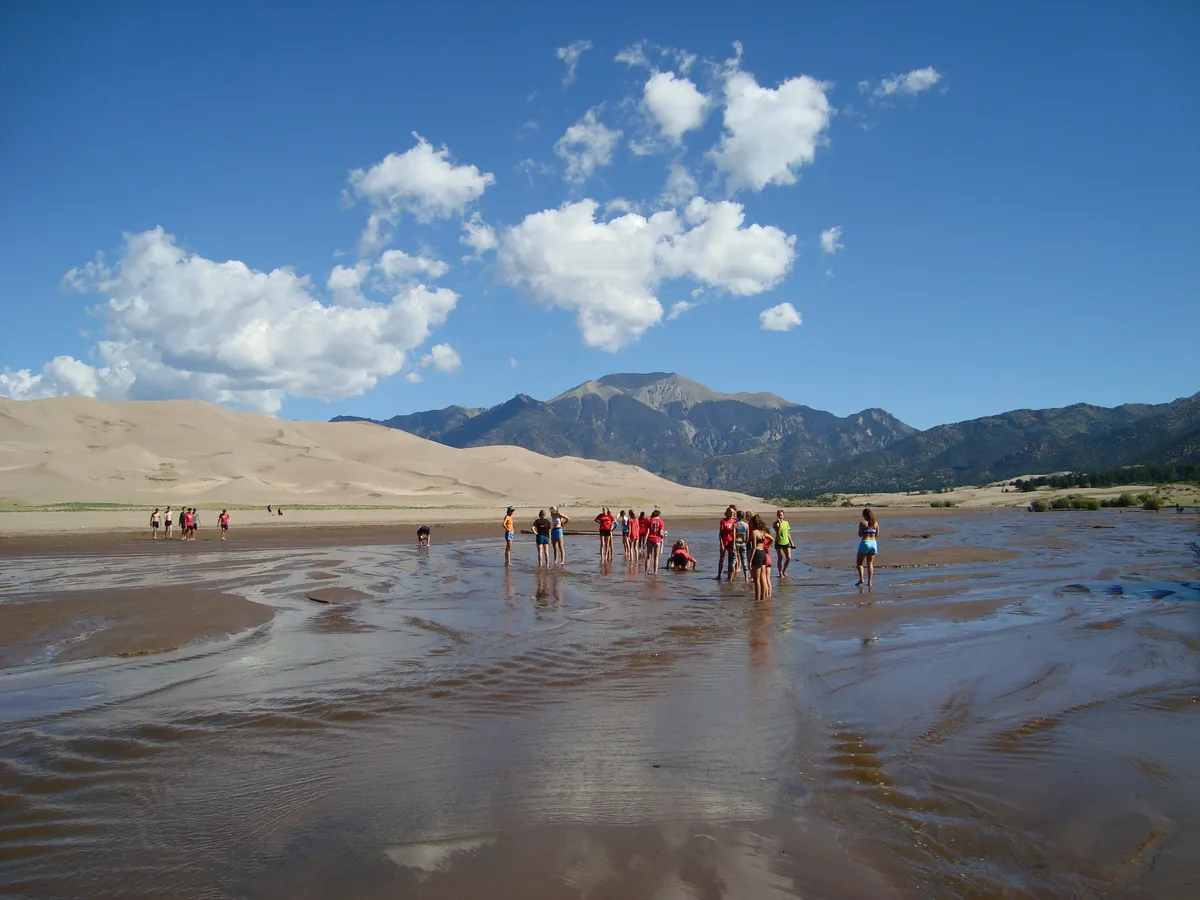
When the creek is flowing, it's the best natural water park in Colorado. Medano Creek is seasonal — fed by Sangre de Cristo snowmelt, it usually reaches the main parking area in April, peaks in late May to early June, and is often dry by August. In an average or wet year, the famous "surge flow" sends knee-high waves pulsing down the streambed — kids float them on inflatable toys for short stretches. Check the NPS Medano Creek conditions page before counting on it; in dry years (like 2026) the creek may barely reach the parking area at all. If it's flowing: swimsuits on, water shoes on, and let the kids splash. The water starts snowmelt-cold but warms as it spreads across the sun-baked sand.
Night: the dark sky
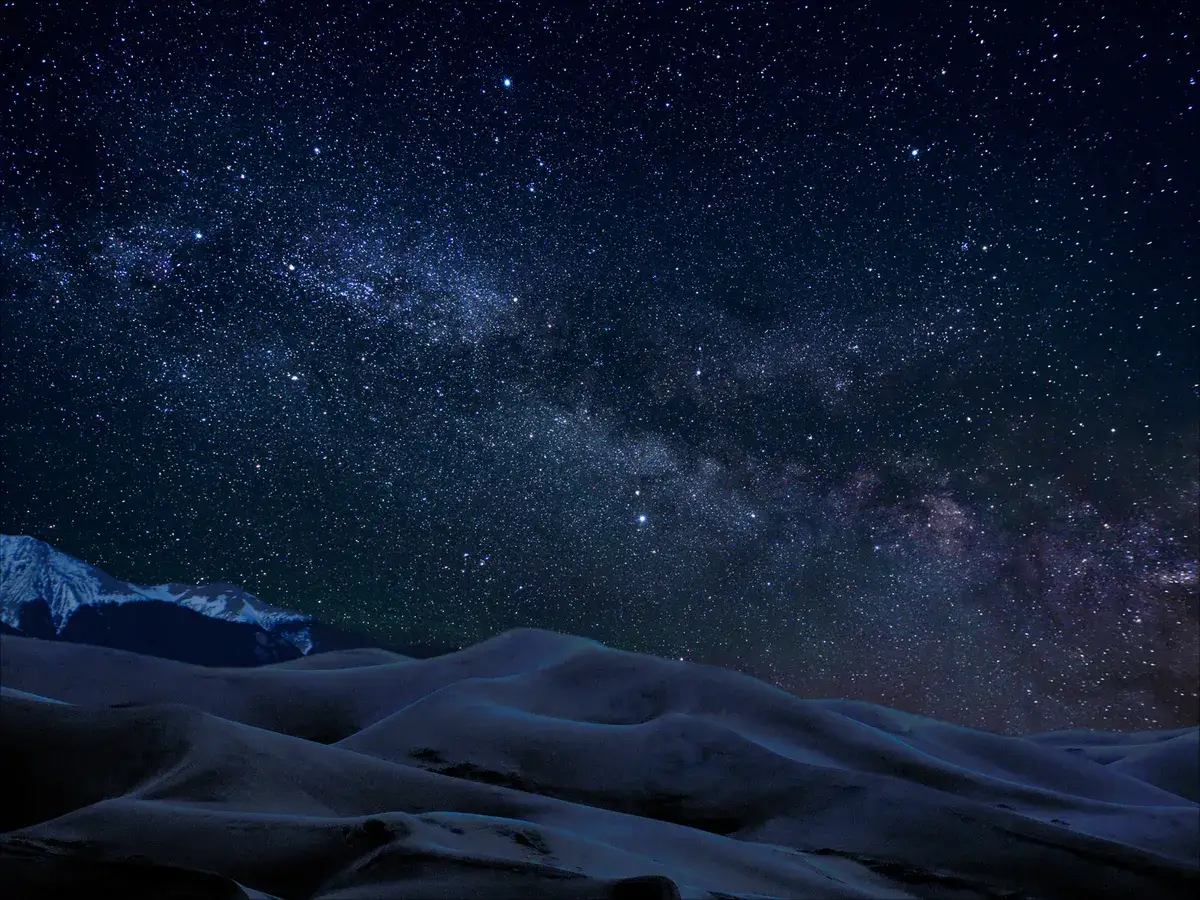
Great Sand Dunes is an International Dark Sky Park, and this is the payoff. On a clear, moonless night, walk a few minutes into the dunefield from the parking area, lie back on the still-warm sand, and give your eyes 20 minutes to adjust — the Milky Way is bright enough to cast a shadow. Bring a headlamp with a red-light mode (white light kills night vision for everyone), warm layers (desert nights drop fast), and note your route back — the dunes look identical in the dark. Check the moon phase before the trip: a full moon washes out the stars. The park occasionally runs night-sky programs; check the schedule at the Visitor Center.
Where to stay
Same Alamosa base — or tonight's the night to try Piñon Flats Campground if you reserved it, because falling asleep under this sky is the whole point. If you're in Alamosa, Milagros Coffee House does breakfast burritos worth waking up for, and San Luis Valley Brewing Company is the easy family dinner. Stock up on picnic supplies at the Alamosa Safeway — there's no food inside the park.
Bad-weather plan
Rain is actually a gift for sledding — wet sand is faster — but lightning is a hard stop: get off the dunes immediately. If Medano Creek is dry, pivot to the Dunes Overlook Trail (2.7 miles round trip, 472 feet of gain from Piñon Flats) for the best panoramic view of the dunefield, or drive the Medano Pass Primitive Road as far as your vehicle allows (high-clearance 4WD only past Castle Creek).
Sled: before 10 a.m. or after 4 p.m. · Sand hits 150°F midday · Creek: seasonal, check NPS · Night: headlamp + red light, 20 min for eyes to adjust
The wax trick: Re-wax the sled base every 4–5 runs — the sand strips it fast. A freshly waxed sled on cool morning sand is twice as fast as a dry one at noon. The rental shop will show you how; it takes 30 seconds.