Summer/FallSoloCherry Springs

3 days · summer/fall in Pennsylvania's dark-sky country

A Solo Stargazer's Weekend at Cherry Springs

Last verified: October 2026How we verify

Three days built around the darkest sky you can drive to east of the Mississippi: Cherry Springs' Gold-tier night sky, Pine Creek Gorge by day, and two long nights under the Milky Way. Built...

Last verified: October 2026 · How we verify

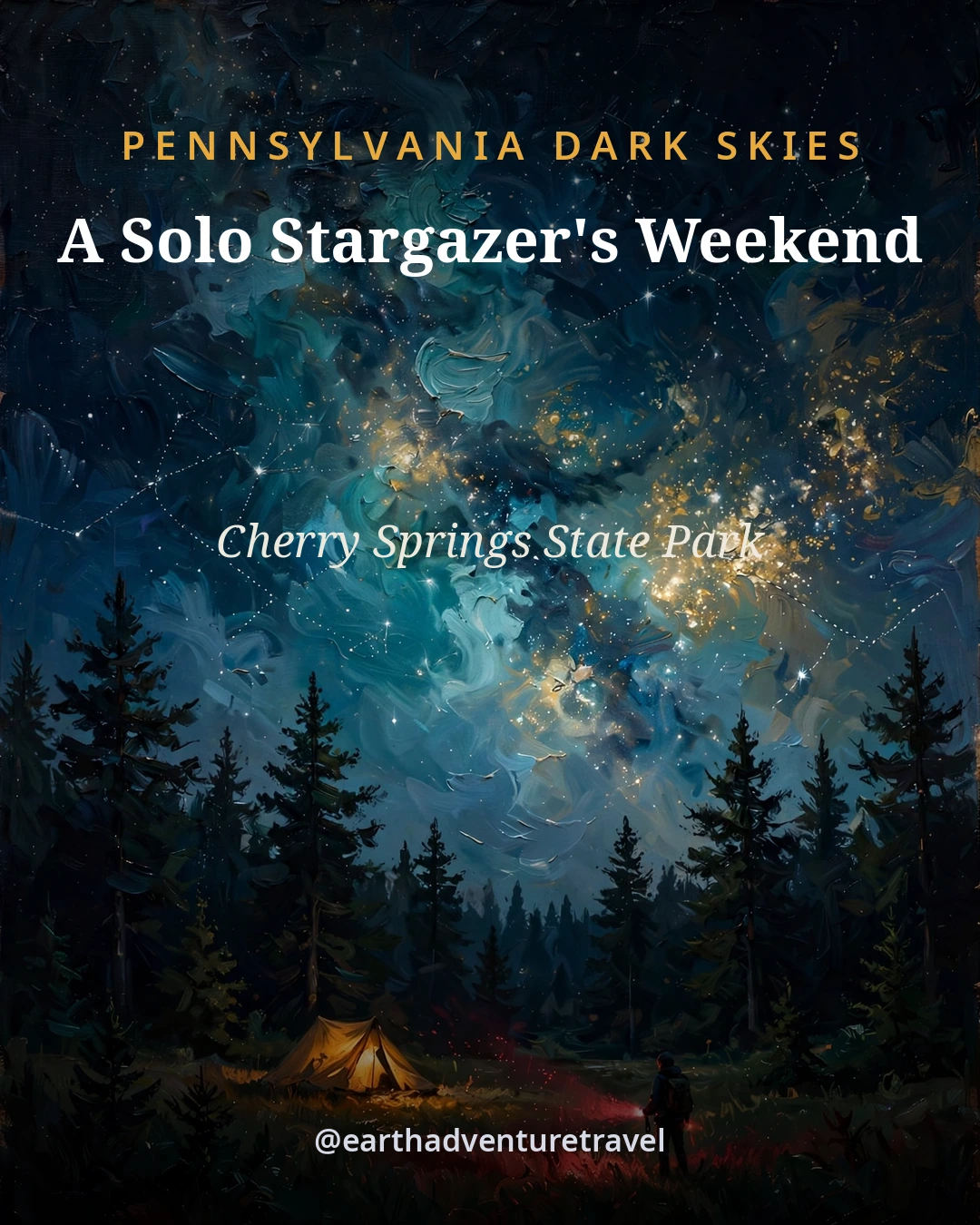
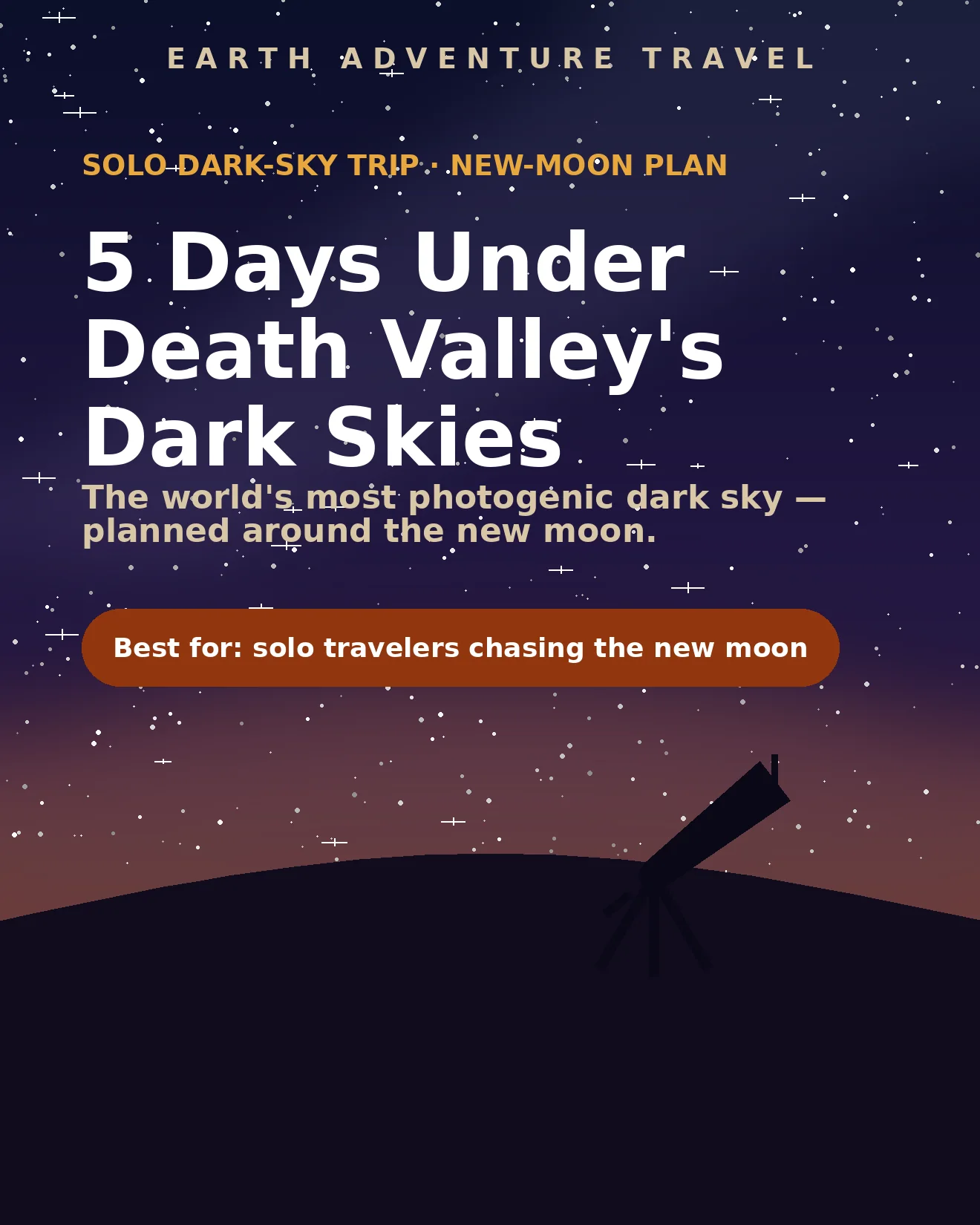
Illustrated Cherry Springs dark sky travel guide cover
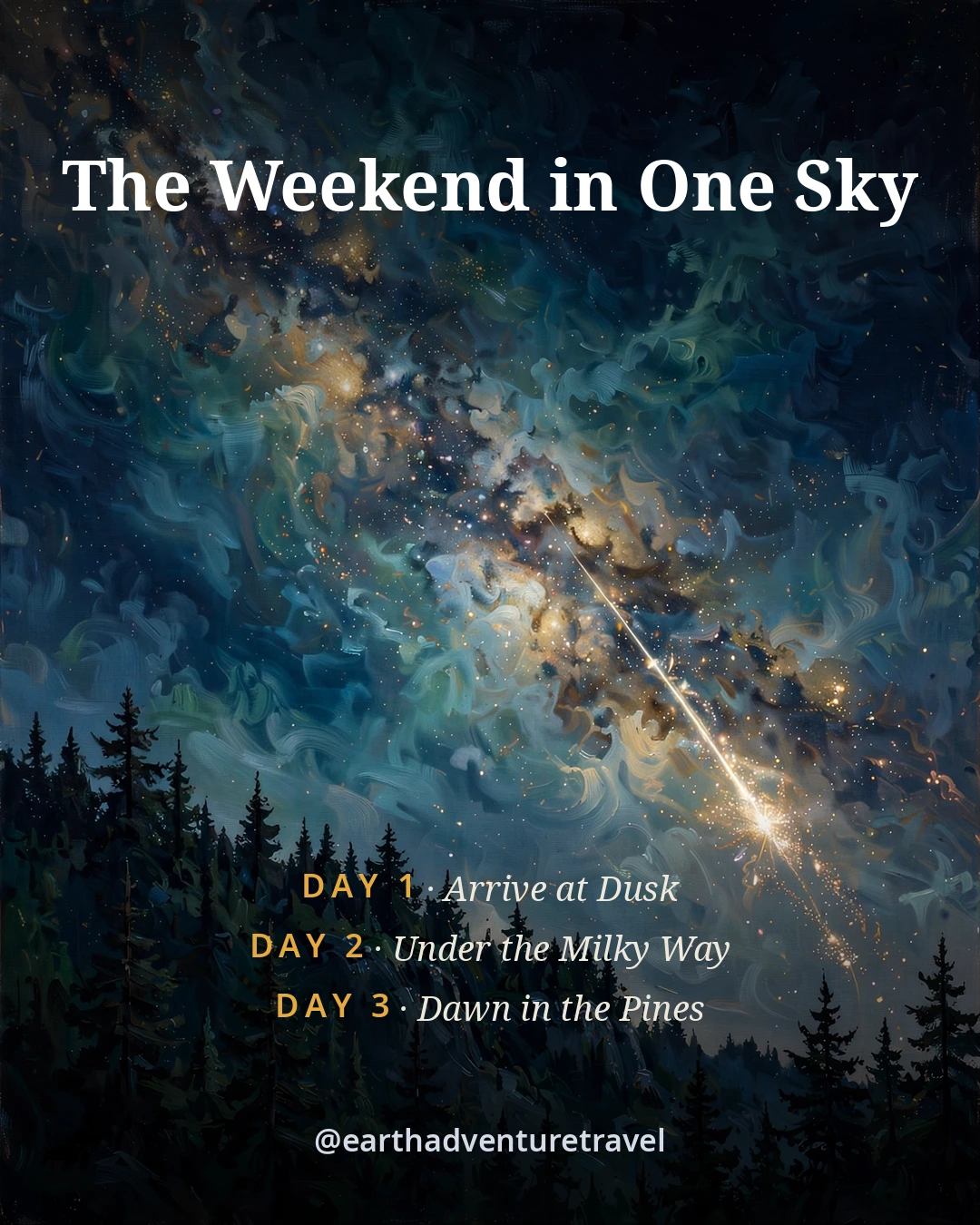
Original itinerary artwork

The trip in 60 seconds

Rough budget · solo traveler

The range below is a planning estimate, not a quote. Lodging is the biggest variable — book Coudersport B&Bs early for new-moon and Perseid weekends. Pennsylvania state parks charge no entrance fee.

$350–$600
2 nights · lodging, food, gas · flights excluded
Lodging
$160–300 · 2 nights, Coudersport B&B or motel
Park
$0 · no state park entrance fee; rustic campground sites extra
Food
$80–150 · diners, groceries, thermos coffee
Gas
$60–120 · regional driving from the Northeast
Buffer
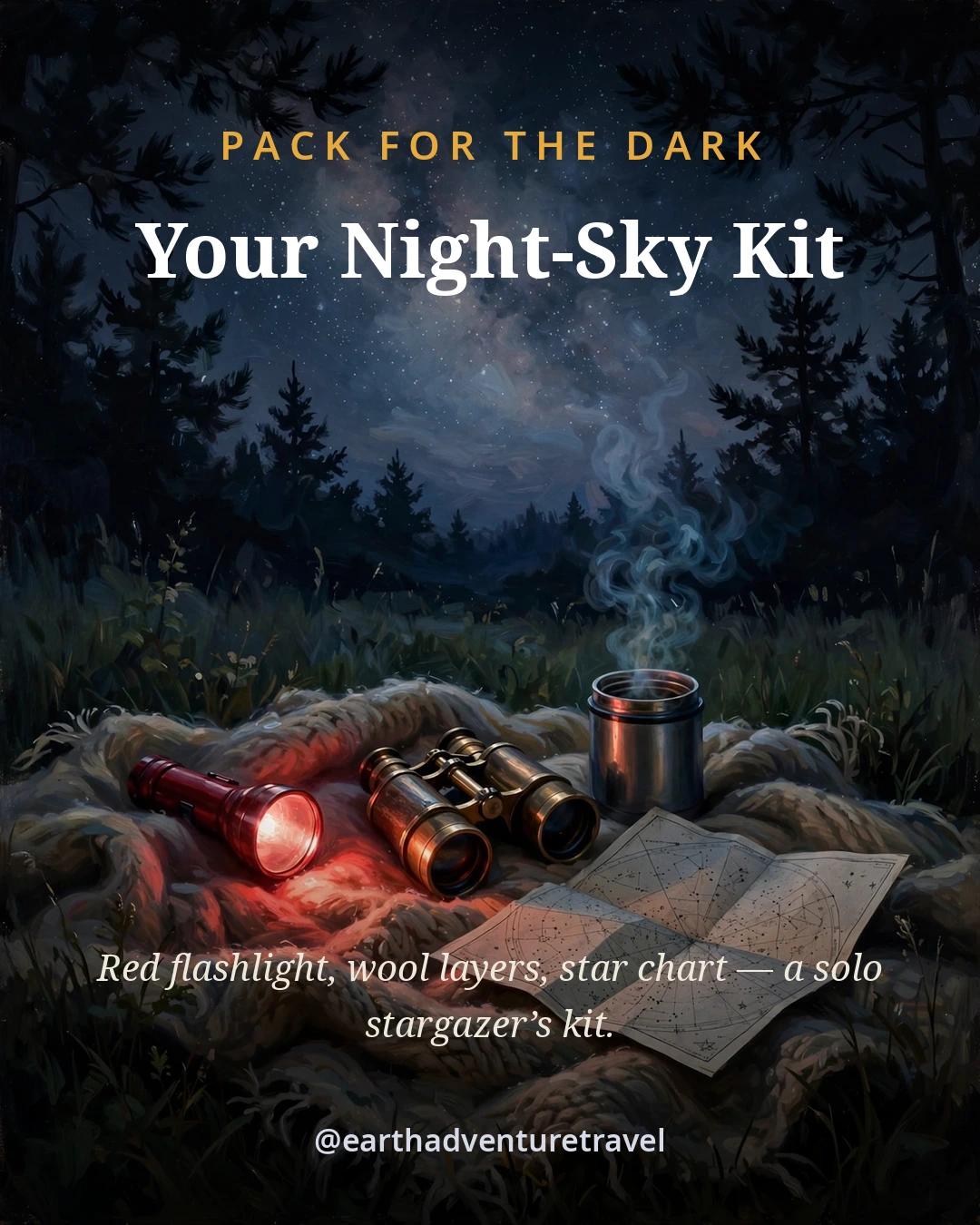
red flashlight + binoculars + star chart

The route

Three nights at the edge of the visible universe.

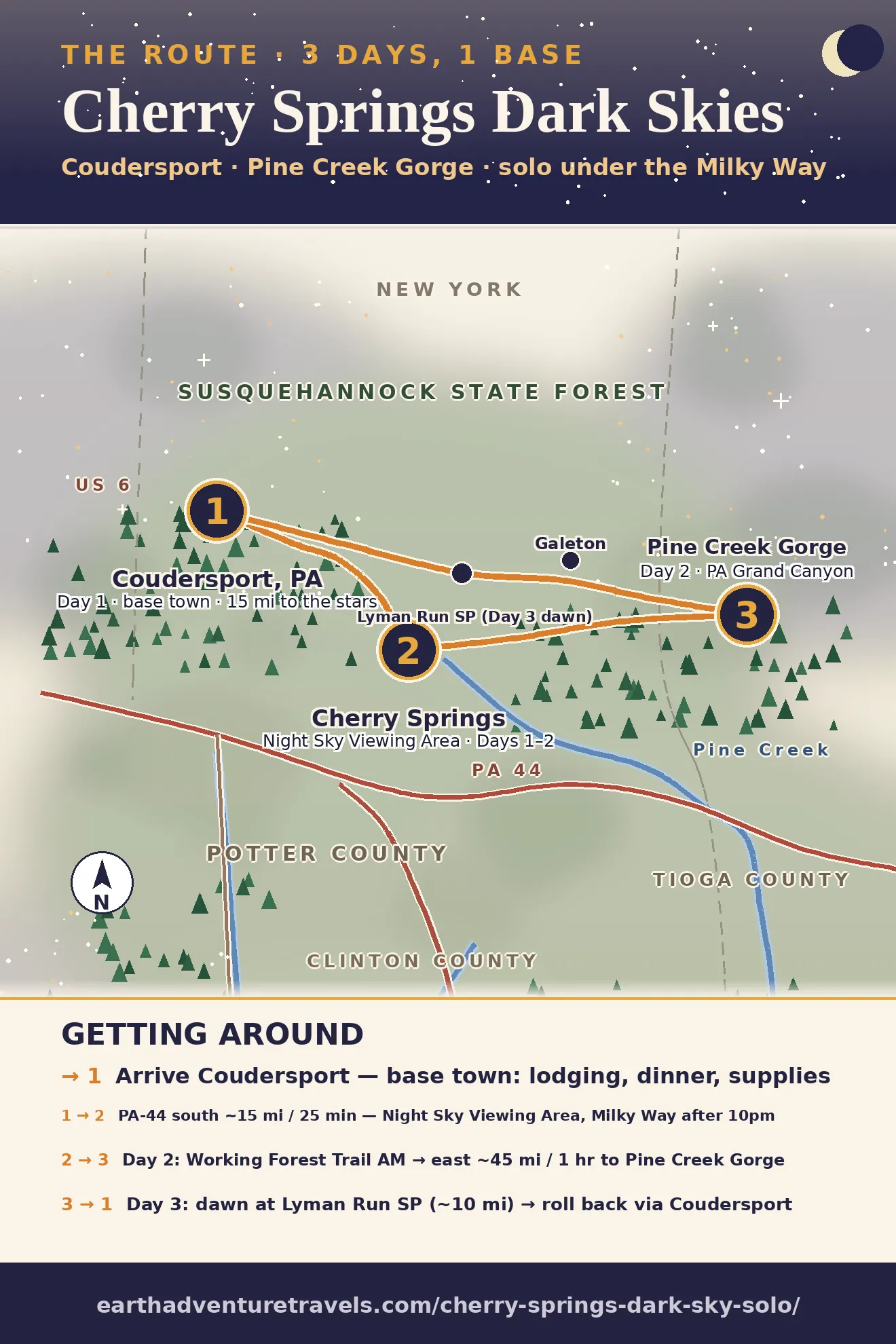
Base in Coudersport, fifteen minutes north of the park. Days are for forests and gorges; nights belong to the sky. Build each night around the boldface session — everything else is optional. Check the Clear Sky Chart before you commit to a date, and give yourself two nights: weather moves fast over Potter County.

Illustrated route map: three days around Cherry Springs State Park, Coudersport, and Pine Creek Gorge in north-central Pennsylvania
Saveable route map · three days in Potter County, PA

The idea

The darkest sky you can drive to.

Here’s the direct answer: three days at Cherry Springs State Park in north-central Pennsylvania, timed to the new moon in August — Perseid meteors streaking overhead, the Milky Way core blazing by midnight, and nights warm enough to lie out for hours. Cherry Springs is a Gold-tier International Dark Sky Park at Bortle Scale 2: the darkest stargazing you can reach by car east of the Mississippi, 82 acres of meadow ringed by 262,000 acres of state forest that swallows every last photon of city light.
Going solo here isn’t a compromise; it’s the point. No one talks through the shooting stars. You set your own hours — sleep in after a 2 a.m. sky session, linger at a gorge overlook as long as you want, eat dinner when you’re hungry. The Night Sky Public Viewing Area is a supervised field full of fellow stargazers, so you’re alone under the sky without ever being alone in the dark. Days are gentle by design: forest trails, the PA Grand Canyon, small-town diners — everything paced to leave you rested for the long nights that are the whole reason you came.

Day-by-day summary

Day-by-day itinerary

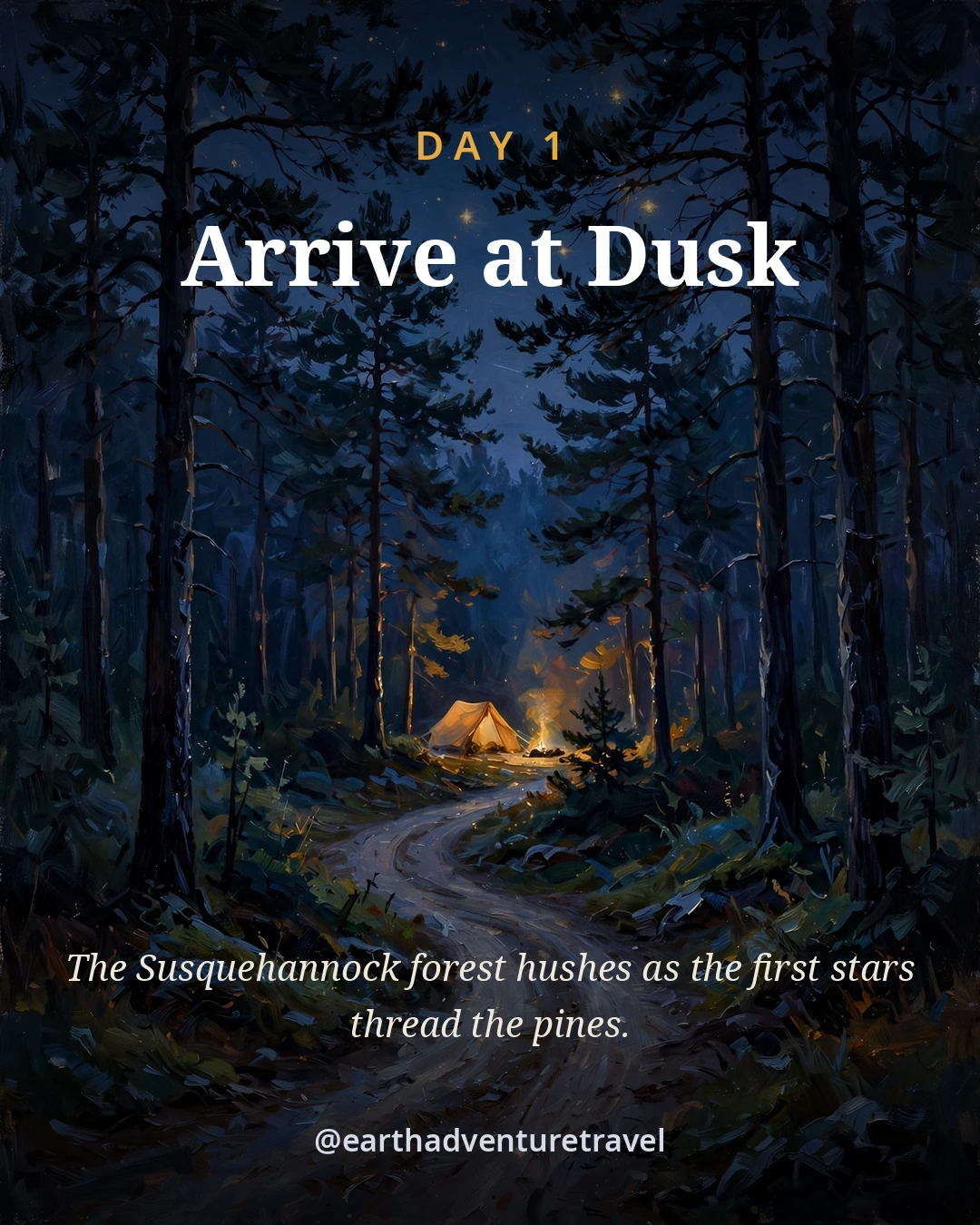
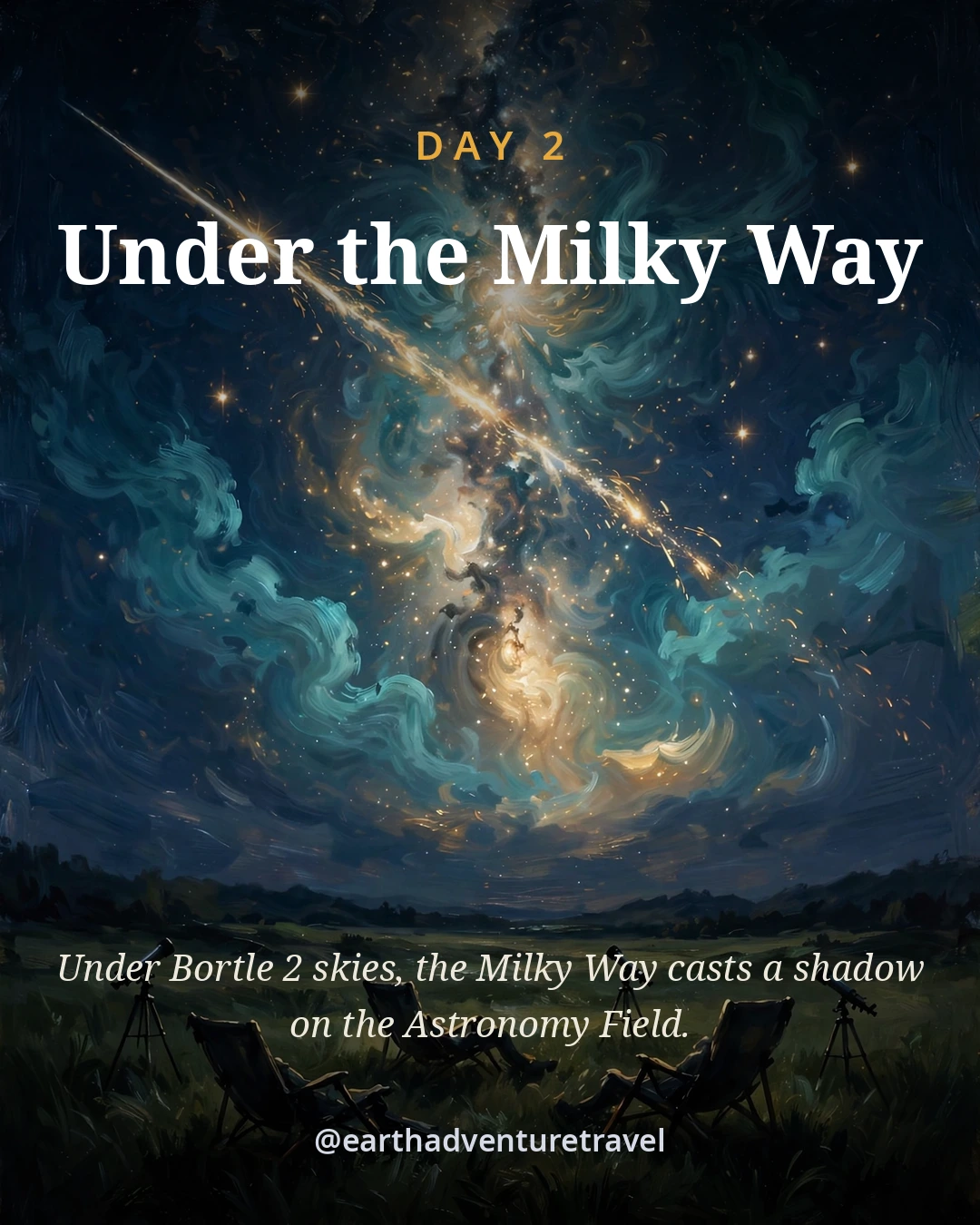
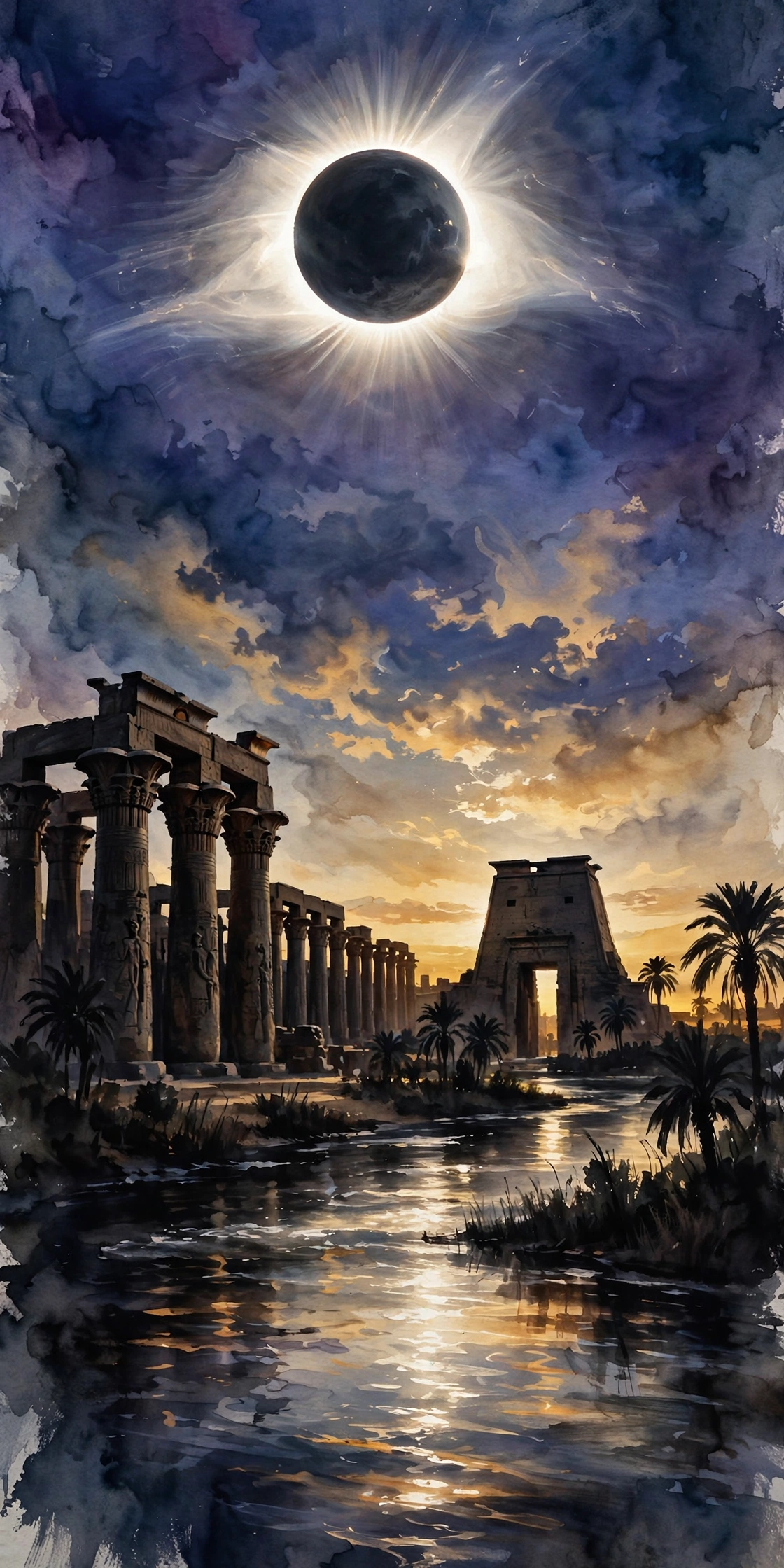
Under a Bortle 2 sky, the Milky Way stops being a photograph and becomes a place — a river of light you could almost wade into, with one quiet traveler standing on its bank.

Saveable recap graphic for the three-day Cherry Springs dark sky solo route
Saveable route recap · three days at Cherry Springs
2Bortle scale · Gold-tier dark
1solo traveler
2,300ft · park elevation
0state park entrance fee

The people behind the plans

Who is Earth Adventure Travel?

We build routes for real life — wrangling kids, spanning generations, or heading out solo — and check every detail against official sources so the plan holds up when you get there.

Learn About Us

Before you go

Pack for the dark. Book the B&B early for new-moon weekends.

These are planning ranges, not quotes. August new moon is the sweet spot — the same trip under a full moon is a different, dimmer experience. Hours and prices should be checked again before departure.

What earns space

  • Red flashlight or headlamp — white light kills night vision for 15+ minutes and is banned in the viewing area
  • Warm layers — 2,300 ft elevation means nights run 15–20°F cooler than the day, even in August
  • Reclining camp chair or thick blanket — you’ll be looking up for hours
  • Binoculars (10×50 ideal) — star clusters and nebulae for under $100
  • Printed star chart or Sky Guide app on night mode — the park’s backlit sky map covers summer constellations
  • Thermos + snacks — there’s nothing open near the park after dark
  • Bug spray for dusk — the meadow belongs to mosquitoes until full dark
  • Downloaded offline maps — cell service dies well before the park
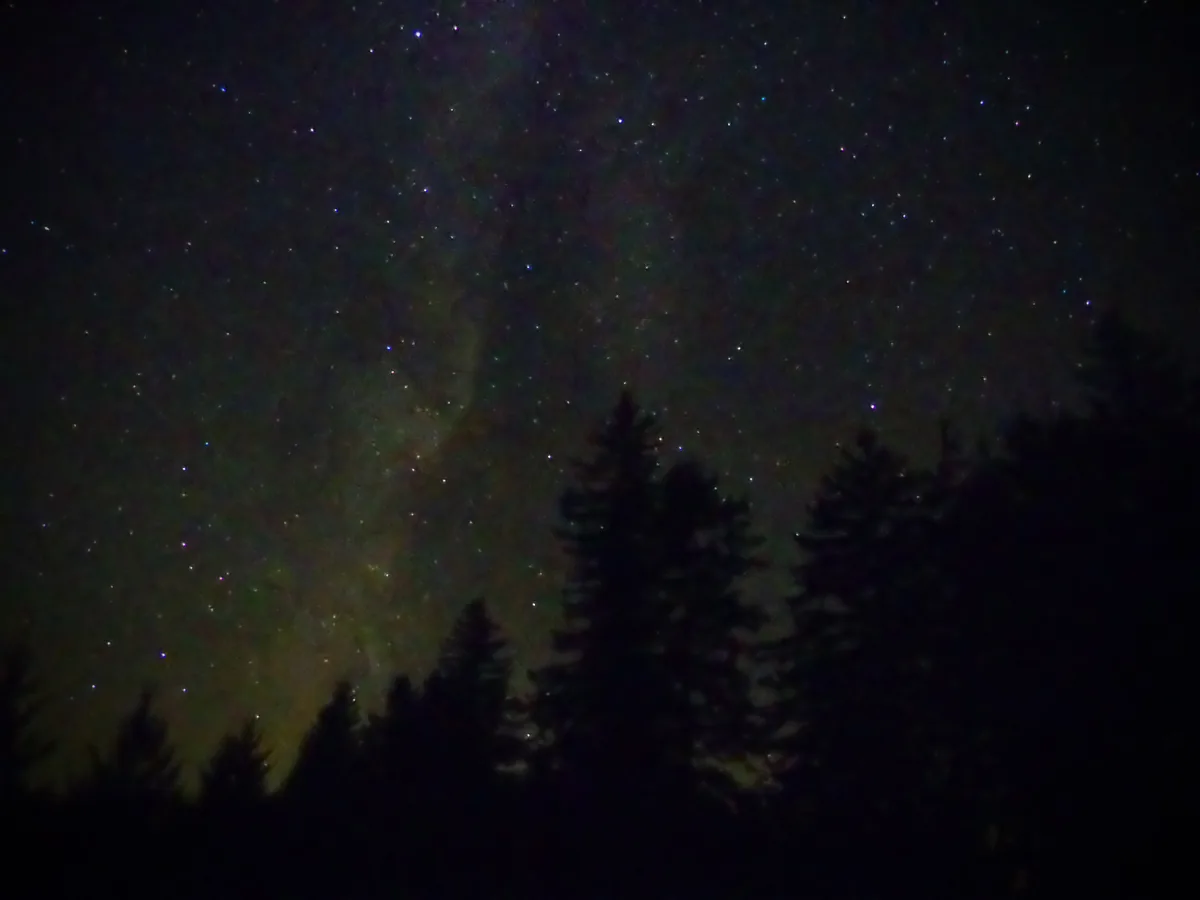
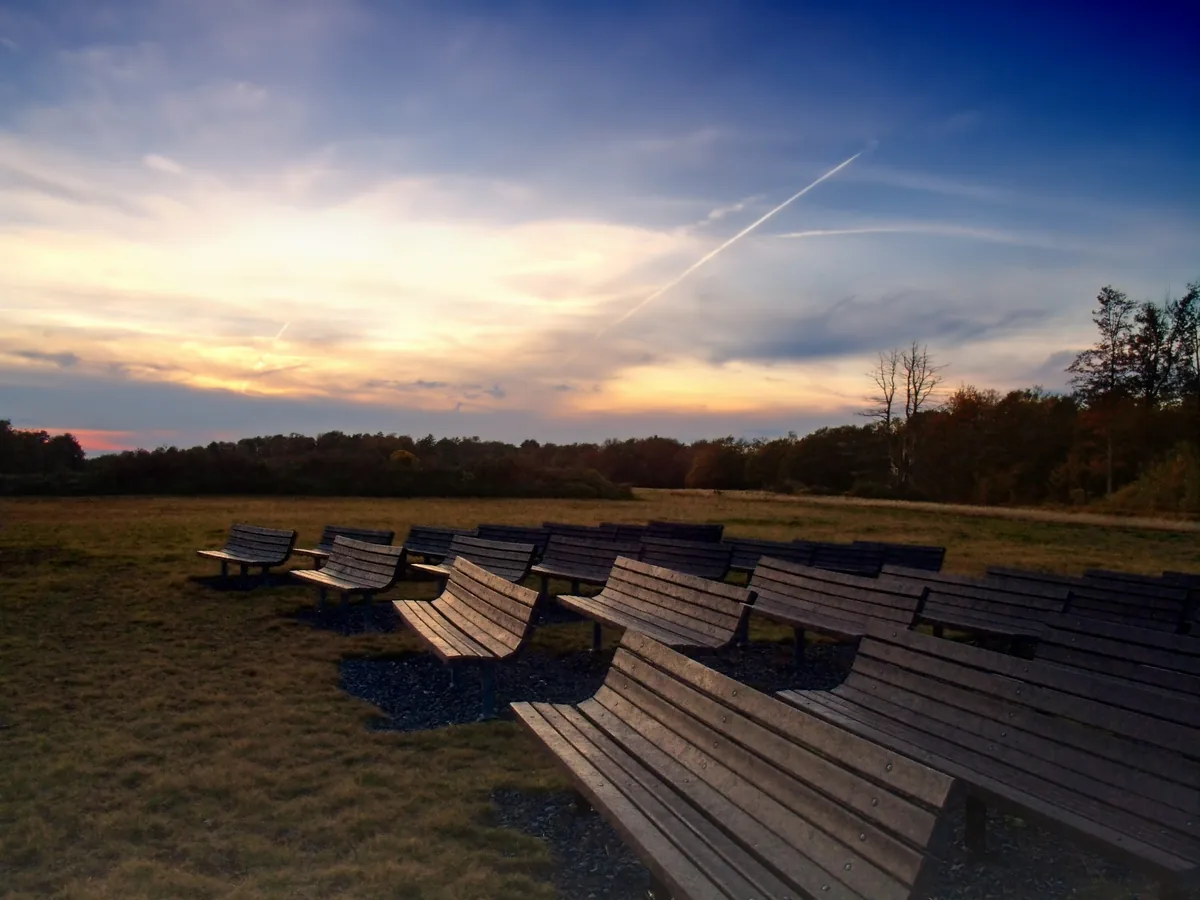
The Night Sky Public Viewing Area at Cherry Springs after dark
The viewing area is the reason you came — pack like the dark matters, because it does.
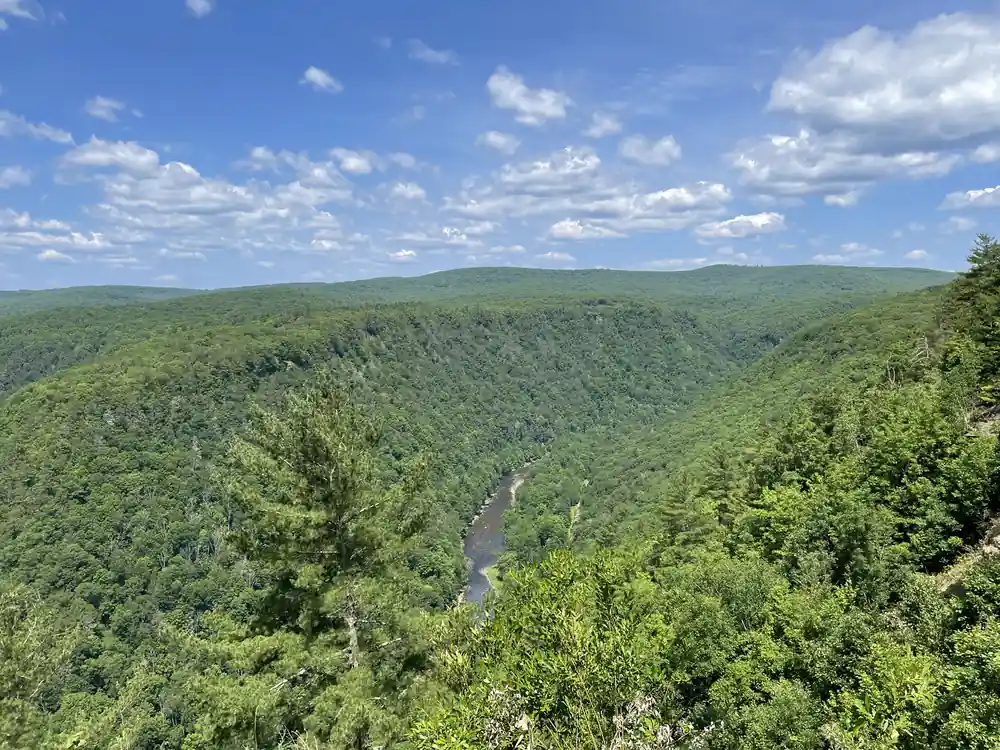
Pine Creek Gorge, the Grand Canyon of Pennsylvania, from Leonard Harrison State Park
Pine Creek Gorge — the Grand Canyon of Pennsylvania rewards the daylight hours between sky sessions.Photo credit in Official Links.

Quick answers

Planning notes

Is Cherry Springs safe for a solo traveler?

Yes — it’s one of the most approachable dark-sky destinations for going alone. The Night Sky Public Viewing Area is a supervised, family-friendly field (not a backcountry trailhead), and you’re surrounded by other stargazers on busy nights. The real cautions are logistical: cell service is spotty, so download offline maps before you leave Coudersport, tell someone your plan, and drive the rural roads carefully at night — deer are everywhere. Bring a red flashlight, not white light, so you don’t blind your night vision or anyone else’s.

Do I need a telescope, or is the naked eye enough?

The naked eye is spectacular — Cherry Springs is Bortle Scale 2, the darkest accessible site east of the Mississippi, and on a moonless night the Milky Way is vivid enough to cast a faint shadow. A pair of 10×50 binoculars is the sweet spot if you want more: star clusters, nebulae, and the moon’s craters for well under $100. Skip the telescope unless you already own one — it adds setup fuss, and the park’s public viewing area rewards lying back and looking up.

Where should a solo traveler stay — Coudersport, the campground, or the observation field?

For a first solo trip, base in Coudersport (about 15 miles north): Frosty Hollow Bed & Breakfast (on Cherry Springs Road itself, 4.9-star reviews) and the Mill Street Mansion are the strongest picks, with the Westgate Inn as a simpler motel option. The park’s rustic campground (30 first-come sites, mid-April to late October, no pets) works if you’re equipped — but it fills on new-moon weekends. The Overnight Astronomy Observation Field is for registered astronomers with telescopes, not casual campers.

When is the best time to visit for stargazing?

Time your trip to the new moon — the five days around it are darkest. August is the sweet spot: the Perseid meteor shower peaks mid-month, the Milky Way core is high overhead by midnight, and nights are warm. September’s Black Forest Star Party and June’s Cherry Springs Star Party draw serious astronomers if you want the social version. Winter skies are the clearest of the year, but nights are brutally cold. Check the Clear Sky Chart for Cherry Springs before you commit.

What’s the difference between the Public Viewing Area and the Observation Field?

The Night Sky Public Viewing Area is the free, short-term stargazing field — amphitheater-style benches, a backlit summer sky map, and a few hours of observing (no overnight). The Overnight Astronomy Observation Field is a separate gated field for registered astronomers: you register online, pay a nightly fee, get a 360-degree observing pad, and stay until dawn. Serious equipment goes to the observation field; everyone else — including this itinerary — uses the public viewing area.

How do I get there, and is the drive manageable alone?

Drive — there’s no practical public transit. It’s about 5 hours from New York City, 4 from Philadelphia, 3.5 from Pittsburgh, on PA Route 44 south of Coudersport. The last stretch is dark rural two-lane highway with no streetlights, so arrive before full dark if you can, and watch for deer. Download offline maps: cell service drops out well before the park. Gas up in Coudersport — there’s nothing at the park after hours.

What should I pack for a night under Bortle 2 skies?

A red flashlight or headlamp (non-negotiable — white light ruins night vision for 15+ minutes and the park bans it), warm layers even in summer (2,300 feet of elevation means nights run 15–20°F cooler than the day), a reclining camp chair or thick blanket for hours of looking up, and 10×50 binoculars. Add a thermos, snacks, bug spray for dusk, and a printed star chart or the Sky Guide app on night mode. The park provides the sky; you provide the comfort.

Can I see the Milky Way with my phone camera?

Yes — with night mode and a tripod or steady surface. Prop the phone still, use a 10–30 second exposure (iPhone Night mode maxes out around 30 seconds on a tripod), and point at the Milky Way core in the south. It won’t match a dedicated camera, but you’ll get a real, shareable shot. One rule: keep the screen dim and red-shifted while you’re in the viewing area — a bright phone screen is the fastest way to annoy fifty astronomers.

What if it’s cloudy — what’s the backup plan?

Give yourself two nights, not one — weather moves through Potter County fast, and the itinerary builds in exactly that buffer. If both nights cloud out, the daytime plan still holds: Pine Creek Gorge (the PA Grand Canyon), the 1-mile Working Forest Interpretive Trail, Lyman Run State Park, and the Coudersport area museums. Check the Clear Sky Chart the morning of — it predicts cloud cover hour by hour — and don’t cancel on a ‘partly cloudy’ forecast; the sky often clears after midnight.

How can I meet other stargazers as a solo traveler?

Park programs are the easiest door in: summer night-sky programs at the viewing area draw a mixed crowd and the format (lying on blankets, looking up) makes conversation natural. The star parties in June and September are built for this — astronomers at Cherry Springs famously love showing their telescopes to newcomers. But most solo stargazers come for the solitude, and nobody will think twice about one person with a blanket and binoculars. You’re in good company either way.

Before you book

Check the moon. Check the clouds. Then go.

Hours, prices, and reservation windows change — verify these on the official sites before departure.

Moon phaseNew moon ±5 days for darkest skies — timeanddate.com
Clear Sky ChartHour-by-hour cloud forecast for Cherry Springs — cleardarksky.com
Night sky programsSummer ranger programs at the viewing area — DCNR events page
Rustic campground30 first-come sites, mid-Apr–late Oct, no pets — ReserveAmerica
Observation field registrationOvernight astronomy field: register online, nightly fee — DCNR stargazing page
Star partiesCherry Springs Star Party (June) · Black Forest Star Party (September)

References

Research behind this guide

The reporting and research that shaped this itinerary.

The trip index

Choose the landscape. Then choose the pace.

Every itinerary gives you a realistic route, daily rhythm, planning notes, and the details that make a family trip work.

Use the filters above to see matching itineraries.

No exact match—yet.
Clear a filter to see the closest routes already in the library.
Official checks

Sources & verification

Every price, date, and hour in this guide was checked against the official sources linked in the Official Links section above.
Trip Types

National Parks & Wild PlacesCoastal Drives & Beach TownsCities & Urban WeekendsHistoric & Cultural RoutesMountain TownsFood & Drink TrailsInternationalView all 112 trips →