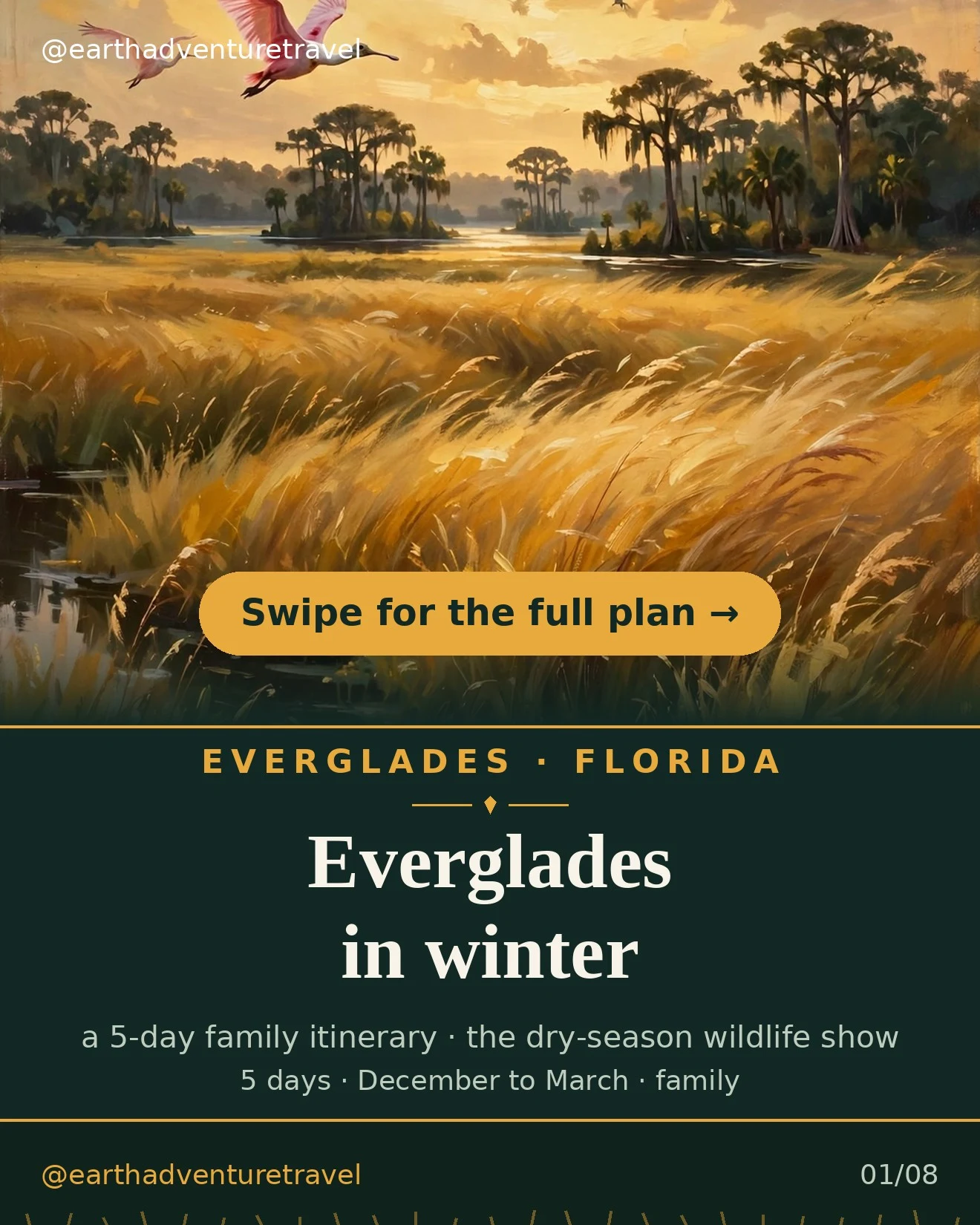
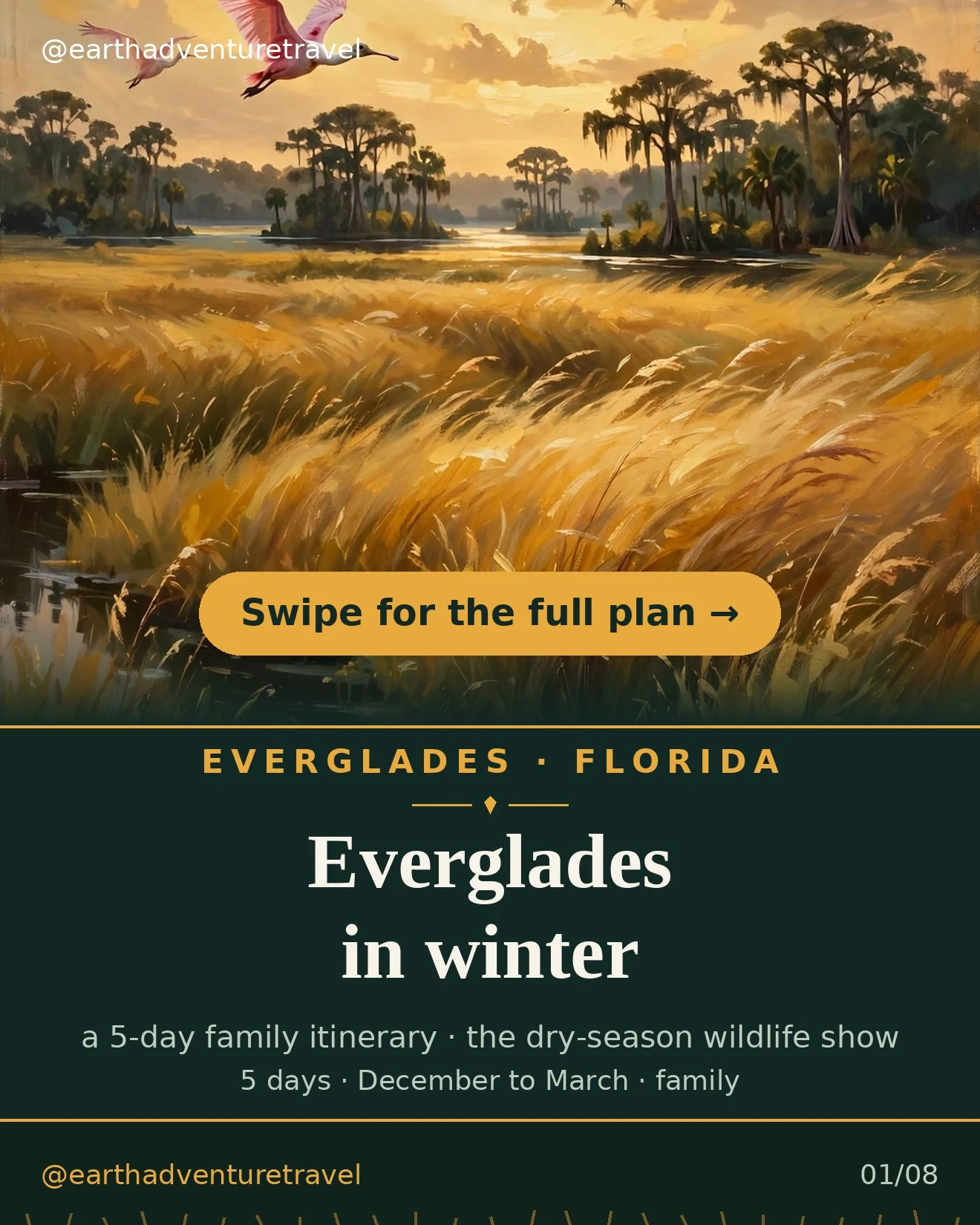
Everglades in Winter: 5 Days in the Dry-Season Wildlife Show
Five family days in Everglades National Park when the water drops and the wildlife concentrates: Anhinga Trail alligators, the Shark Valley tram and tower, Flamingo's spoonbills, a cypress slough slog, and the Ten Thousand Islands.
National Parks & Wild Places
5days·DecembertoMarch·Family
Original itinerary artwork
On this page
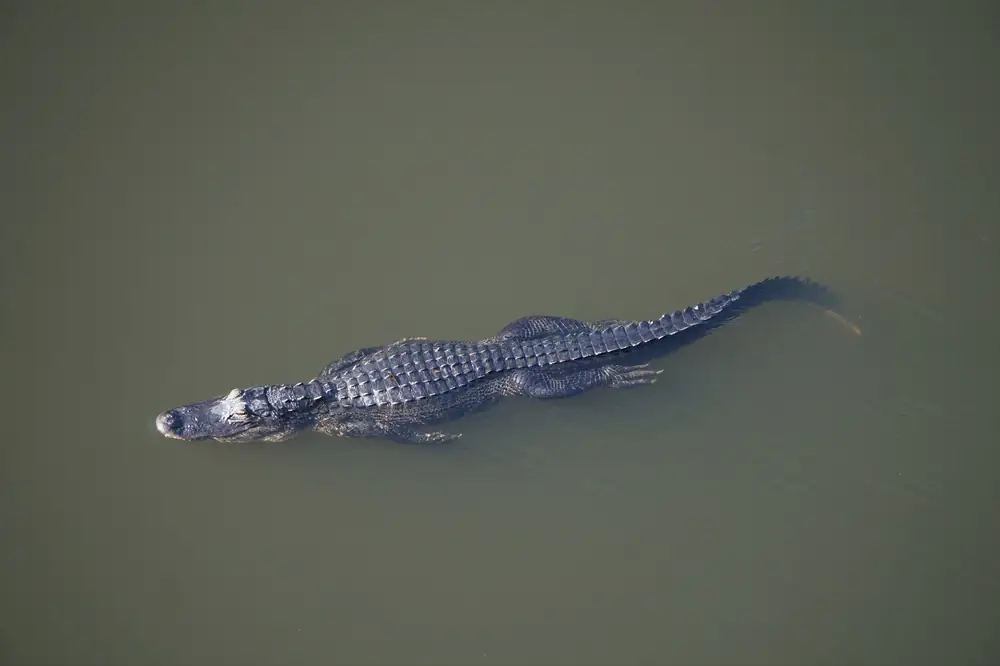
A wild alligator cruising at Shark Valley — in the dry season, receding water concentrates wildlife into front-row viewing. (Wikimedia Commons · Public domain)
The trip in 60 seconds
Rough budget
Rough planning figures in USD, not quotes — prices move with season and demand.
$2.1K–$3.0K
Family of 4 · 5 days · USD
Lodging · 4 nights
$800–$1,200
Food & drink
$550–$750
Rental car + gas
$400–$550
Park entry · 1 vehicle
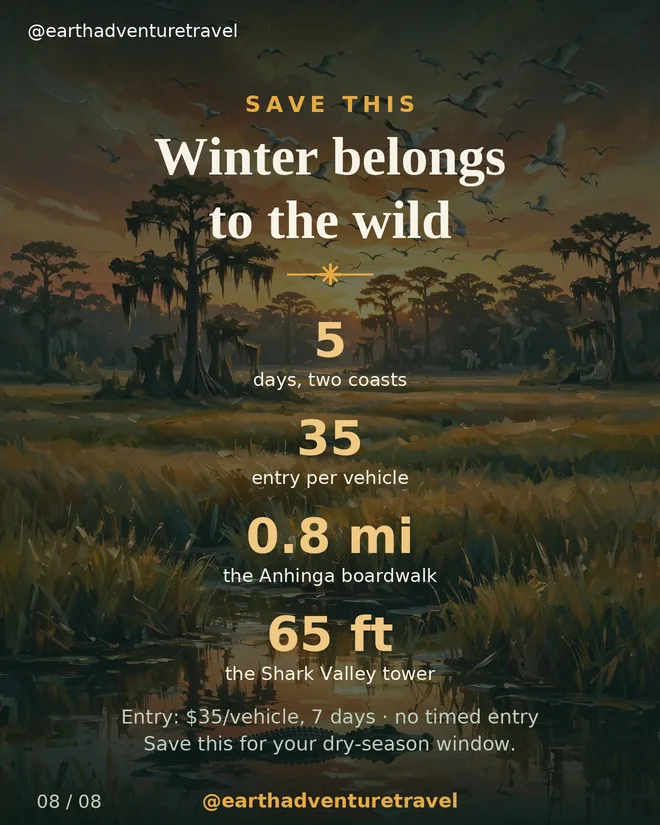
$35
Activities (tram, boats, slog)
$350–$500
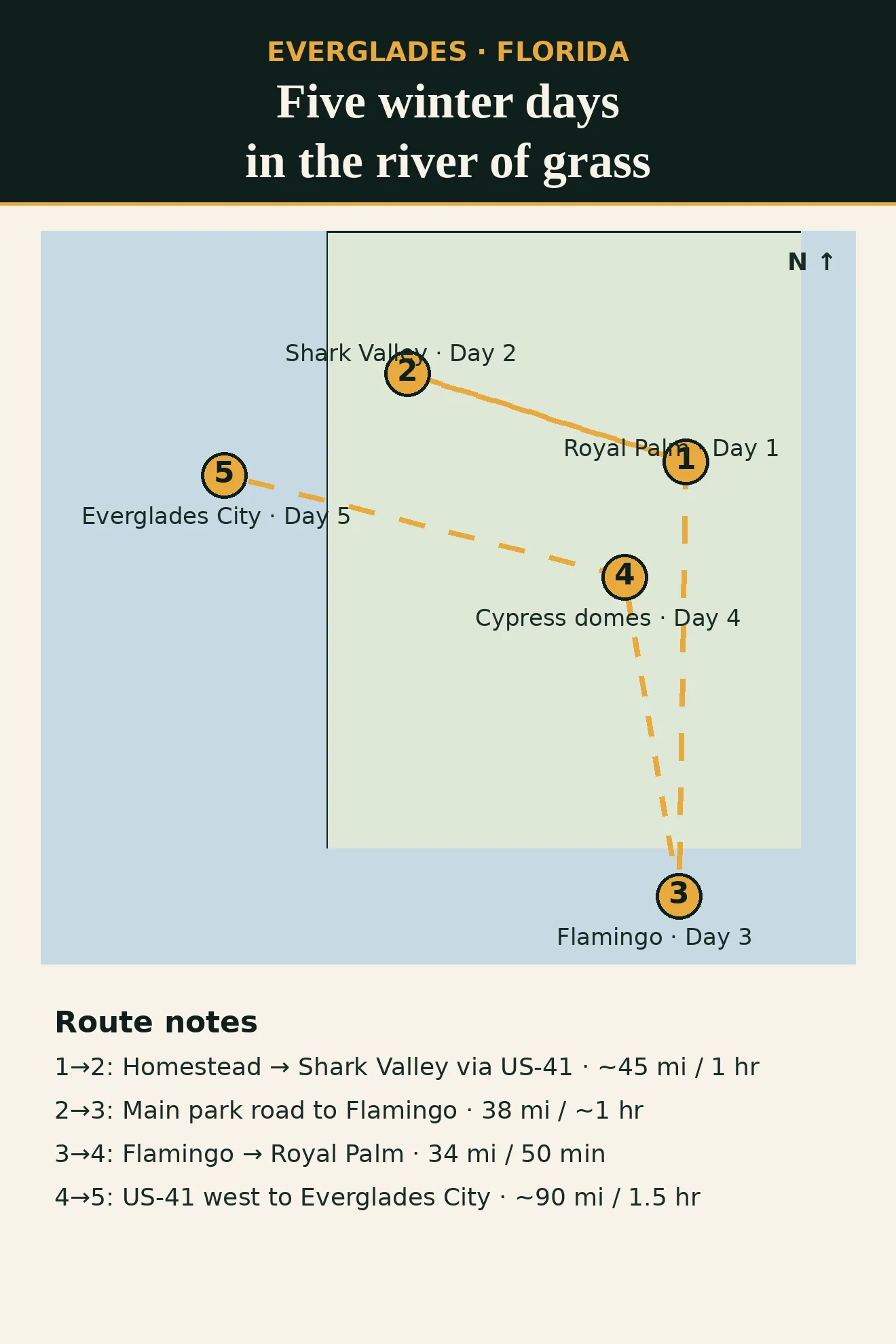
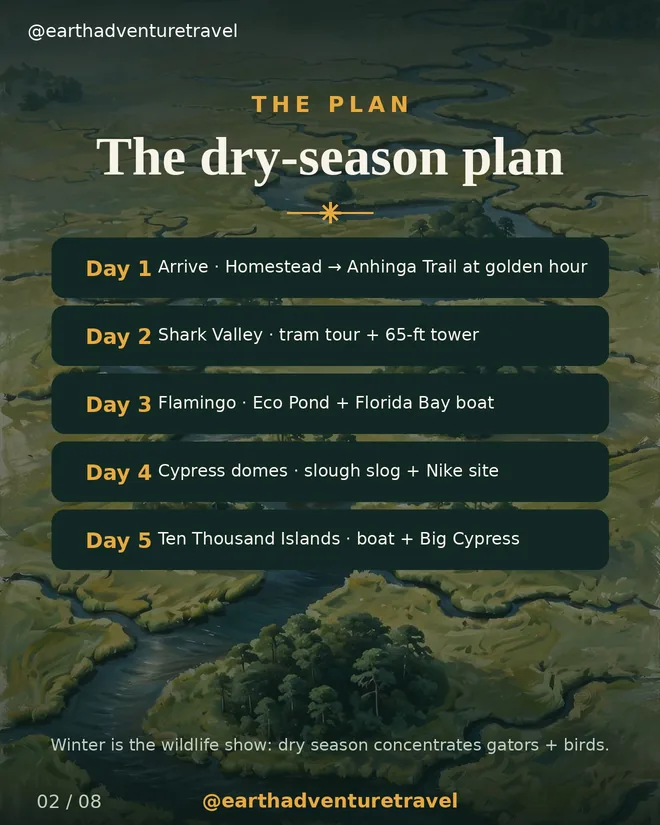
Saveable route recap · five winter days in the Everglades
Day-by-day summary
The idea
Winter is when the Everglades puts on its show.
Here's the direct answer: December through March is the best time to visit Everglades National Park — the dry season. Water levels drop, and alligators, wading birds, turtles, and fish concentrate around the remaining pools. The Anhinga Trail becomes an alligator parade. Eco Pond fills with roseate spoonbills. Mosquitoes nearly vanish. Highs hover around 79°F, lows around 55°F — bring a fleece for the mornings.
This 5-day family itinerary uses two bases — Homestead for the main park road and Shark Valley, Everglades City for the Gulf Coast — and hits the park's three entrances without backtracking. Park entry is $35 per vehicle for 7 days; there is no timed entry or reservation needed. Winter is the park's busiest season, so book the tram tour, the slough slog, and Flamingo lodging early.
The park's entrances are not connected inside the park — this route works them in order without backtracking. Days 1–4 run from Homestead; Day 5 crosses to the Gulf Coast and exits toward Miami.
01MIA airport · Homestead · Royal Palm
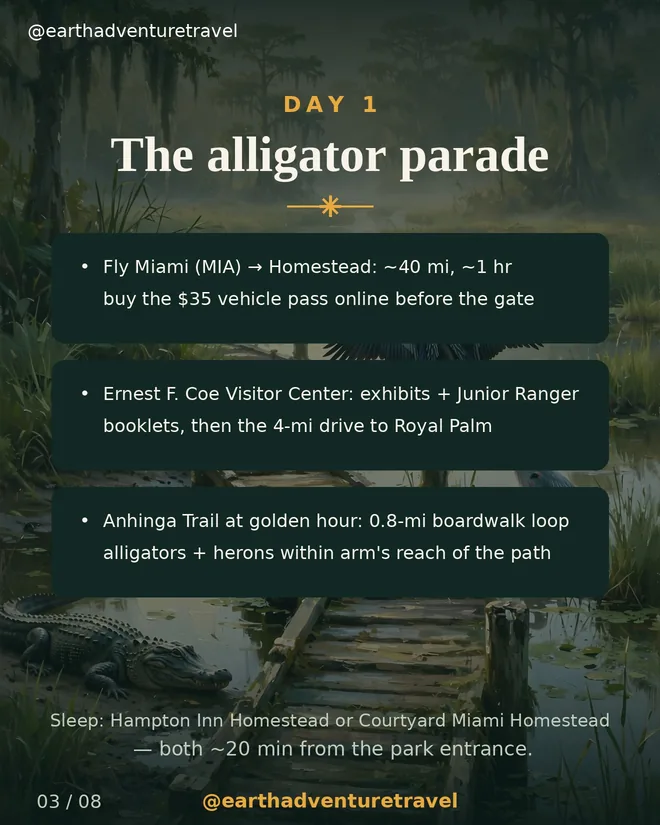
Day 1 is a travel day with a payoff at the end. Land at Miami International (MIA) — about 40 miles and an hour south to Homestead, the gateway town for the park's main entrance. Buy the $35 vehicle pass online before you go (good for 7 days, no timed entry needed) and download offline maps — coverage is spotty once you leave the highway. Homestead is a real town with real grocery stores: stock the cooler here, because food options inside the park are thin.
Afternoon: Ernest F. Coe + Royal Palm
Enter at the Ernest F. Coe Visitor Center (open 24 hours at the gate; the center itself keeps daytime hours) for exhibits and the Junior Ranger booklet — rangers run family programs all winter. Then drive 4 miles to Royal Palm, the trailhead for the park's two most famous short walks. The Gumbo Limbo Trail (0.4 miles, shaded, stroller-friendly) is the warm-up through old-growth hardwood hammock.
Golden hour: the Anhinga Trail
Save the Anhinga Trail for late afternoon. This 0.8-mile boardwalk loop over a sawgrass slough is the single best wildlife walk in the park in winter: alligators pack the remaining pools, anhingas dry their wings on posts, and herons stalk the shallows within arm's reach of the boardwalk. Go slow, bring binoculars, and let the kids count gators — double digits is a slow day in February.
Where to stay
Hampton Inn & Suites Miami-Homestead or the Courtyard Miami Homestead — both about 20 minutes from the park entrance with pools the kids will actually use. For a quirkier base, the Everglades International Hostel in Florida City runs family rooms. Dinner: the Cuban bakeries on Krome Avenue — medianoche sandwiches and guava pastelitos.
Pro tip: Anhinga Trail is best in the last 90 minutes of daylight, when the light goes golden and the day's tour buses have left. The parking lot is small — arrive by 4 p.m. in peak season.
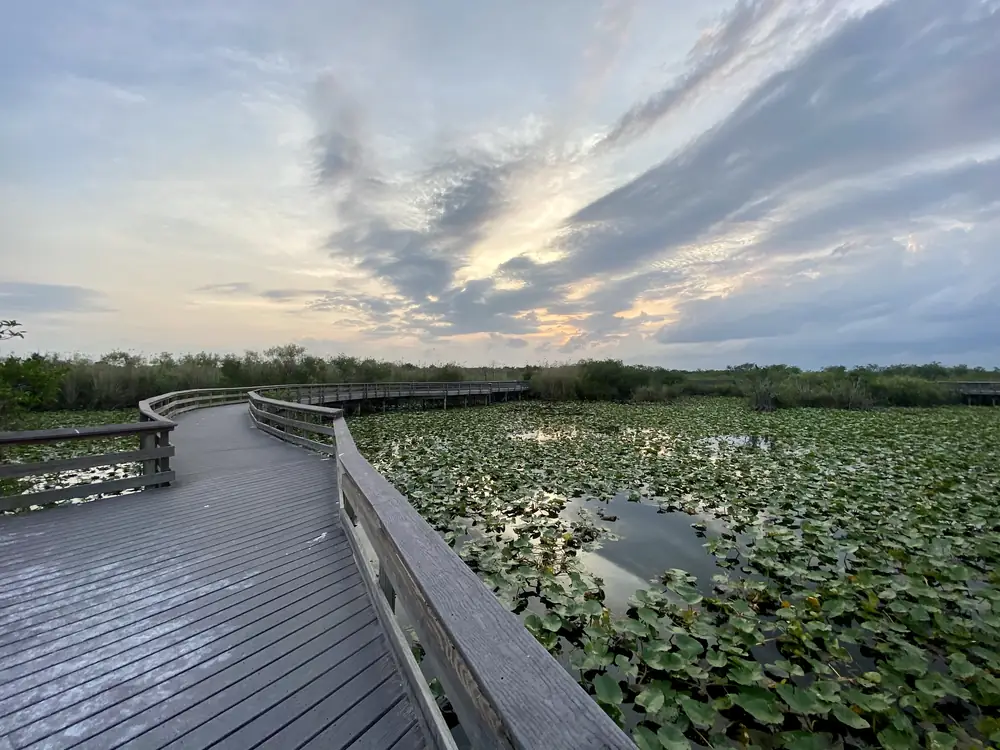
The Anhinga Trail boardwalk at Royal Palm — alligators rest on the banks within arm's reach of the path. (Wikimedia Commons · Public domain)
02Tamiami Trail · tram loop · 65-ft tower
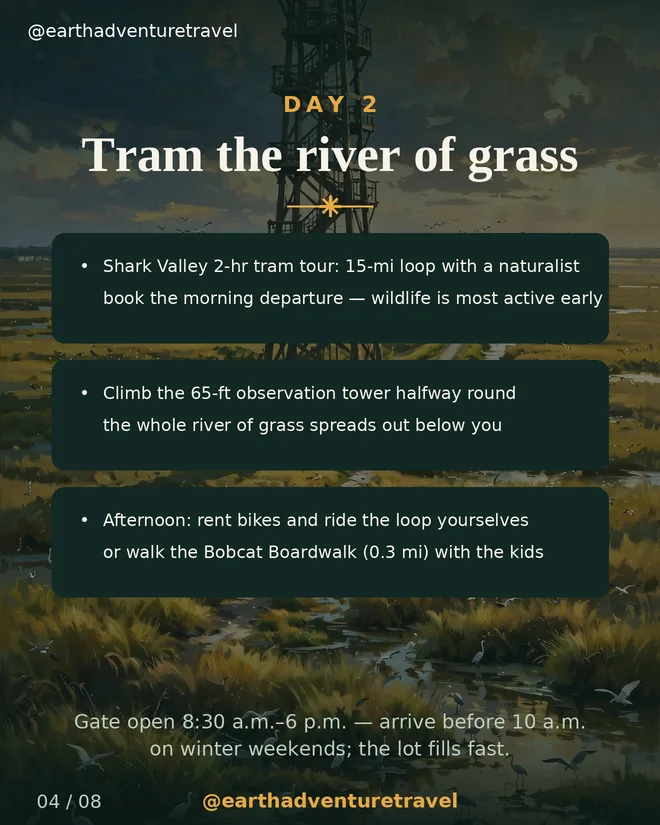
Day 2 belongs to Shark Valley, the park's northern entrance off the Tamiami Trail (US-41), about an hour from Homestead. This is the heart of the river of grass: a 15-mile paved loop through sawgrass prairie dotted with hardwood hammocks. The 2-hour narrated tram tour is the move for families — a naturalist drives, you ride, and the wildlife spotting is professional-grade. Book the morning departure: wildlife is most active early, and winter weekends sell out.
Midday: the tower
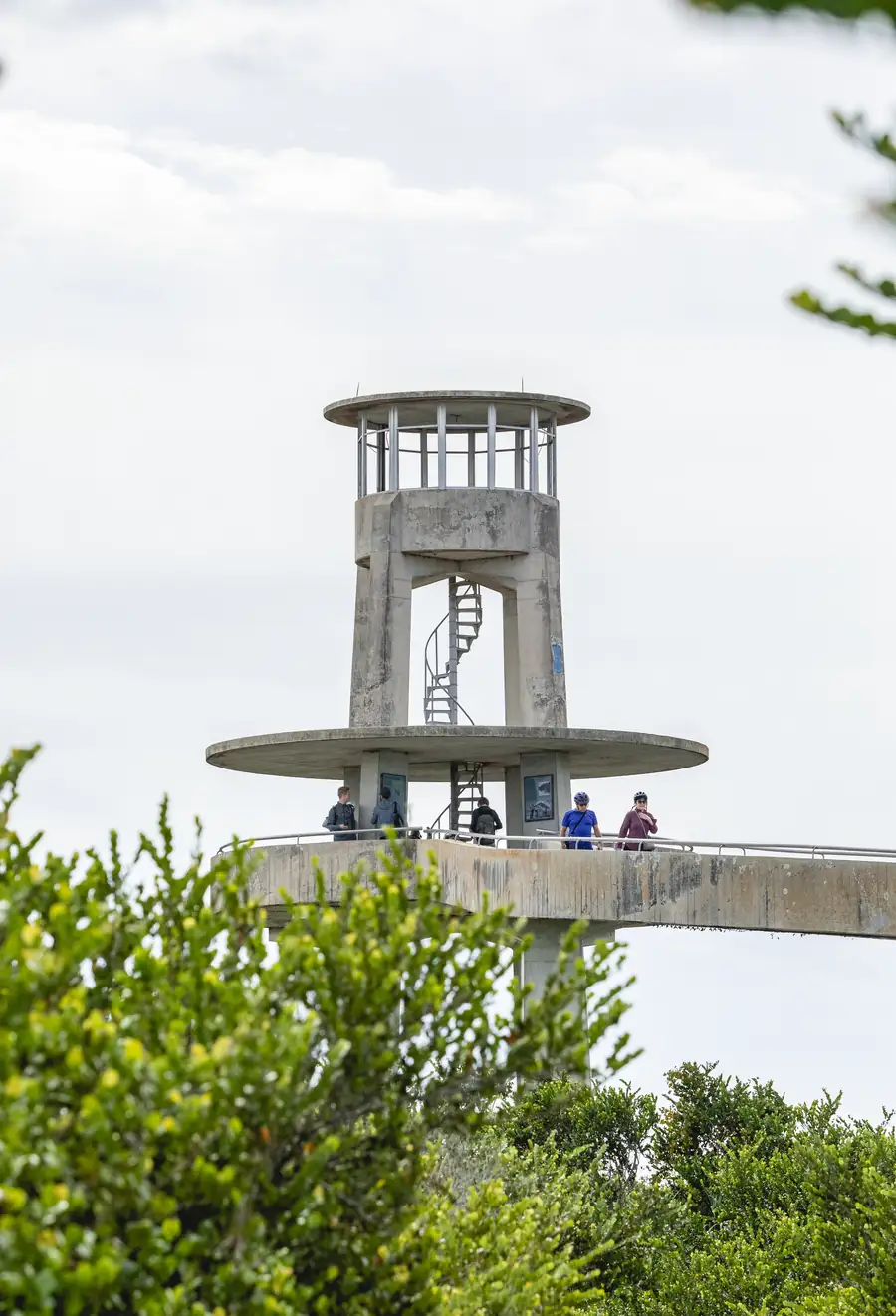
Halfway around the loop the tram stops at the 65-foot observation tower. Climb it. From the top, the Everglades finally makes sense — an impossibly flat sheet of sawgrass running to every horizon, broken only by dark cypress domes. On a clear winter day you can watch weather move across the marsh like a curtain. Kids love the height; photographers love the geometry.
Afternoon: bikes or boardwalk
Back at the visitor center, rent bikes and ride the loop yourselves (the tram road is flat and car-free) or walk the Bobcat Boardwalk (0.3 miles) into a bayhead hammock. Note the gate hours: Shark Valley is open 8:30 a.m. to 6 p.m., with no vehicle access after 6 p.m. — plan to be out well before closing. Stop for stone crabs or frog legs in Everglades City on the drive back, or keep it simple with dinner in Homestead.
Where to stay
Same Homestead base as night one — Hampton Inn Homestead or Fairway Inn Florida City for a budget pick. Two nights in one bed keeps the packing light and the mornings fast.
Pro tip: The tram's open sides are perfect for photos, but the sun is brutal even in January — hats, sunscreen, and a full water bottle per person. There is no shade on the loop.
The 65-foot Shark Valley observation tower — the whole river of grass spreads out below. (Wikimedia Commons · Public domain)
Winter in the Everglades is a front-row seat to the wildest show in Florida — you just have to be there when the water drops.
03Main park road · Eco Pond · Florida Bay
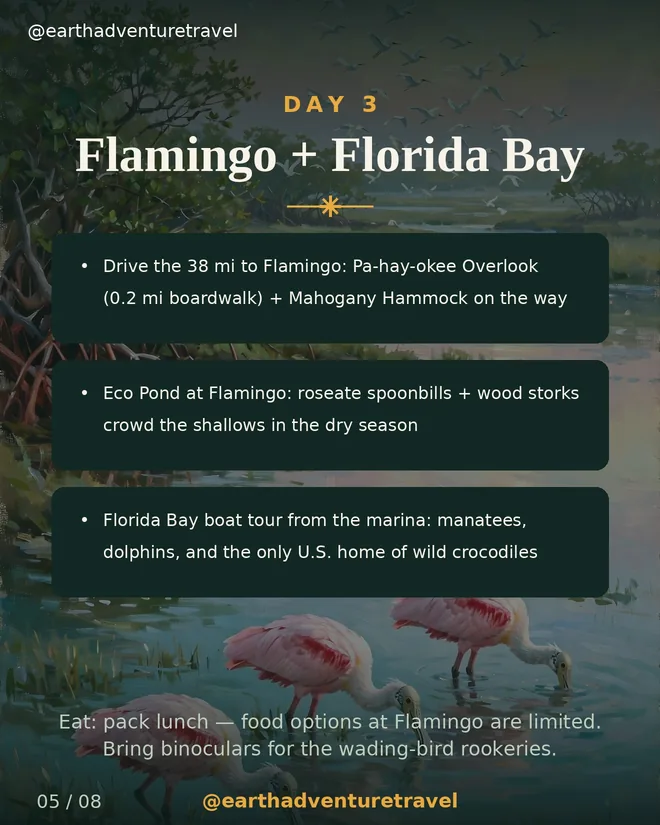
Day 3 is the long drive south — 38 miles from the Coe entrance to Flamingo, and every mile earns it. Leave Homestead by 8 a.m. First stop: the Pa-hay-okee Overlook (0.2-mile boardwalk), a sea of sawgrass with a sawgrass-prairie panorama that explains the "river of grass" better than any exhibit. Then Mahogany Hammock (0.5-mile boardwalk) through the largest stand of old-growth mahogany in the country — cool, dark, and full of barred owls.
Midday: Eco Pond
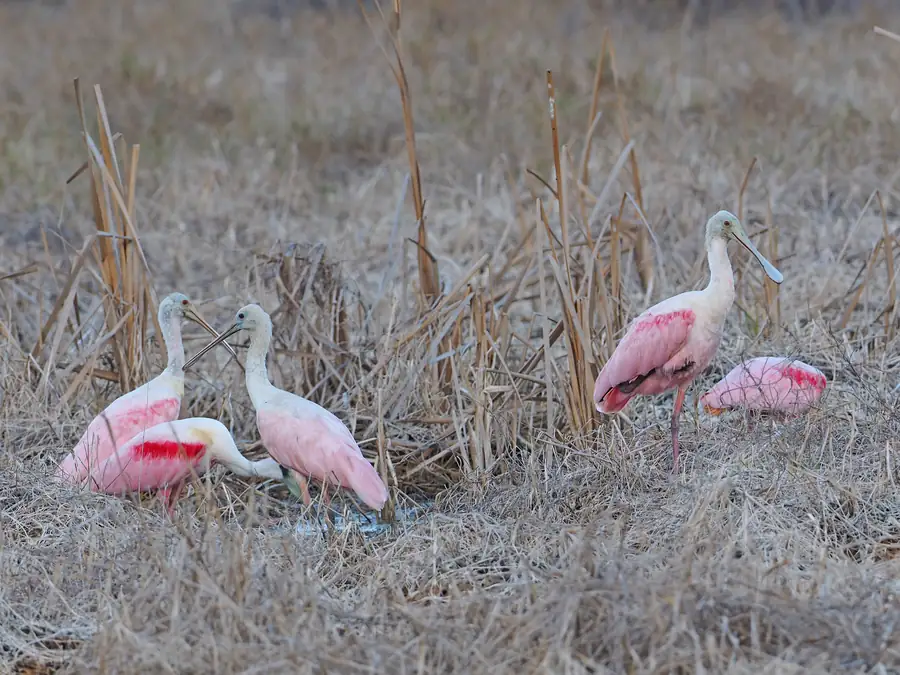
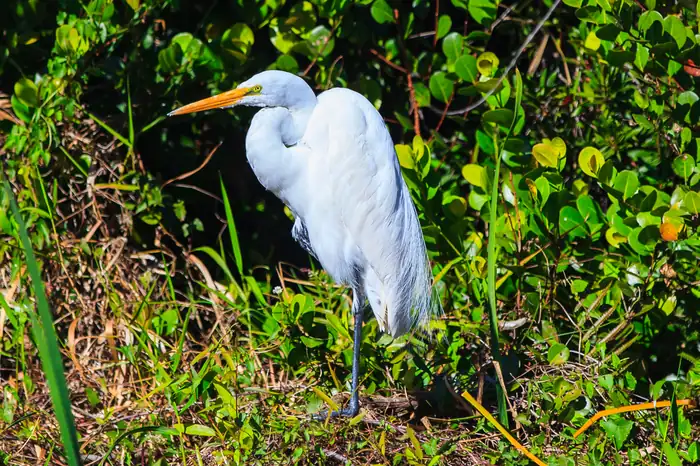
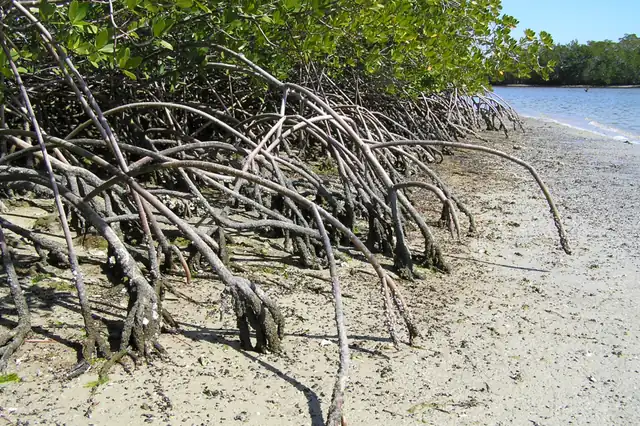
At Flamingo, walk the Eco Pond loop. In the dry season this shallow pond is a wading-bird magnet: roseate spoonbills — pink as flamingos, and the reason for half the gasps — sweep their bills through the shallows alongside wood storks, white ibis, and great egrets. The nearby Guy Bradley Trail (1 mile, paved) runs along Florida Bay with manatee sightings common in the marina basin in winter.
Afternoon: the bay
Take the Florida Bay boat tour from the Flamingo marina. Bottlenose dolphins ride the bow wake, sea turtles surface in the channels, and the mangrove shoreline is the only place in the U.S. where American crocodiles live in the wild — your captain will know the resident crocs by name. Back on land, the Flamingo Lodge restaurant does a solid key-lime pie with a bay view.
Where to stay
Flamingo Lodge — the park's waterfront lodge, steps from the marina and the night sky — or drive back to Homestead for the Courtyard. Flamingo's campground is superb in winter if you brought gear; book months ahead.
Pro tip: Fill the tank before leaving Homestead — there is no gas between Florida City and Flamingo. Pack lunch; the Flamingo food options are limited and the day is long.
A roseate spoonbill feeding at Flamingo — winter concentrates wading birds in the shallows. (Wikimedia Commons · CC BY 2.0)
04Slough slog · Long Pine Key · Nike site
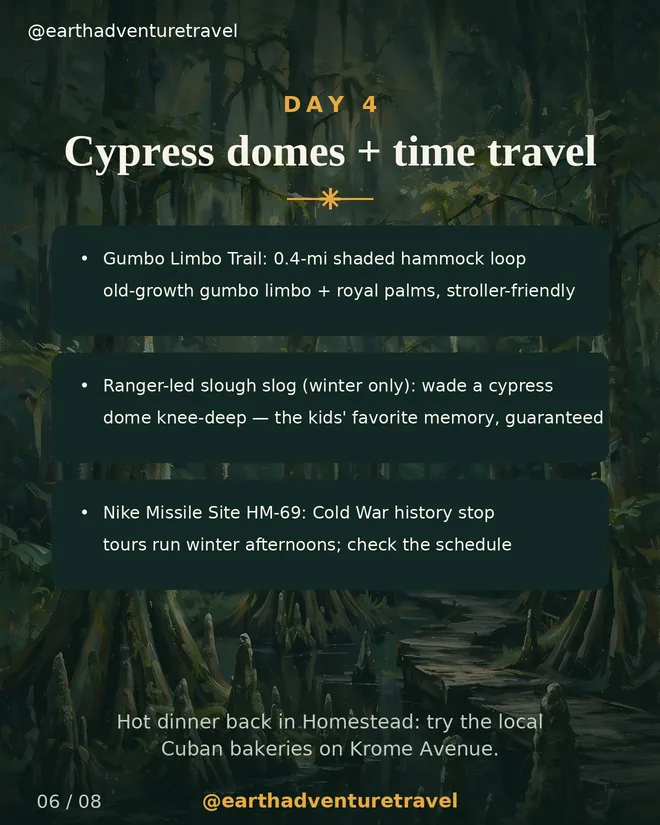
Day 4 is the day the kids will talk about for years. Start at Royal Palm again — this time for the ranger-led slough slog, offered in the dry season. You wade knee-deep (sometimes thigh-deep) into a cypress dome with a ranger, feeling the peat bottom, spotting apple-snail eggs, and learning why the dome is shaped like a dome. Reserve the moment bookings open — groups are small and it sells out fast. Wear quick-dry clothes; the park provides the wonder.
Midday: hammocks + pinelands
Dry off and walk the Long Pine Key trails — the Pinelands Trail (0.4 miles) through slash-pine forest with solution holes full of fish, or the Long Pine Key Nature Trail loop. Winter is wildflower season in the pinelands, and the contrast with the morning's swamp is the whole Everglades story in one day: water makes everything here.
Afternoon: the Cold War
Drive to the Nike Missile Site HM-69, a fully preserved 1960s nuclear missile base built after the Cuban Missile Crisis — one of the best-preserved Cold War sites in the country. Ranger tours run winter afternoons; check the schedule at the visitor center. Teenagers who were bored by birds will be riveted by missile barns. End the day back in Homestead with dinner on Krome Avenue.
Where to stay
Back to the Homestead base — Hampton Inn Homestead or try Best Western Gateway to the Keys in Florida City. Pack tonight: tomorrow you move to the Gulf Coast side.
Pro tip: The slough slog has a minimum age (usually 12, check current rules) and requires closed-toe shoes that can get soaked. Bring a full change of clothes in a dry bag — you'll want it.
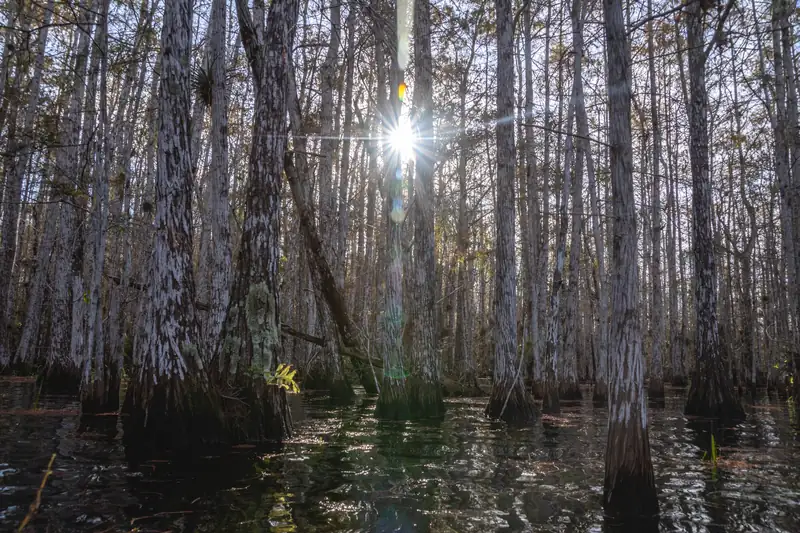
A cypress dome in the Everglades — ancient bald cypress rising from black water. (Wikimedia Commons · Public domain)
05Everglades City · islands · Big Cypress
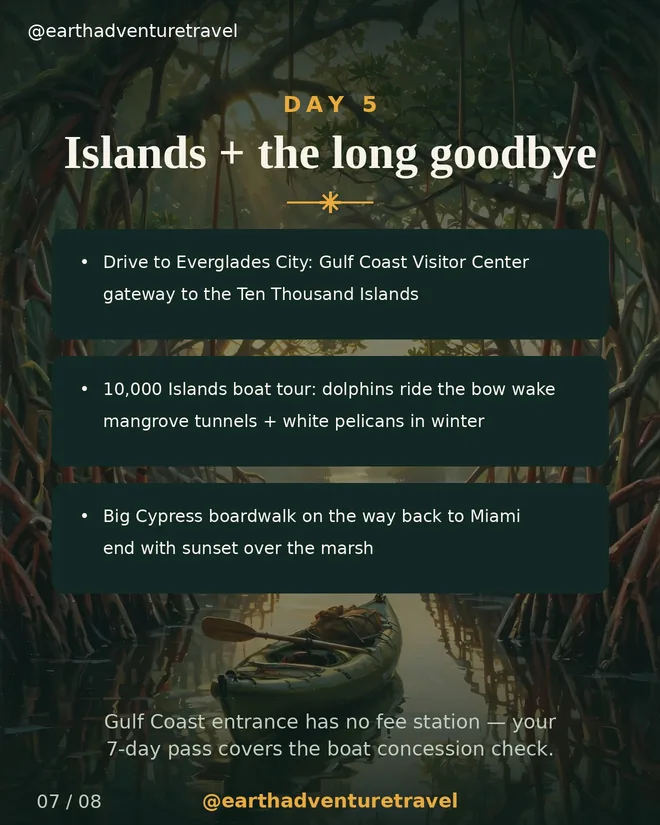
The grand finale moves to the park's west side. Drive from Homestead to Everglades City (about 1.5 hours via US-41) and check in at the Gulf Coast Visitor Center — note there's no fee station here; your 7-day pass covers the boat concession check. The Ten Thousand Islands boat tour is the essential experience: a covered tour boat threading mangrove-lined channels where dolphins ride the bow wake, white pelicans winter in rafts, and the islands themselves are living geology — mangrove roots trapping sediment into land.
Midday: small-town Florida
Everglades City is Old Florida at its most charming: the historic Rod & Gun Club (lunch on the porch), the Museum of the Everglades (free, excellent), and stone-crab claws in season (October–May). If the family still has paddle energy, the concessionaire rents kayaks for the Turner River canoe trail — a marked 8-mile loop through mangrove tunnels, doable as a short out-and-back.
Afternoon: Big Cypress + home
Head east on US-41 through Big Cypress National Preserve — the Everglades' wilder sibling. Stop at the Oasis Visitor Center boardwalk for a guaranteed alligator sighting (the canal behind the center is famously reliable) and the H.P. Williams Roadside Park for roadside wading birds. You're 45 minutes from MIA — time the drive for a sunset over the marsh, the perfect last frame of five days in the river of grass.
Where to stay
Flying home tonight? No hotel needed. Staying over: the Ivey House in Everglades City (adventure inn with an outfitter desk) or back to Miami's Hilton Miami Airport Blue Lagoon for an early flight.
Pro tip: The Gulf Coast boat tours are the most weather-sensitive activity of the trip — morning departures are calmest. If it's windy, the mangrove tunnels of the Turner River are the sheltered backup.
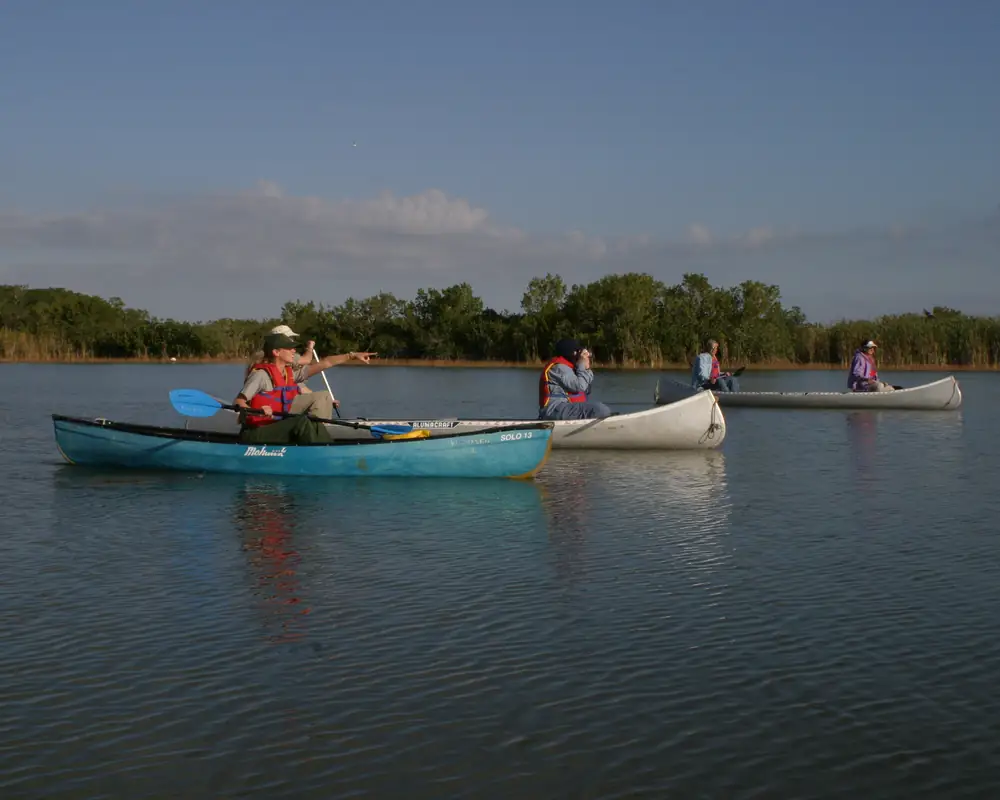
The Nine Mile Pond canoe trail — marked paddle routes through the sawgrass backcountry. (Wikimedia Commons · Public domain)
Saveable route map · five winter days in the Everglades
Route notes
1→2 Homestead → Shark Valley via US-41 · ~45 mi / 1 hr
2→3 Main park road to Flamingo · 38 mi / ~1 hr each way
3→4 Back up the park road to Royal Palm · 34 mi / 50 min
4→5 Homestead → Everglades City via US-41 · ~90 mi / 1.5 hr
The people behind the plans
Who is Earth Adventure Travel?
We build detailed, research-first itineraries for every kind of crew — solo, couples, family, multigenerational. Our Verified Tours are the trips a team member has personally traveled; this Everglades guide is a research-built itinerary, checked against official sources in October 2026.
These are planning ranges, not quotes. Winter is the busy season — the dry-season window that makes this trip work is also when everyone else comes. Book the big-ticket items early and check hours again before departure.
Rough budget · family of 4
$2.1K–$3.0K
Five days / four nights · flights excluded
Lodging · 4 nights
$800–$1,200
Food & drink
$550–$750
Rental car + gas
$400–$550
Park entry · 1 vehicle
$35
Activities · tram, boats, slog
$350–$500
What earns space
Binoculars — the single highest-value item on this trip; herons and spoonbills feed within feet of the boardwalks
Fleece + windbreaker — winter mornings start in the 50s, especially on the water; afternoons hit the high 70s
Sun protection — hat, sunscreen, sunglasses; there is no shade on the 15-mile Shark Valley loop
Quick-dry clothes + water shoes for the slough slog, plus a full change in a dry bag
Refillable water bottles — fill at visitor centers; there is no water at most trailheads
Insect repellent — minimal in the dry season, but the mangrove tunnels always hold a few
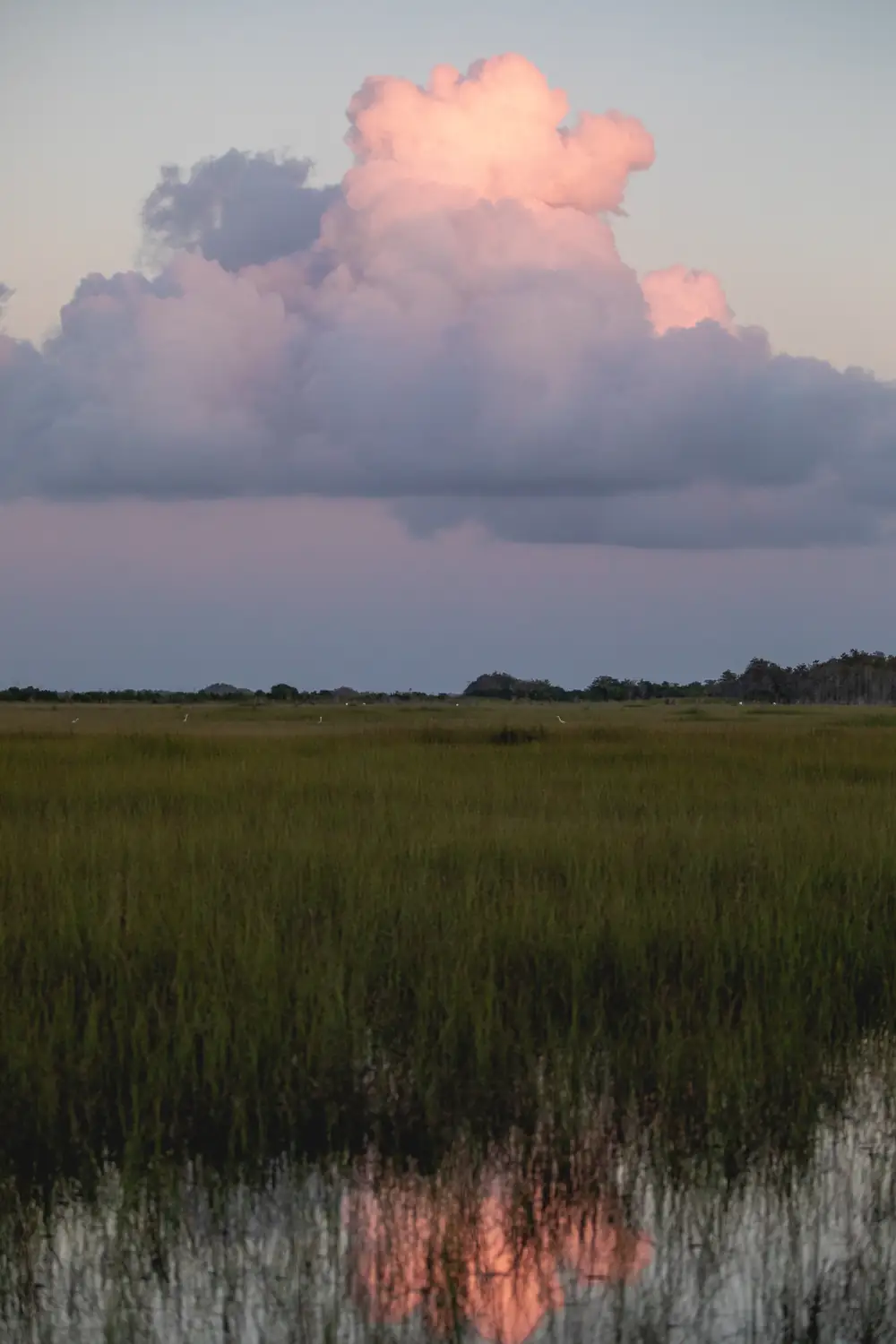
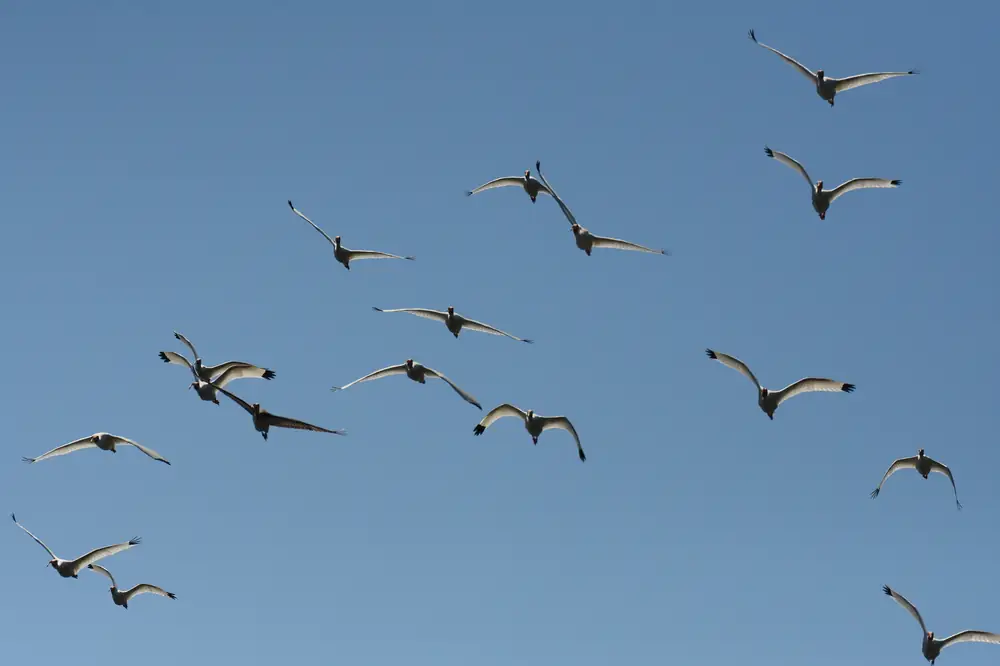
Sunset timing. Winter skies do this most evenings — plan one golden-hour walk daily.Binoculars. The single highest-value item on this trip — herons hunt within feet of the boardwalks.Bug spray. Minimal in winter, but the mangrove tunnels always hold a few mosquitoes.Morning starts. Wildlife is most active early — the ibis flocks lift off at dawn.
Saveable route overview · five winter days in the Everglades
Saveable route overview · five winter days in the EvergladesSaveable route recap · five winter days in the Everglades
Quick answers
Everglades winter family FAQs
Is the Everglades safe for kids with all the alligators?
Yes — with the same respect you'd give any wild place. Alligators are not aggressive toward people who keep their distance; attacks are extraordinarily rare. Stay on boardwalks and trails, keep kids from dangling hands over the water, stay 15+ feet from any gator, and never feed wildlife (it's illegal and dangerous). Rangers will happily talk your kids through gator safety — ask at any visitor center.
When exactly is the dry season?
December through April, with January–March the sweet spot: lowest water, most concentrated wildlife, fewest mosquitoes, and the full ranger-program schedule. November and April are good shoulder months with thinner crowds. May–October is the wet season — hotter, buggier, and wildlife disperses across the flooded marsh.
How much is Everglades entry in 2026?
$35 per private vehicle (valid 7 days at all entrances), $25 motorcycle, $15 per pedestrian/cyclist. The $80 America the Beautiful pass covers it. Note: a 2026 federal policy adds a $100/person nonresident surcharge at 11 major parks including Everglades — US residents just pay the vehicle fee.
Do I need a timed-entry reservation?
No. Everglades has no timed-entry system — buy the pass online and drive in. The constraint in winter is parking (Shark Valley fills by 10 a.m. on weekends) and tour availability (tram, boats, slough slog), not park entry.
Can you do the Everglades as a day trip from Miami?
You can, but you'll see one slice. A day trip works for Shark Valley (tram + tower, ~half day from Miami) or Royal Palm (Anhinga + Gumbo Limbo, ~half day). Flamingo and Everglades City each deserve their own day — that's why this itinerary runs five.
What's the difference between the three entrances?
Homestead/Ernest F. Coe (southeast) is the main entrance: Royal Palm, the 38-mile road to Flamingo, most trails. Shark Valley (north, off US-41) is the tram, tower, and biking loop. Gulf Coast/Everglades City (west) is the Ten Thousand Islands boat tours. They are not connected inside the park — plan drives between them.
Will we see a Florida panther?
Almost certainly not — and that's okay. Fewer than 250 Florida panthers remain, they're nocturnal, and they avoid people. Consider a sighting a once-in-a-lifetime event. You'll have far better luck with alligators, manatees, dolphins, crocodiles, and 300+ bird species — the park's real everyday magic.
Are airboat tours inside the national park?
No — airboats are prohibited inside Everglades National Park (they damage the marsh). The park's water experiences are the tram, the Florida Bay and Ten Thousand Islands tour boats, canoes/kayaks, and the pole-boat-style gladesmen heritage. Airboat operators run on private land just outside the park boundaries along US-41 and SW 8th Street — fun, but a different ecosystem and a different experience.
What should we do about mosquitoes?
In winter: almost nothing — the dry season is famously low-bug, which is half the reason to come now. Bring repellent anyway for the mangrove tunnels and dawn/dusk. If you ever visit May–October, treat it as essential gear, not optional: head nets, long sleeves, and DEET or picaridin.
Is the slough slog okay for younger kids?
The ranger-led slough slog usually has a minimum age around 12 (confirm current rules when booking) and requires wading knee-to-thigh deep. Under-12s get the same ecosystem knee-deep-free: the Anhinga and Gumbo Limbo boardwalks, the tram tour, and the Oasis boardwalk in Big Cypress all deliver big wildlife without the wade.
Last look
Official trip checks
Park entry$35/vehicle, 7 days · no timed entry · buy online before the gate
Details checked October 6, 2026. Conditions and prices can change. Photo credits: see assets/photo-credits.json.
The trip index
Choose the landscape. Then choose the pace.
Every itinerary gives you a realistic route, daily rhythm, planning notes, and the details that make a family trip work.
↑
Use the filters above to see the routes that match.
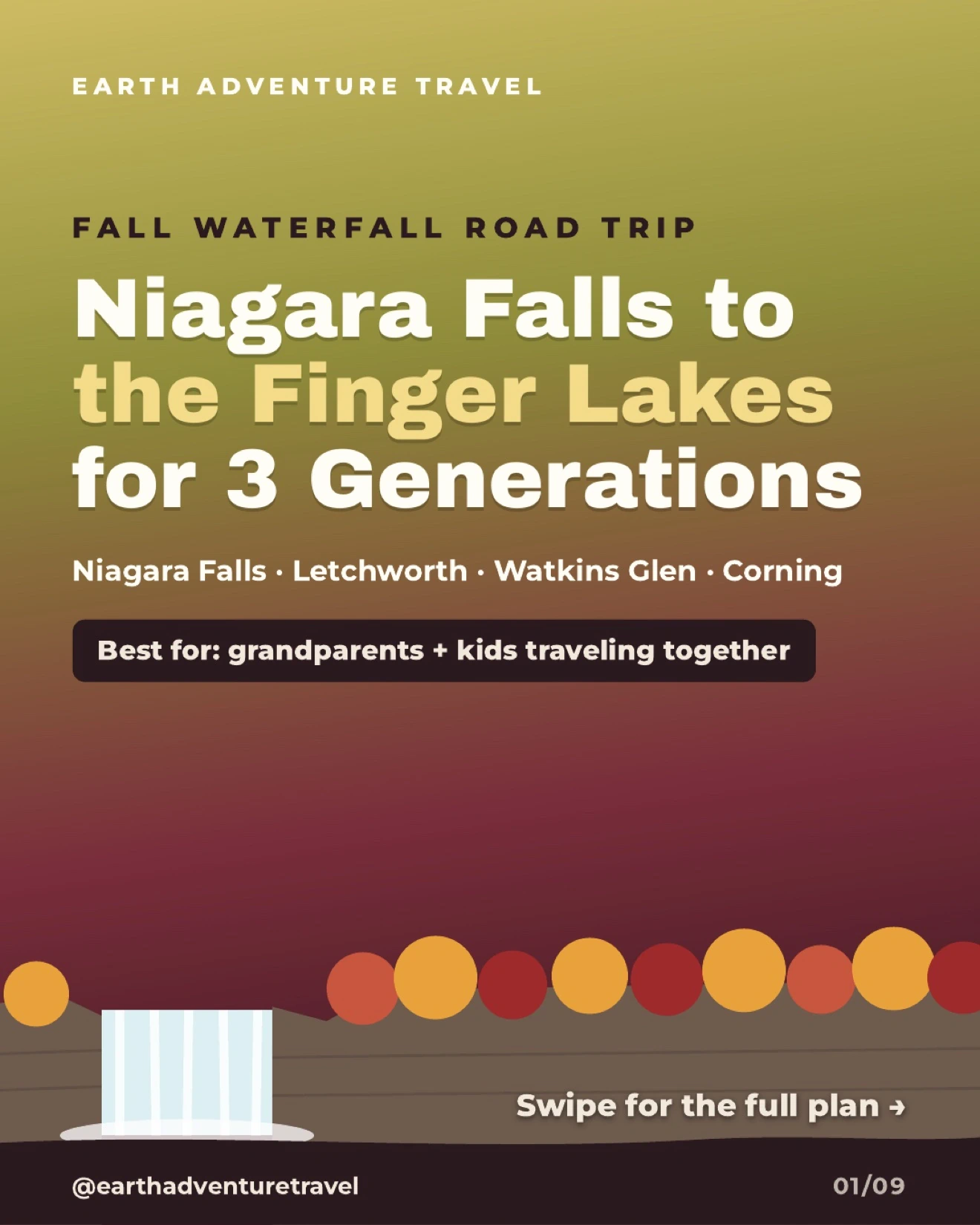
Featured route · New York
Niagara Falls to the Finger Lakes
Big-water drama first, then gorge walks, glassmaking, and lake-country calm—a five-day route designed for grandparents, parents, and kids traveling together.