Dec–MarCouplesWhitehorse

Four nights · aurora viewing, dog sledding & hot springs

A 4-Night Whitehorse Aurora Trip for Two

Last verified: October 2026How we verify

Whitehorse sits directly under the Auroral Oval — four nights of aurora hunting paired with dog sledding, steaming hot springs, and a frontier downtown that knows how to do winter, all from one cozy base.

International

Last verified: October 2026 · How we verify

5 days / 4 nightsBest Dec–MarCouplesEstimate: $1.9K–$2.6K
Illustrated Whitehorse aurora guide cover: northern lights over a snowy Yukon cabin
Original itinerary artwork
On this page
The aurora borealis dancing over Whitehorse, Yukon
Aurora over Whitehorse · the Auroral Oval does the talking

The trip in 60 seconds

At a glance

Best timing
December–March: the darkest nights (up to ~18 hours), the clearest skies, and peak aurora season directly under the Auroral Oval
Rough budget
$1,900 – $2,600 per couple, flights excluded — lodging, food, rental car, and activities
Ideal ages
Adults — a late-night, deep-winter trip built for two (prime aurora viewing runs 11pm–3am)
Getting there
Fly YXY (Erik Nielsen Whitehorse International) — about 10 minutes from downtown, with nonstops from Vancouver, Calgary, and Edmonton
Don’t miss
A heated-cabin aurora night and the Takhini Hot Springs soak under the lights
Good to know
Book dog sledding 2+ months ahead and aurora viewing for 2–3 nights — the lights are never guaranteed, so stack backup nights

Rough budget · couple

$1,900 – $2,600

5 days / 4 nights · lodging, food, rental car, activities · flights excluded · all costs in USD

The route

Four nights, one cozy base, and the sky on show.

Base downtown all four nights — every day trip is under 45 minutes. Book the dog sledding and two to three aurora nights before you leave home; the lights don’t do walk-ins. Days are short and sweet; the real show runs 11pm to 3am.

Illustrated route map: five days around Whitehorse — downtown base, Takhini Valley dog sledding, Yukon Wildlife Preserve, Miles Canyon, and YXY airport
Saveable route map · five days in Whitehorse

The idea

Whitehorse is where the aurora comes to you.

Here’s the direct answer: four nights in Whitehorse, Yukon, between December and March, when the town sits under the Auroral Oval in up to 18 hours of darkness and the northern lights show up on clear nights like they own the place. The thesis is simple — this is the easiest serious aurora trip in North America: fly into a real small city (YXY), sleep in a real hotel downtown, and let heated cabins, hot springs, and husky teams do the rest.

The route works like this: Day 1 lands you on Main Street with a first aurora night. Day 2 puts you behind a dog team in the Takhini Valley (self-drive sleds from ~US$245, book 2+ months ahead). Day 3 pairs the Yukon Wildlife Preserve’s muskox and moose with an evening soak at Takhini Hot Springs — 42°C water, −20°C air, aurora optional but likely. Day 4 walks the frozen Miles Canyon and ends at Fish Lake under the lights. Day 5 flies home. Every night gives the sky another chance, because the aurora is weather, not a showtime.

Day-by-day summary

1
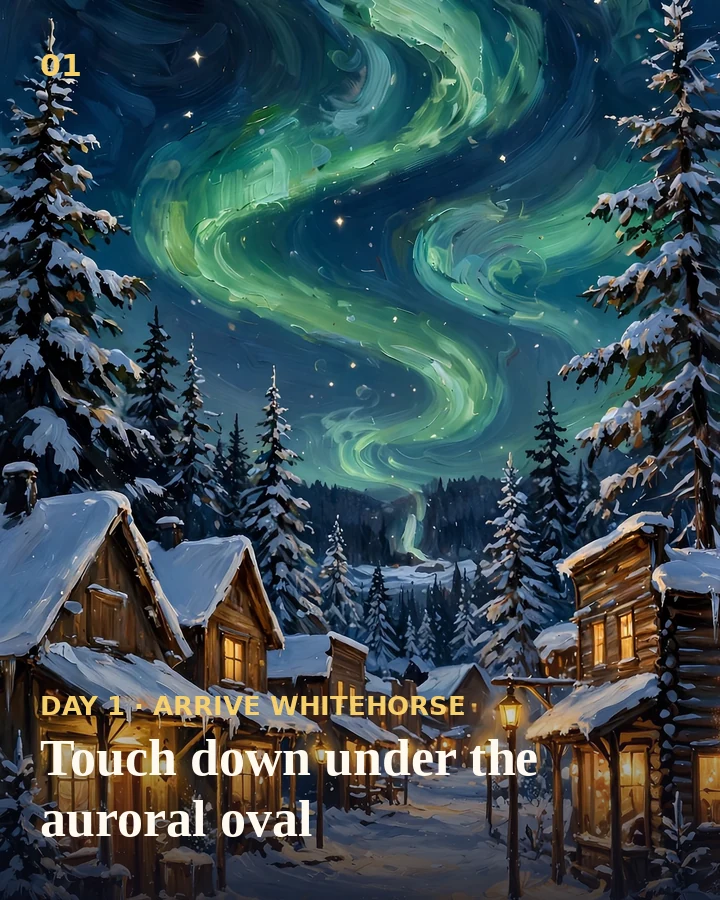
Illustration: Whitehorse's frontier main street under the aurora
Day 1 · Whitehorse under the lights

Main Street glows, the sky does the rest — night one under the Oval.

Touch down at Erik Nielsen Whitehorse International Airport (YXY), about 10 minutes from downtown, with nonstops from Vancouver, Calgary, and Edmonton. Pick up the rental car — you’ll want it for Fish Lake and the hot springs — and settle into your downtown base. Whitehorse is a real small city of about 28,000 — drop the bags and walk Main Street while the light lasts.

Afternoon: the Gold Rush city

Start at the MacBride Museum of Yukon History (Gold Rush and First Nations history — check winter hours), then walk the riverfront path to the SS Klondike grounds. Parks Canada’s sternwheeler is closed in winter, but the riverside walk stays open and photographs beautifully.
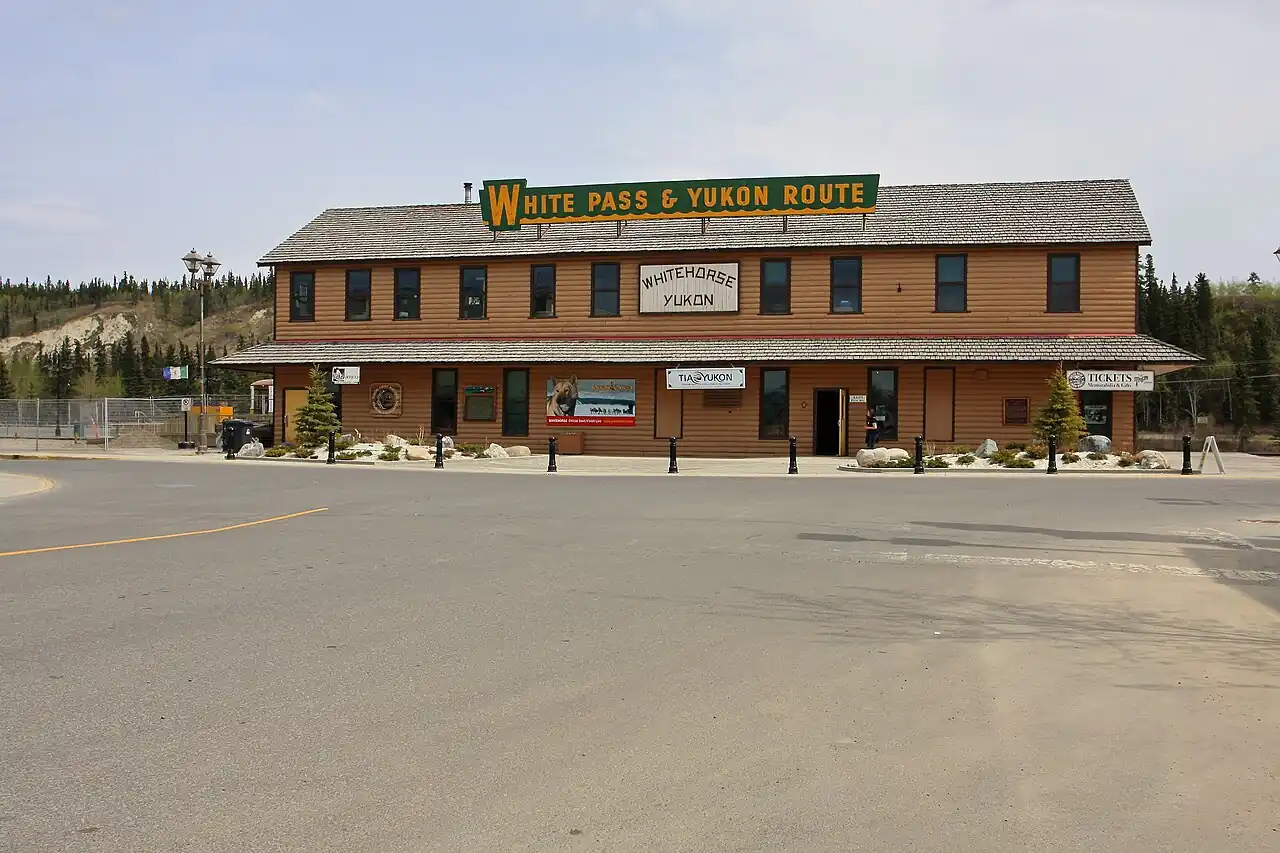
Whitehorse at dusk in winter
Whitehorse at dusk · the Yukon in winter

Night one: the aurora

Prime viewing runs 11pm–3am. Two good options: the guided route — the Whitehorse Aurora Lounge (~US$119, 4 hours, pickup included) or a late-night viewing tour (~US$125, 4.5 hours) — heated cabins 30+ minutes out of town with hot drinks and a guide who watches the sky; or drive yourself to Fish Lake (~16 km southwest), the dark-sky local favorite. Dress for −20°C: thermal base, fleece, puffy, shell, insulated boots, mittens.

Where to stay

One base for all four nights: the Edgewater Hotel (101 Main St — historic, from ~US$169, free airport shuttle) or the Coast High Country Inn (riverside, solid mid-range). Or Sundog Retreat’s cabins outside town, where the aurora is visible from the yard.

Bad-weather plan

If night one is cloudy, don’t panic — you have three more nights. Swap in a long dinner; NOAA’s 30-minute aurora forecast (linked below) tells you when the sky clears.

YXY → downtown: ~10 min · Fish Lake: ~16 km SW · aurora prime time: 11pm–3am

Couple’s tip: Book aurora viewing for two or three nights, not one — Night 1 plus Night 3 or 4 spreads your chances across the forecast.
2
Illustration: a husky sled dog team running through a snowy Yukon forest at dusk
Day 2 · behind the dog team

Twelve huskies, one frozen trail, zero engine noise.

This is the day the trip is secretly about. Dog sledding operators run out of the Takhini Valley, about 20 minutes west of downtown, on the classic Dec 1–Mar 20 winter season. Book a guide-assisted self-drive — you drive your own team with a guide riding along (from ~CAD $380, about US$266, 3–4 hours including transfer) — or the solo-sled self-drive (from ~CAD $350, about US$245, plus 5% GST). You’ll meet the team, learn the commands, then run 10+ km of forest trail. Book 2+ months ahead — winter slots sell out.

What it’s actually like

Cold (−15 to −25°C is normal), quiet, and faster than you expect. You brake and steer; the team does the rest. Wear your warmest layers and no cotton — accept the kennel’s loaner arctic suit if offered.

A husky sled dog team at work
Sled dogs at work · the Yukon's original engine

Afternoon: downtown thaw

Warm up with lunch, then wander: Lumel Studios (glassblowing demos and hands-on sessions), the Kwanlin Dün Cultural Centre (First Nations art on the riverfront), and coffee at Midnight Sun Coffee Roasters. Eat an early dinner — the aurora night starts late.

Night two: heated-cabin aurora

Book the dedicated viewing night tonight: the Whitehorse Aurora Lounge (~US$119, 4 hours) or Wild Adventure Yukon’s 6-hour viewing (~US$212). Heated wall tents, tripods and hot drinks provided. You’ll be back around 2–3am.

Where to stay

Same downtown base — kennels and aurora tours pick up from downtown hotels.

Bad-weather plan

In extreme cold (below −30°C) kennels may shorten runs — call ahead the morning of. Fill a spare afternoon with the MacBride Museum and the downtown galleries.

Downtown → Takhini Valley kennels: ~20 min · tours: 3–4 hrs incl. transfer

Couple’s tip: Mittens, not gloves — and split the driving if your tour allows it, so each of you gets the musher’s-eye view.
3
Illustration: steaming Takhini Hot Springs pools under the aurora
Day 3 · steaming pools, dancing sky

Muskox by day, steaming pools by night.

The Yukon Wildlife Preserve (~30 km northwest, next to the hot springs) keeps 12+ northern species in huge natural enclosures: muskox, wood bison, moose, elk, caribou, Dall sheep, mountain goats, and lynx. Winter guided tours run August through early April at ~CAD $120 (about US$84) + 5% GST, 3–4 hours. Book the morning slot — the animals are most active in the cold early light.

Afternoon: protect your sleep

Aurora nights run late, so treat the afternoon as sacred rest. Nap, then an early dinner downtown — Sanchez Cantina or Antoinette’s — before the night’s main event.

A muskox in the snow
Muskox at the preserve · Ice Age survivor

Night three: Takhini Hot Springs

Takhini Hot Springs (10 Takhini Hotsprings Rd, Mile 6), ~30 km NW: two outdoor mineral pools — 36°C and 42°C — with no sulphur smell, steam pouring off into −20°C air. Admission is about CAD $11.50 (~US$8) for adults; open daily noon–10pm in winter (closed Dec 24–25; Monday is adults-only, 18+). Soak until close, then look up — the springs sit under dark skies, and the aurora regularly shows from the pools. Floating in 42°C water while the lights ripple overhead is the signature night of this trip.

Where to stay

Same downtown base. The springs are an easy 30-minute drive each way — plan the drive home before the pools close at 10pm.

Bad-weather plan

The preserve tour runs in most weather (it’s part driving, part walking). If the pools don’t appeal in a cold snap, swap the evening for an extra heated-cabin aurora night — you can never have too many.

Downtown → Wildlife Preserve: ~30 km NW · → Takhini Hot Springs: adjacent

Couple’s tip: Bring sandals for the pool deck and your own towel — rentals are limited. And ask about the February hair-freezing contest; it’s real, and it’s exactly as Yukon as it sounds.

“The aurora keeps its own schedule in Whitehorse — your job is simply to dress warm, look up, and wait.”

4
Illustration: the frozen Miles Canyon with its suspension bridge at winter dusk
Day 4 · the frozen canyon

A frozen river canyon and the town gold built.

Miles Canyon is 10 minutes south of downtown: the Yukon River squeezing through basalt walls, frozen into blue-white stillness in winter. Walk the rim trail to the Robert E. Lowe suspension bridge (rebuilt) spanning the gorge — free, and in February you’ll likely have it to yourselves. Ice cleats help: the rim ices over.

Afternoon: SS Klondike and farewell dinner

The SS Klondike National Historic Site (Parks Canada) sits on the riverfront — the sternwheeler itself is closed in winter, but the grounds and riverside walk are open and photogenic. Then downtown for last souvenirs at the Main Street galleries, and a farewell dinner at the Wayfarer Oyster House or Klondike Rib & Salmon.

Miles Canyon on the Yukon River
Miles Canyon · the river in winter

Night four: Fish Lake

Your last aurora chance. Drive yourself to Fish Lake (~16 km southwest) or rebook a guided night if the forecast is hot. By night four you know the drill: thermos, tripod, spare batteries in an inside pocket, patience. If you’ve already seen the lights twice, make this the relaxed one — dinner first, Fish Lake only if the sky is clear.

Where to stay

Same downtown base — last night. Pack before the aurora run so tomorrow morning is easy.

Bad-weather plan

If the canyon rim is too icy, do the drive-up viewpoints only and spend the afternoon at the Yukon Beringia Interpretive Centre (check winter hours) — Ice Age Yukon, mammoths and all.

Downtown → Miles Canyon: ~10 km south · → Fish Lake: ~16 km SW

Couple’s tip: The canyon at dusk is the trip’s quietest hour — go just before sunset for the blue light on the ice, then dinner, then the sky.
5
Illustration: the frozen Yukon River at dawn with ravens in a pale sky
Day 5 · farewell at dawn

Last light on the Yukon River — fly home chasing dawn.

Sleep in — you’ve earned it after four late nights. Brunch at Burnt Toast Cafe or Baked Cafe & Bakery (both downtown institutions), then one last walk on the riverfront path while the winter sun does its brief, low arc. YXY is about 10 minutes from downtown and small enough that 90 minutes before departure is plenty; return the rental car with a full tank and you’re through in minutes.

If your flight is later

An afternoon flight buys you a final hour or two: the MacBride Museum opens late morning (check winter hours), and the Main Street galleries are good for last-minute Yukon art. Or simply sit with a coffee and watch the river ice — the trip’s pace has earned you a slow ending.

The Yukon River at Whitehorse
The Yukon River · headwaters of the Gold Rush

What you’re taking home

Four nights under the Auroral Oval, a musher’s-eye view of the Takhini Valley, 42°C water against −20°C air, and — if the sky cooperated — the kind of photos people assume took a week in the Arctic. Whitehorse makes the aurora easy; the hard part is leaving.

Where to stay

Tonight: home. If you’re extending, the Edgewater Hotel and Sundog Retreat both welcome a fifth night — and March adds longer days without losing the dark.

Downtown → YXY: ~10 min · arrive 90 min before departure

Couple’s tip: Winter sunrises run late in Whitehorse — time your brunch for first light and watch the town wake up pink.
Saveable recap graphic for the Whitehorse aurora couples route
Saveable route recap · four nights in Whitehorse
61°Ndirectly under the Auroral Oval
Dec–Marpeak aurora season
11pm–3amprime viewing hours
~US$8Takhini Hot Springs soak

Who is Earth Adventure Travel?

Research-first itineraries for every kind of crew.

We build detailed, research-first itineraries for solo travelers, couples, families, and multigenerational groups alike. Our Verified Tours are the trips a team member has personally traveled; this Whitehorse guide is a research-built itinerary, checked against official sources in October 2026.

More about us

Before you go

Book the dogsled first. Pack for −20°C, not for the flight.

These are planning ranges, not quotes. Winter rates, tour prices, and hours move by season — check the official links before departure. All costs in USD (converted from CAD at ~0.70, Oct 2026).

What earns space

  • Non-cotton thermal base layers (top + bottom) — the cold is dry and wicks fast
  • Fleece or wool mid-layer + an insulated puffy jacket
  • Windproof/waterproof shell jacket and ski pants
  • Insulated winter boots rated to −30°C
  • Warm hat, neck gaiter or balaclava, and mittens (not gloves)
  • Hand and toe warmers for the long aurora nights
  • Swimsuit + sandals for Takhini Hot Springs, towel of your own
  • Ice cleats for the Miles Canyon rim
  • Camera tripod + spare batteries (kept in an inside pocket)
  • A thermos — hot drinks make the 11pm–3am window civilized
Arctic winter clothing and gear
Arctic-grade layers
Miles Canyon overlook
The night sky over the Yukon
Night sky, 61°N

Planning notes

Whitehorse aurora questions, answered.

When is the best time to see the northern lights in Whitehorse?

December through March: the darkest nights (up to ~18 hours in December), the clearest skies, and peak aurora season directly under the Auroral Oval. March is a sweet spot — long dark nights with milder temperatures than January.

How many nights do you need to see the aurora in Whitehorse?

Plan at least four nights and book aurora viewing for two or three of them. The lights are weather, not a showtime — clear dark skies and solar activity both have to cooperate. Multiple nights turn a gamble into a near-certainty.

What does a Whitehorse aurora trip cost for a couple?

Roughly $1,900–$2,600 excluding flights for 5 days/4 nights: $480–$700 lodging, $400–$600 food, $400–$550 rental car, and $550–$750 for aurora tours, dog sledding, the hot springs, and the wildlife preserve. All costs in USD.

How cold does Whitehorse get in winter?

Winter days average around -12°C (about 10°F), with nights commonly hitting -20°C and cold snaps down to -25°C (-13°F) or lower. The cold is dry, and with proper layers — thermal base, fleece mid, windproof shell, insulated boots, mittens — it's entirely manageable.

Do you need a car in Whitehorse in winter?

For this itinerary, yes. Fish Lake, Takhini Hot Springs, and the Yukon Wildlife Preserve are 16–30 km out of town with no winter transit. Rent with winter tires and budget $400–$550 for five days.

Can you see the aurora from downtown Whitehorse?

On strong nights, yes — the whole town sits under the Auroral Oval. But city lights wash out faint displays, so drive 20–30 minutes out (Fish Lake is the local favorite) or book a heated-cabin viewing tour for the full experience.

What is Takhini Hot Springs and how much does it cost?

Two outdoor mineral pools (36°C and 42°C) about 30 km northwest of Whitehorse, with no sulphur smell. Admission is about CAD $11.50 (~US$8) for adults; it's open daily noon–10pm in winter, closed Dec 24–25, with Monday as adults-only night.

How much is dog sledding in Whitehorse?

Self-drive sleds (you drive your own team with a guide) start around CAD $350 (~US$245) per person, guide-assisted from ~CAD $380 (~US$266), for 3–4 hours including transfer, Dec 1–Mar 20. Book at least two months ahead — winter slots sell out.

Is Whitehorse good for couples?

It's built for two: late aurora nights, steaming hot springs, dog sledding, and a cozy downtown with good restaurants — all from one hotel base. The whole itinerary is paced for a couple, with no kid-specific stops.

What should we pack for -20°C?

Non-cotton thermal base layers, a fleece or wool mid-layer, an insulated puffy, a windproof/waterproof shell (jacket and pants), insulated boots, a warm hat, neck gaiter, and mittens — not gloves. Add ice cleats, a swimsuit for the hot springs, and a camera tripod with spare batteries.

Where is the best aurora viewing near Whitehorse?

Fish Lake (~16 km southwest) is the classic free self-drive spot. Heated-cabin tours (Aurora Lounge ~US$119, Wild Adventure Yukon ~US$212) take you 30+ minutes out with hot drinks and tripods. Takhini Hot Springs doubles as an aurora soak on clear nights.

How do I check the aurora forecast?

Use NOAA's 30-minute aurora forecast (swpc.noaa.gov) for real-time activity, watch the Kp index (at 61°N even low Kp can deliver under dark skies), and check local cloud cover — clear skies matter more than a high Kp.

Before you book

The six checks that make this trip work.

References

Research behind this guide

The reporting and research that shaped this itinerary.

Whitehorse: Exploring Yukon’s Capital City ↗National Geographic — on the northern lights overhead, the Wilderness City nickname, and aurora season running late August to April.
Where to see the northern lights in Canada ↗National Geographic — the Yukon section: Fish Lake viewing, NOAA’s 30-minute forecasts, and why the territory suits aurora seekers.
Takhini Hot Springs ↗Frommer’s — the natural hot-springs pool at 10 Takhini Hotsprings Rd, seasonal hours, and admission pricing.
Aurora Borealis bucket-list package ↗Travel Yukon — heated-cabin viewing formats, 10pm departures, and 2–4 night aurora tour structures in Whitehorse.
Basic Aurora Borealis package ↗Aurora Borealis Yukon — multi-night viewing itineraries with heated cabins, hot drinks, and 10pm departures, the model behind this trip’s aurora nights.
Whitehorse northern lights tours ↗GetYourGuide — the Aurora Lounge heated cabin (from $119) and late-night viewing formats with current pricing and reviews.
Famous landmarks in Whitehorse ↗MileHacker — Miles Canyon, the SS Klondike, the Wildlife Preserve, and Takhini Hot Springs as the Whitehorse-area anchors.

Trip Types

National Parks & Wild PlacesCoastal Drives & Beach TownsCities & Urban WeekendsHistoric & Cultural RoutesMountain TownsFood & Drink TrailsInternationalView all 112 trips →

The trip index

Choose the landscape. Then choose the pace.

Every itinerary gives you a realistic route, daily rhythm, planning notes, and the details that make a family trip work.

Use the filters above to see the routes that match.

No exact match—yet.

Clear a filter to see the closest routes already in the library.