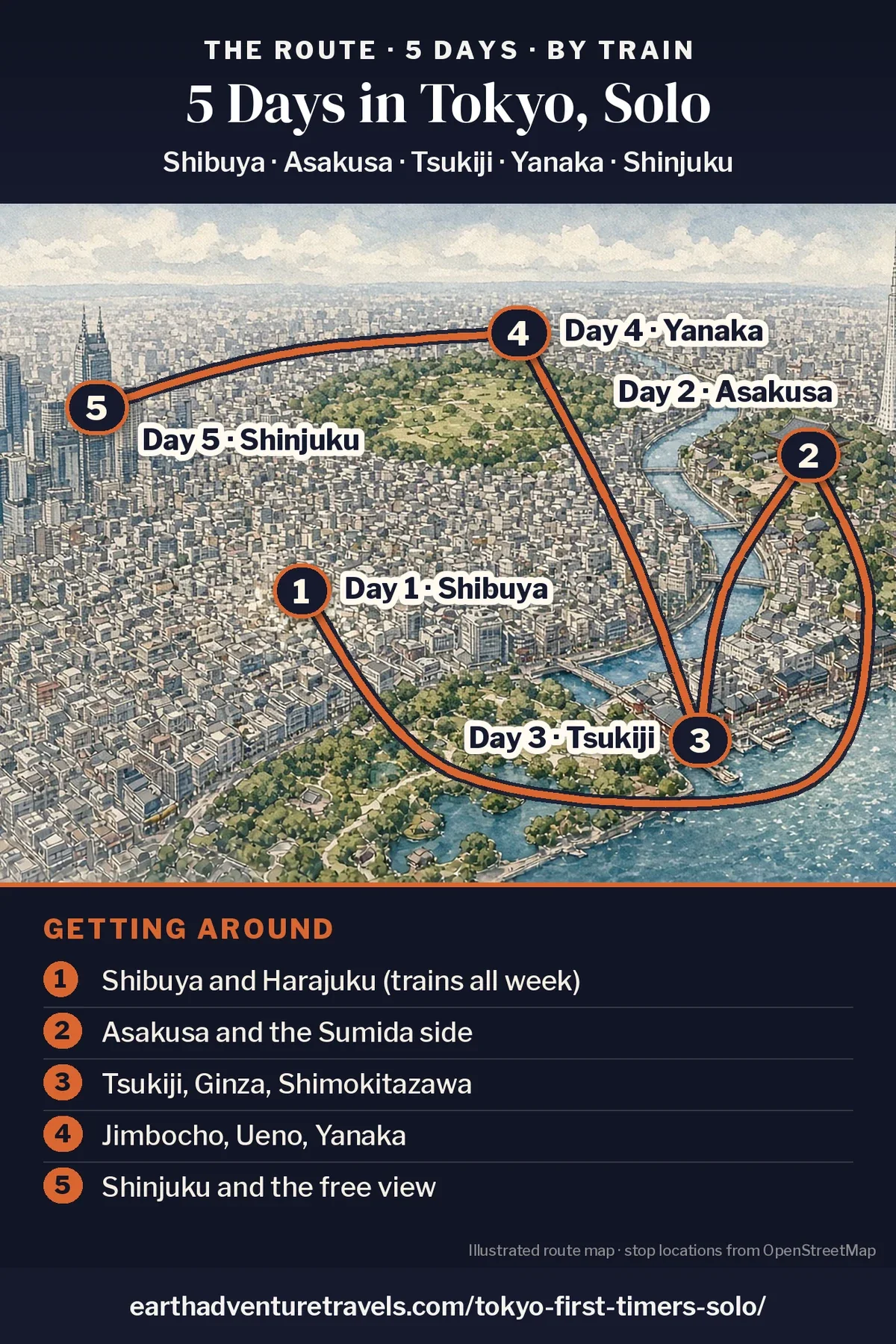
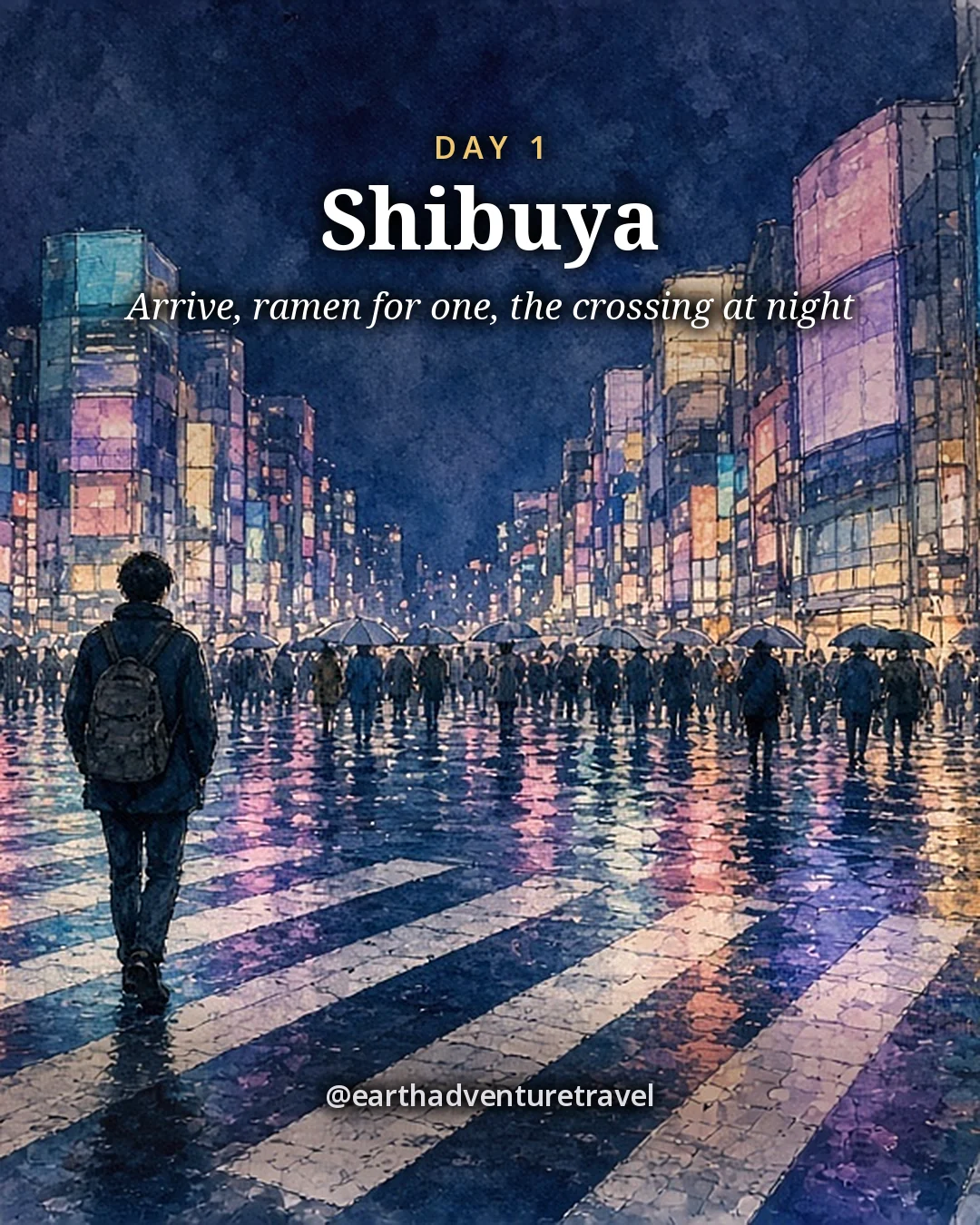
Base: your room near Shinjuku or Ueno, all four nights. Today stays in western Tokyo: Tomigaya and Harajuku on foot in the morning, two short train rides to Shimokitazawa and back, then Shibuya after dark. Nothing on today’s walking route charges entry (free), so the only costs are trains and food. Pace: gentle for a first day: about three or four miles of flat walking in total, with a long sit at lunch. If you land in the afternoon, start with the crossing and dinner and move the morning to Day 5.
An IC card and coffee in Tomigaya
Before anything else, get a rechargeable IC card at the airport or the first big station and load it with a few thousand yen. It pays for every train in this plan, and most convenience stores take it too, so you are not counting coins at a ticket machine on your first morning.
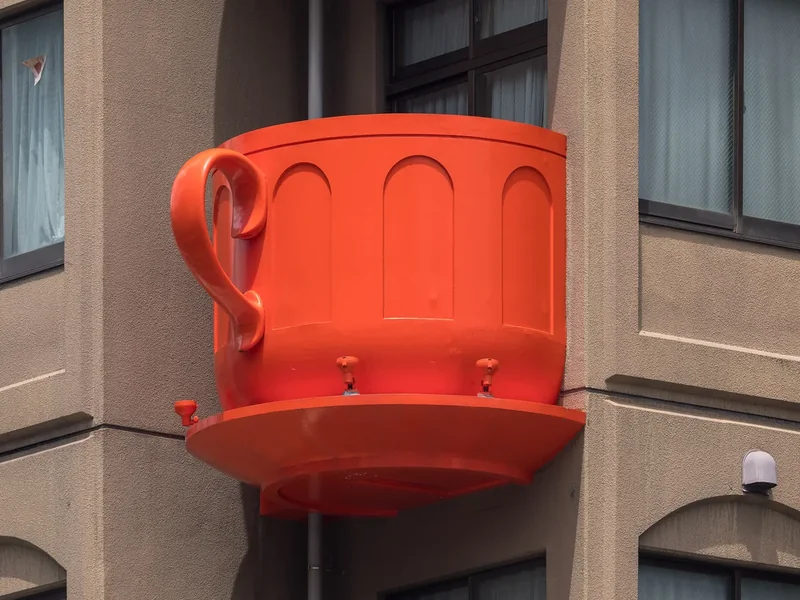
Where to eat: coffee and something small at Fuglen Tokyo in Tomigaya, a quiet residential pocket north-west of Shibuya, about a 15-minute walk away. It is a coffee bar by day and a bar at night, and the room is small enough that sitting alone at the counter feels natural.
From Tomigaya, walk south and east through the side streets toward Harajuku. The blocks between are mostly houses, small studios and shops, a calm way to get your bearings before the crowds.
A yuzu ramen lunch in Harajuku
Where to eat: AFURI Harajuku for its signature yuzu shio ramen, a clear salt broth with a citrus edge that is lighter than the rich pork styles. You buy a ticket from the machine by the door and hand it over at the counter, so ordering alone takes no conversation at all.
Harajuku is busy around the station, especially on weekends; arrive close to opening for a quick seat, then keep moving rather than fighting the main street crowds.
An afternoon in Shimokitazawa
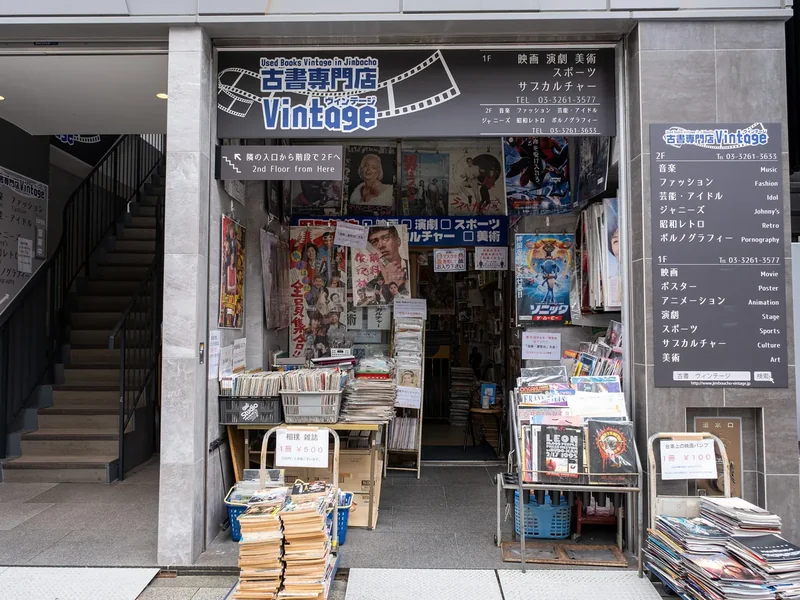
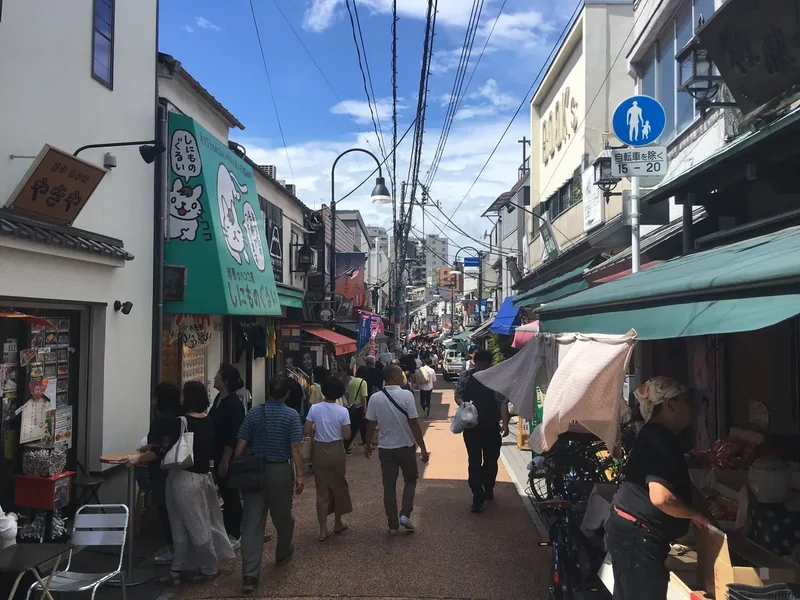
Take the train a few stops west to Shimokitazawa, a walkable neighborhood known for vintage clothing, record shops, bookstores, small theaters and live-music bars. The streets are narrow and mostly car-free, which makes it easy to wander without a map until the light fades.
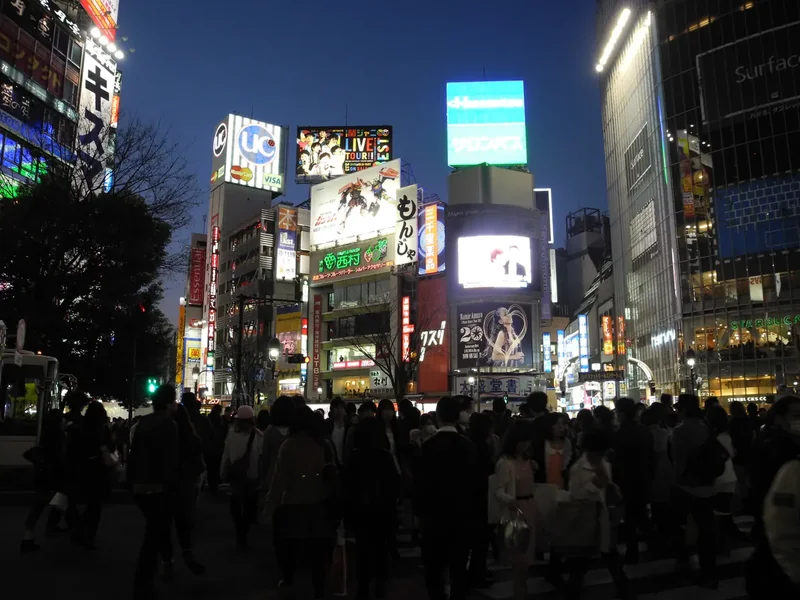
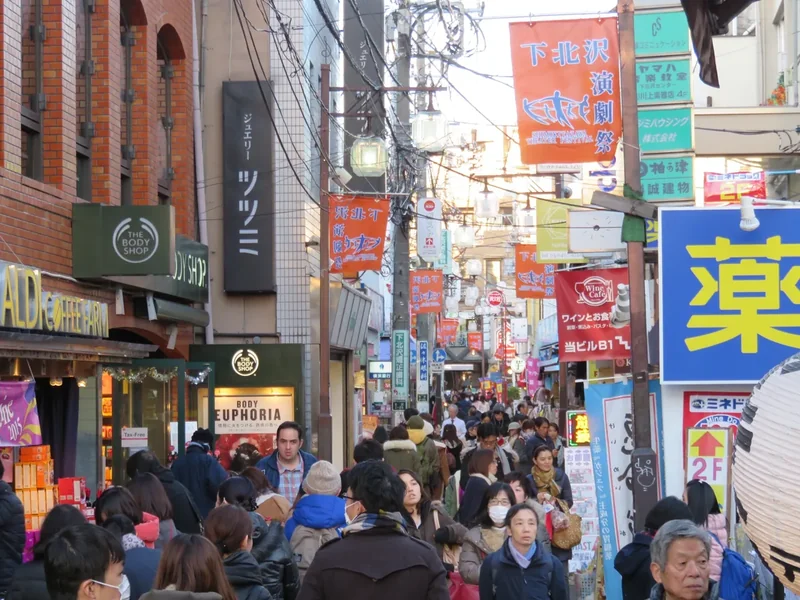
The secondhand shops open late in the morning and stay open into the evening, so the afternoon can run long. Coming back to Shibuya after dark, the noise rises fast: the station announcements, the music from the storefronts, the crossing signals chiming over the crowd. After a quiet afternoon it lands all at once, and that jolt is what makes the crossing feel like arrival.
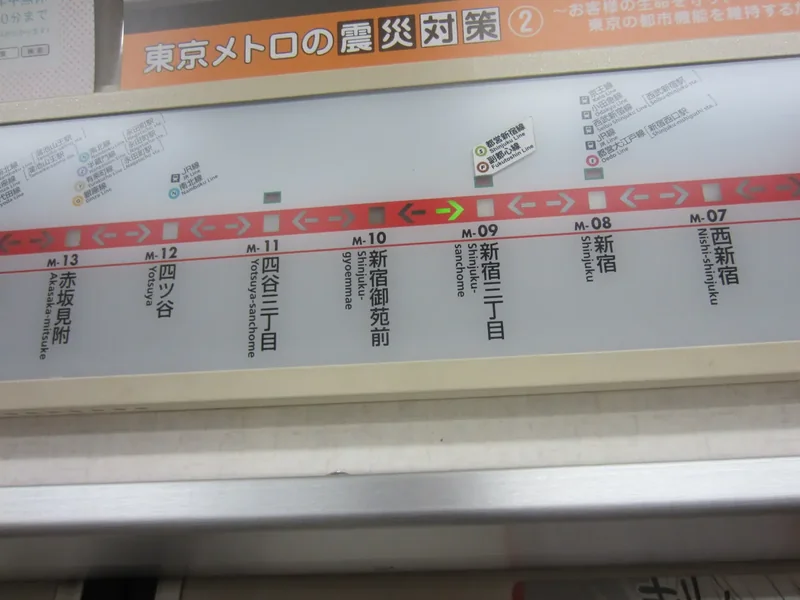
Expert tip: keep your IC card topped up above ¥1,000 today. Shimokitazawa is on a different line from Shibuya, and a low balance means a stop at the fare adjustment machine at the gate.
The Shibuya Crossing at dusk
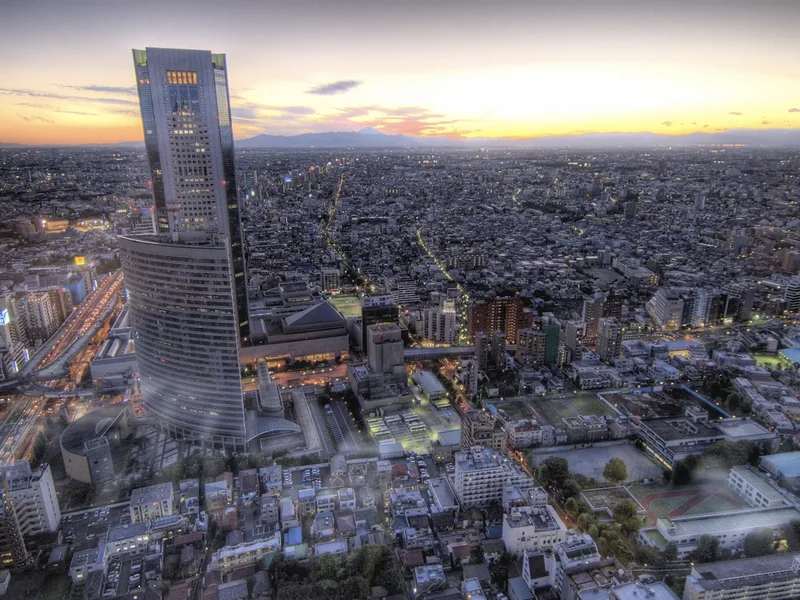
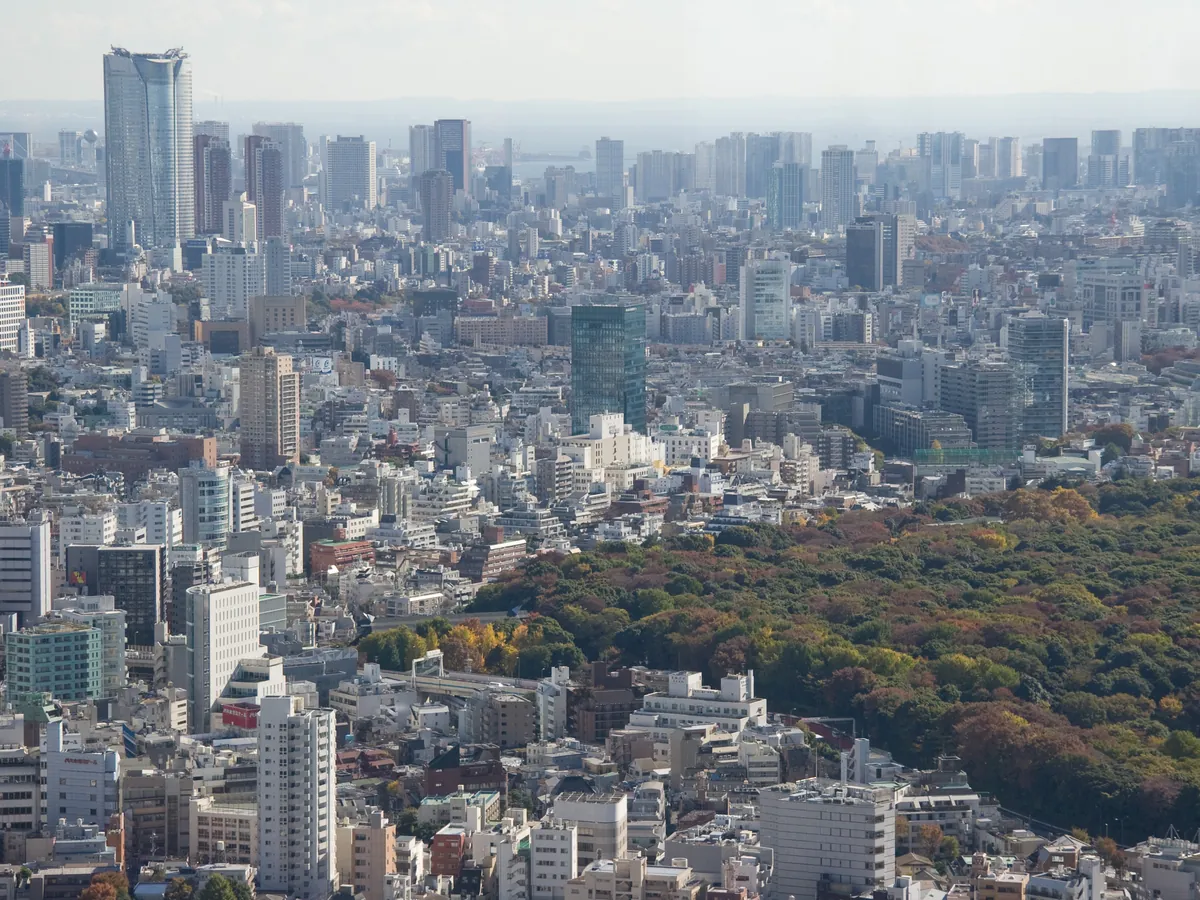
The scramble crossing in front of Shibuya Station stops every car at once and lets people walk in every direction, including diagonally. Cross it once at street level with the crowd, then look back at it from a raised walkway or a café window near the station to see the pattern the crossing makes from above.
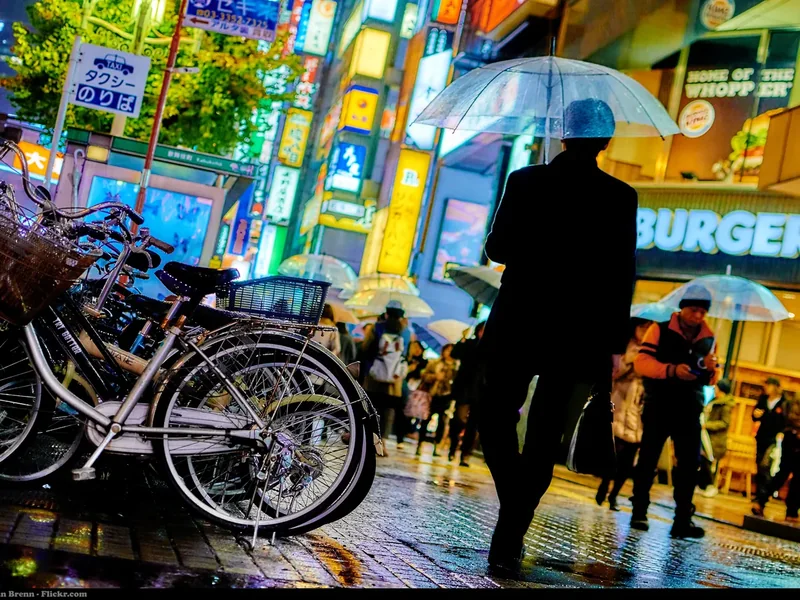
After dark, the screens on the surrounding buildings light the wet pavement on a rainy evening. Stay aware of your bag in the thickest part of the crowd, as you would in any big city, but Shibuya at night is busy and well lit.
A sushi counter and a late ramen booth
Where to eat: Sushi no Midori in Shibuya for a first solo sushi dinner. Fish comes in fresh from the Toyosu market, the prices are moderate for central Tokyo, and the counter suits one person. Queues are common, so arrive early in the evening.
Where to eat: later, if you are still hungry or jet-lagged, Ichiran near the crossing for tonkotsu ramen in a single booth with dividers on both sides. You mark your preferences on a paper sheet and the bowl arrives through a small window. It stays open late.
Where to eat and stop
- Breakfast · Fuglen Tokyo — coffee and a light bite at a small coffee bar. Why here: In Tomigaya near Shibuya, a calm coffee first morning.
- Lunch · AFURI Harajuku — yuzu shio ramen ordered from the ticket machine. Why here: A light yuzu ramen lunch, easy to order solo.
- Dinner · Sushi no Midori — a sushi dinner at the counter in Shibuya. Why here: A sushi counter for a first solo sushi dinner (queues are common).
- Quick stop (snack): Ichiran Shibuya — tonkotsu ramen in a single booth. Why here: Booth-seat ramen made for eating alone, open late near Shibuya Crossing.
Tomigaya → Harajuku: about 20 minutes on foot. Shibuya → Shimokitazawa: about 5 minutes by train. Shibuya Station → the crossing: about 2 minutes on foot.
Where to stay
- A business hotel near Shinjuku Station — four nights a few minutes from Shinjuku Station, the easy hub for the west side and the airport trains.
- A small hotel near Ueno Station — or four nights near Ueno Station, closer to Asakusa, Yanaka and the Narita trains.
Dinner: Sushi no Midori in Shibuya, with Ichiran as a late bowl.
Tomorrow: Senso-ji in Asakusa before the shops open.
Bad-weather plan
Rain all day? Swap Shimokitazawa for the covered shopping floors around Shibuya Station, keep the counter lunch and dinner, and watch the crossing from a café window instead of the street.
Stay: Shinjuku or Ueno base · Anchor: the Shibuya Crossing · IC card, short train rides
Good to know: Most small Tokyo restaurants sell meal tickets from a machine at the door; many take cash or an IC card, so carry some yen.