MACHU PICCHU · WITH TEENS

8 Days on the Inca Trail to Machu Picchu

Cusco · Sacred Valley · Dead Woman’s Pass · Sun Gate — two nights at altitude before a single trail step, the classic four-day trek walked at teen pace, and Machu Picchu arriving the way it should: on foot, at dawn, through the Sun Gate.

8 days / 7 nightsCusco 2n · Sacred Valley 1n · Trail camps 3n · Aguas Calientes 1nHighest point: Dead Woman’s Pass, 4,215 mYear-round except February, when the trail closes
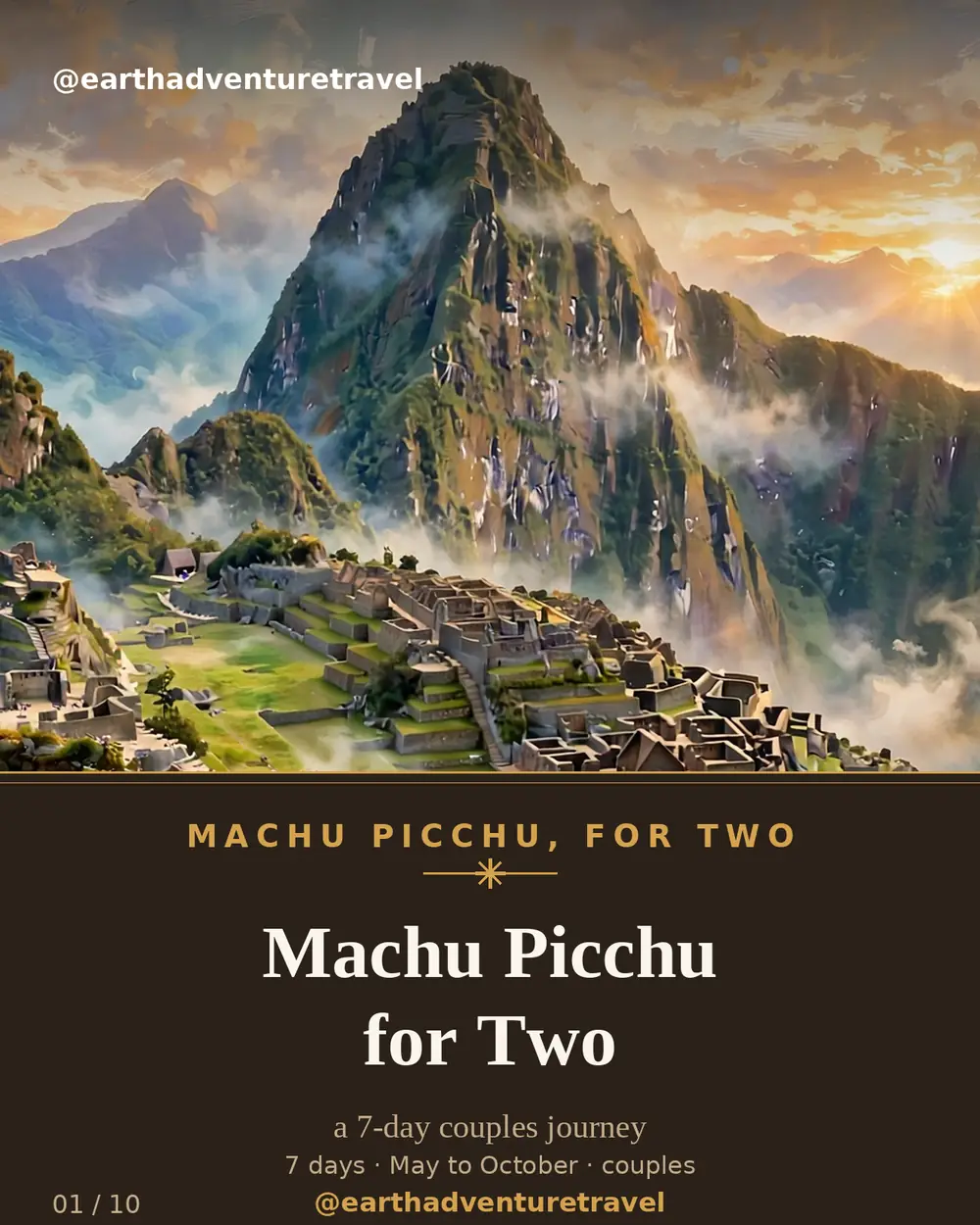
Original Illustration: Illustrated cover card: Machu Picchu at dawn, citadel and terraces below Huayna Picchu, mist in the valley and first light on the stone.
Original Illustration

Reviewed How we verify

Machu Picchu at dawn, seen the way this trip earns it — after four days of stone steps, with the mist still in the valley and the first gold on the terraces.

The idea

The classic trail, planned like a family expedition

The Inca Trail is the one trek teenagers never have to be sold on — a lost city at the end of it does the selling. What families need is the planning around it: permits booked in time, altitude respected, and a pace a teen can actually enjoy.

Illustrated accent: one precisely cut Inca stone block with a tuft of golden ichu grass at its base on plain cream paper.Original Illustration

Every family that walks the Inca Trail tells the same story afterwards: the citadel was extraordinary, but the trail was the trip. Four days on a stone road the Inca built, through cloud forest and over a 4,215-metre pass, arriving at Machu Picchu through the Sun Gate at dawn — that sequence turns a famous ruin into an earned one, and for teenagers it lands like nothing else. They do not get shown Machu Picchu. They walk to it, the way its builders intended, and they know exactly what it cost.

The plan around the trek is what makes it work for a family. You sleep two nights in Cusco first, at 3,400 metres, doing deliberately gentle things — the plaza, the cathedral, the great walls of Sacsayhuamán above the city — while young lungs adjust. A third night drops down to the Sacred Valley, lower and warmer, for Pisac’s terraces and the fortress town of Ollantaytambo. Only then, on day four, do you show your permits at Km 82 and start walking, with a licensed operator’s porters carrying the camp and the kitchen.

Nothing on the trail is left to luck. Permits are capped at 500 people a day including porters and guides, they sell out months ahead for the dry season, and the trail closes every February — so this guide treats the booking calendar as part of the itinerary. Inside the walk, the shape is the classic one: an easy first day to Wayllabamba, the great climb over Dead Woman’s Pass on day two of the trek, the cloud-forest ruins day through Phuyupatamarca, and the pre-dawn start that puts you at the Sun Gate as the light arrives.

Two nights to acclimatize, one valley day to drop lower, then four days of stone steps to the Sun Gate at dawn — Machu Picchu, earned.

01

Altitude is planned, not endured

Most Inca Trail misery is a scheduling error: families fly into Cusco at 3,400 metres and start climbing the next morning. This plan spends two nights in Cusco and a third, lower night in the Sacred Valley before the trailhead, so the first walking day starts with adjusted lungs, tested boots and a teen who has already slept three nights at altitude.

02

The permit calendar runs the whole trip

Only 500 trail permits are issued per day, and that number includes guides and porters — roughly 200 walkers. For May to September they can sell out four to six months ahead, and there is no walk-up option and no waiting list. Booking the trek first and building flights and hotels around it is not caution; it is the only order that works.

03

Teens get the real expedition, supported

A licensed operator’s crew carries the tents, the kitchen and most of the weight, cooks hot meals at camp, and walks a guide at the front and back of the group. What is left for your teenager is the good part: a daypack, stone steps, ruins nobody drives to, and a pass at 4,215 metres they will talk about for years.

On this trip

A Sense of Place

Eight days, one old road — a colonial city built on Inca walls, a fortress of impossible stones, valley terraces that still feed towns, and four days of camps, passes and cloud-forest ruins ending at a stone gate above a lost city.

On this trip

A Sense of Place

Eight days, one old road — a colonial city built on Inca walls, a fortress of impossible stones, valley terraces that still feed towns, and four days of camps, passes and cloud-forest ruins ending at a stone gate above a lost city.

The trip in 60 seconds

Under this sky

The Season Here

Cusco · Ollantaytambo · Inca Trail · Aguas Calientes

At 3,400 m the rules are altitude rules: fierce midday sun, cold nights in every month, and a year split cleanly between the dry season (May–September) and the rains (November–March).

  1. NovemberThis monthTypical high 70°, low 44°
  2. DecemberNextTypical high 67°, low 44°
  3. JanuaryThenTypical high 66°, low 44°
See the full 14-day forecast

The next three months

Sky & weather

Forecast for Cusco

Forecast · refreshes daily

Sun today

Sunrise–Daylight–Sunset–

Sun times load with the forecast.

Typical by month

MonthHighLowHigh / lowWhat to expectExpect
Jan66°44°66° / 44°Wet season: afternoon downpours, green hills, cold nights after rain.Rainy, green
Feb65°44°65° / 44°The wettest weeks; the trail closes this month and the city is quiet.Wettest month
Mar66°43°66° / 43°Rains easing; bright mornings with storms still rolling in after lunch.Easing rains
Apr67°40°67° / 40°The turn of the year: mostly dry days return and the hills stay green.Turning dry
May68°36°68° / 36°Dry season begins: blue skies, strong sun, properly cold nights.Dry, bright
Jun68°32°68° / 32°The clearest, coldest month — frost at dawn, flawless walking days.Clear, frosty
Jul68°32°68° / 32°Peak dry season: Inti Raymi crowds gone, skies at their most reliable.Peak dry
Aug69°36°69° / 36°Dry and warming; golden ichu grass on the high slopes.Dry, golden
Sep69°40°69° / 40°Late dry season, warmer nights, the first spring storms late in the month.Late dry
Oct70°43°70° / 43°Shoulder season: warm days, occasional rain returning.Shoulder
Nov70°44°70° / 44°Rains building; mornings still fine, afternoons increasingly wet.Rains return
Dec67°44°67° / 44°Wet season proper: festive, green and rainy in the afternoons.Wet, festive

Typical: SENAMHI — Peru national weather service.

The route

The route, day by day

Cusco first for altitude, down into the Sacred Valley to sleep lower, then the trail itself: four walking days northwest along the old Inca road to the Sun Gate, a night in Aguas Calientes, and the train out along the river.

How the route flowsCusco → Sacsayhuamán → Pisac → Ollantaytambo → Km 82 → Wayllabamba → Dead Woman’s Pass → Phuyupatamarca → Sun Gate → Machu Picchu → Aguas Calientes

Illustrated accent: the empty stone-paved Inca road climbing through cloud forest toward a high pass, one shaft of sun on the steps.Original Illustration
  1. Day 1On foot, gentle paceCusco basePlaza de Armas, the cathedral quarter and San BlasArrival day is for thin air and golden hour, not sightseeing heroics
  2. Day 2Short taxi or walk uphillCusco → SacsayhuamánThe fortress hill above the cityZigzag walls in the morning, Qorikancha and the markets after
  3. Day 3Private transfer, about 1 hourCusco → Pisac → OllantaytamboDown into the Sacred Valley along the UrubambaTerraces at Pisac, then sleep lower in the fortress town
  4. Day 4Transfer about 1.5 hours, then on footOllantaytambo → Km 82 → WayllabambaPermit checkpoint, then the trail beside the UrubambaThe easy first trail day under the Verónica glacier
  5. Day 5On foot, the big climbWayllabamba → Dead Woman’s Pass → PacaymayoUp to 4,215 m, then down the far sideThe trip’s high point before lunch, camp in the valley below
  6. Day 6On foot, ruins dayPacaymayo → Phuyupatamarca → Wiñay WaynaTwo smaller passes and the cloud-forest ruinsThe town in the clouds, then the long stairway down
  7. Day 7On foot before dawn, bus down afterWiñay Wayna → Sun Gate → Machu Picchu → Aguas CalientesInti Punku at dawn, a guided citadel circuit, then the busThe arrival the whole trip is built around
  8. Day 8Bus up, train outAguas Calientes → Machu Picchu → train to OllantaytamboA second citadel morning, then the gorge railwayHome by rail along the white-water Urubamba

Day 1 of 8

Dead Woman’s Pass
4,215 metres (13,829 ft)Warmiwañusqa, the highest point of the classic trail — crossed on day 5, after three nights sleeping at altitude
Trail permits
500 people per day, totalThe cap includes guides and porters, so only about 200 trekkers start each day; dry-season dates sell out months ahead
The trail
About 42 km over 4 daysKm 82 to the Sun Gate on the original stone-paved Inca road, through the Machu Picchu Historical Sanctuary
February
The trail is closedThe classic Inca Trail closes every February for maintenance and the worst of the rains; Machu Picchu itself stays open by train

Make it yours

Two ways to make this trip yours.

Free with an account: this guide as written, with its map and day-by-day plan.

Fits this guide

Your Edition

Same place, same length. Fitted to your group, season and pace.

From $9.99Members $6.99 · Join Freedom Passport · Member price applied

This 8-day guide: $9.99 · members $6.99

  • This guide’s route, re-paced for who’s coming
  • Food hotspots and picks along the way
  • An occasion moment for a birthday, anniversary or first trip
  • Group notes, season notes, packing list and playlist
  • Lives on its trip page and in the app

Uses the guide’s illustrations. No new artwork.

Get Your Edition

Custom Trip

Any combination of places, built from scratch.

From $69Members $49 · Join Freedom Passport · Member price applied

Getaway $39 · Journey $69 · Grand Journey $119

  • Any combination of locations, not limited to a prebuilt itinerary
  • A deeper dive: 3 full itineraries a day, Saver, Sweet spot and Splurge
  • Its own custom artwork, made for your trip
  • Any length up to 21 days, with a trip page and a PDF
Get a Custom Trip

Your Edition fits this guide to your group. A Custom Trip goes deeper: any combination of locations, with its own custom artwork.

Freedom Passport members pay $6.99 and up for Your Edition and from $29 for a Custom Trip. See Freedom Passport

Member prices on every Your Edition and Custom Trip, plus a free Your Edition after 3 paid months (monthly plan). Partner perks coming soon.

Compare side by side

Illustrated travel journal with a winding route and pinsCustom Edition

How we tailor your Inca Trail to Machu Picchu with Teens plan

A plan that knows how you travel.

3 full itineraries in every plan, Saver to Splurge, so you can pick or mix.

🌙 Your rhythm

Late night? The next morning starts slow, with brunch before anything else.

🥾 Your needs

Want to split up for an afternoon? Day 2 gives you a hike or a slow wander, then dinner together.

🌄 Your kind of day

Here for the food? Every day plans around one meal worth the trip.

3 full itineraries in every plan

Saver, Sweet spot and Splurge, each a complete day-by-day plan. Pick one or mix.

All 3 in your plan
$SaverSmart value
$$Sweet spotGood balance
$$$SplurgeTreat yourself
See it in a sample plan

Yours from $39.

Every plan is built around you, your pace and your must-dos.

Longer trip? Design your own custom journey up to 100 days

Journey (4–8 days) · $69

Art & photos

  • 8 original illustrations of your trip's highlights
  • 14 destination photos to preview each stop1 cover · 6 daily · 7 postcards

Planning

  • Timed itinerary so every day runs at an easy pace
  • 3 full itineraries Saver, Sweet spot and Splurge, so you can pick or mix
  • 3 curated stays per stop to match your budget
  • Where to eat for breakfast, lunch and dinner, plus local tips every day
  • Tap-to-go routes to every hotel, activity and restaurant, opening straight in your maps app
  • Booking timeline so you book the right things in the right order
  • Packing list made for every traveler coming
  • 6 rainy-day backup plans so a wet day still feels like vacation

Your plan, your way

  • Digital trip page in your account, on any device
  • PDF to save, print or share
  • Trip playlist with song links for Spotify and Apple Music
  • Calendar file that drops every day into your calendar
  • Budget estimate so you know the cost before you go
  • 1 free refinement to tweak anything after delivery

Emailed within 3 business days of your trip brief. Full refund any time up until delivery of the plan. Report a wrong fact and we’ll correct it and send you an updated plan, free. 1 free refinement after delivery (2 on Grand Journey); extra refinements after delivery, $19 each.

Our promise

  • Full refund any time up until delivery of the plan. Change your mind any time before your plan is delivered and we’ll refund you in full. If you report a wrong fact in your plan, we’ll correct it and send you an updated plan, free.
  • One free refinement after delivery (two on Grand Journey). Tell us what to change and we’ll refine it. Extra refinements are $19 each.
  • Spotted an error? Tell us which fact on this page looks wrong and we’ll review it.

The people behind the plans

Who is Earth Adventure Travel?

We build routes for real life — wrangling kids, spanning generations, or heading out solo — and review key details regularly. Things change and we can miss some, so we link the official sources for you to confirm before you go.

Learn About Us

Before you go

Plan & pack

Original IllustrationIllustrated packing scene: an open trekking backpack on a Cusco hotel bed with folded layers, a rain shell, warm hat and gloves, trekking poles, a headlamp and water bottles

Pack for the trip

  • Broken-in trekking boots — the trail is stone steps for four days; new boots are the classic family mistake
  • A daypack of about 30 litres per walker — porters carry the camp, you carry water, layers and rain gear
  • Real rain gear, jacket and trousers — cloud-forest weather changes by the hour in every season
  • Warm layers for the pass and cold camps — a down jacket, warm hat and gloves; nights near 3,600 m bite
  • Trekking poles with rubber tips — required tip covers on the stone paving, and knees will thank them on the descents
  • A headlamp each — day 7 starts walking in the dark, and camps have no lighting worth the name
  • Sun hat, sunscreen and sunglasses — high-altitude sun at 4,000 m is stronger than any beach day
  • Refillable water bottles — boiled and filtered water is provided at camps; single-use plastic is banned on the trail
  • Passport in a waterproof pouch — the permit is tied to it and it is checked at the trailhead and the Sun Gate
  • Small soles notes and coins — trailhead snacks, camp tips for the crew, and the hot springs in Aguas Calientes
San Pedro Market in Cusco
The stone ruins of Sayacmarca on their narrow ridge on the Inca Trail, steep valleys falling away on both sides.
Original IllustrationIllustrated recap card: the citadel from the guardhouse in the golden hour, the whole complex and its terraces with Huayna Picchu in last light.
Four days of stone steps to the Sun Gate at dawn.

Where to stay

Sleep high first, then lower, in that order. In Cusco, the JW Marriott El Convento Cusco is built into a restored 16th-century convent three blocks from the Plaza de Armas, with oxygen-enriched rooms that genuinely help on the first night at 3,400 metres; the Palacio del Inka, a Luxury Collection hotel across from Qorikancha, is the other grand address, a colonial mansion layered over Inca walls. The Sacred Valley night goes to Ollantaytambo, the trailhead town: El Albergue, the family-run hotel inside the station gardens, or the Hotel Pakaritampu in its own gardens below the fortress. On the trail, your operator’s crew sets the camps — Wayllabamba, Pacaymayo and Wiñay Wayna. The last night is Aguas Calientes, where the Inkaterra Machu Picchu Pueblo Hotel spreads whitewashed casitas through cloud-forest gardens full of orchids, and the Sumaq Machu Picchu Hotel watches the river from the road up to the citadel.
Orchidaceae: Masdevallia veitchiana Machu Picchu Historical Sanctuary, ca. 1,900-2,500m elev.Ollantaytambo Railway Station
Lomo saltado as it arrives in Peru: seared beef, red onion and tomato over fries, rice on the side — the plate every teen orders twice.

Getting there

Fly into Cusco’s Alejandro Velasco Astete airport (flights only in passing — most families route through Lima) and give the altitude the respect the itinerary is built around: nothing strenuous for the first two days. Cusco to the Sacred Valley is about an hour by private transfer or taxi to Pisac and another hour on to Ollantaytambo; expect roughly $30–60 for a private car for the day depending on stops. Check pricing when reserving. The transfer from Ollantaytambo to the Km 82 trailhead takes about 1.5 hours on a rough valley road and is normally bundled into your trek booking. Coming out, the only way from Aguas Calientes is the train: PeruRail and Inca Rail run down the Urubamba gorge to Ollantaytambo (about 1.5–2 hours, roughly $60–150 per person by class) and on to Cusco. Check pricing when reserving. Book trains with the trek, not after it — the afternoon departures that meet this plan sell first.

Quick answers

Planning notes

How far ahead do Inca Trail permits sell out?

For the dry season, plan on months. The government issues 500 permits per day for the classic trail and that total includes guides, porters and cooks, so only around 200 trekkers actually start daily. May to September dates routinely sell out four to six months ahead, and the day the season’s permits are released, the most popular start dates go within weeks. Permits carry your passport number and cannot be transferred or date-changed, so book the trek first and build everything else around it.

How old do teens need to be for the Inca Trail?

There is no official minimum age, but the honest answer is that the trail suits teens who can walk 6–7 hours a day on stone steps, with one long climb to 4,215 metres. Operators commonly take children from about 12 when they are active and used to hiking, and this plan is built for teenagers: three nights of altitude before the trail, porter support so they carry only a daypack, and a rest-friendly pace. A teen who hates walking at sea level will not be converted at altitude.

How do we handle the altitude as a family?

Slowly, and by schedule rather than by remedy. This plan sleeps two nights in Cusco at 3,400 metres doing gentle sightseeing, then drops to Ollantaytambo at about 2,800 metres for the night before the trail — so the first walking day starts after three nights of adjustment. Eat lightly the first evening, drink water steadily, skip nothing in the acclimatization days to squeeze in extra sights, and talk to your doctor before the trip about altitude medication for each family member.

Is the Inca Trail closed in February?

Yes. The classic Inca Trail closes every February for maintenance and because it is the height of the rainy season; the closure is set by SERNANP, the protected-areas authority. Machu Picchu itself remains open and reachable by train all year, and alternative treks such as Salkantay run in February — but the classic trail, the Sun Gate arrival and this itinerary do not. If February is your only window, plan the citadel by train instead.

What do porters carry, and what do we carry?

On a licensed trek, the crew carries the tents, kitchen, food and your main duffel up to the operator’s weight limit — commonly around 7 kg per trekker for personal gear, checked at the trailhead. You carry a daypack with water, rain gear, sun protection, a warm layer and your passport. That division is what makes the trail right for teens: the walking is genuinely demanding, but nobody is hauling a full expedition pack up Dead Woman’s Pass.

How hard is Dead Woman’s Pass, really?

It is a long, steady stone staircase from Wayllabamba at about 3,000 metres to the pass at 4,215 metres — roughly 1,200 metres of climb, most parties taking three to five hours up. There is nothing technical and no exposure; it is simply high and relentless, which is why this plan puts it on the fifth day of the trip, after three nights at altitude. Poles, a slow rhythm and the guide’s patience get almost every prepared teen over it.

Do we need a guide for the Inca Trail?

Yes — independent trekking on the classic Inca Trail is not permitted. The trail can only be walked with a licensed operator and its guides, porters and permits, which is also why booking ahead matters: you are reserving a place in a regulated system, not just hiring help. The upside for families is real — hot meals at camp, tents pitched before you arrive, and a guide who reads both the ruins and your teenager’s energy.

What is the difference between arriving via the Sun Gate and by train?

Train visitors bus up from Aguas Calientes and enter through the main gate, usually mid-morning, into a citadel already filling. Trail walkers come over the ridge through Inti Punku, the Sun Gate, at dawn, and see Machu Picchu whole and from above before descending into it — the approach the Inca built the road for. This plan also adds a second morning entry on day 8, so the family gets both the dawn arrival and a slower, closer look.

When is the best month to walk the trail with teens?

The dry season, May to September, is the classic window: the direction for this trip is built on those months, with June and July offering the clearest skies and the coldest camps, and May and September trading a little certainty for thinner crowds. School holidays point most families to June–August, which is exactly when permits sell out fastest. Shoulder months April and October can be lovely but wetter; November to March is rain season, and February the trail is closed.

What happens if it rains on the trail?

You walk, in rain gear, at a slower rhythm — the trail runs in all weathers and the stone steps are precisely why poles and good boots matter when wet. Cloud forest days often alternate mist, sun and showers by the hour, and some of the best photographs of the trip come from ruins emerging out of cloud. The genuinely dangerous weather call — a storm on the pass — belongs to your guide, whose schedule authority on the mountain is absolute.

Can we see Machu Picchu twice on this plan?

Yes, deliberately. Day 7 arrives through the Sun Gate at dawn and includes a guided circuit of the citadel before descending to Aguas Calientes. Day 8 goes back up by bus for a second, slower morning — time for the corners the first visit rushed, and for the views in different light — before the afternoon train. The two entries need two tickets on the current circuit system, so they are booked with the trek, not improvised on the day.

Before you set off — the official checks

One booking decides whether this trip exists: the trail permit. Permits are released for the season ahead, are tied to your passport number, cannot be changed or transferred, and once your dates sell out there is no alternative version of the classic trail — only other treks. Book the trek before flights, before hotels, before anything. The second check is medical and honest: this plan tops out at 4,215 metres, so talk to your doctor about altitude for every family member, and keep the two Cusco nights sacred whatever the flight deals suggest.

Freedom Passport

Planning your next trip?

Member prices on every Your Edition and Custom Trip, a free Your Edition every quarter, and up to 12 planning questions a month. Partner perks coming soon.

$3.99 a month or $29.99 a year

Join Freedom Passport

References

Research behind this guide

The reporting and research that shaped this itinerary.

Photo credits

Photos via Wikimedia Commons, resized and converted to WebP.

    The trip index

    Choose the landscape. Then choose the pace.

    Every guide on the site, filtered the same way everywhere: region, season, who is going, style, trip type and length.

    Every guide is listed on All trips (the filters here need JavaScript).

    Browse by Where · Who's going · When · Trip type · How long.

    Trip types: Festivals & events ·  Anniversaries & milestones ·  Cultural festivals & parades · National parks & wild places ·  State park getaways ·  Waterfalls & gorges ·  Volcanoes & geothermal wonders ·  Stargazing & northern lights ·  Camping & cabins ·  Wildlife watching & birding ·  Desert & canyon parks ·  Mountain & alpine parks ·  Coastal & island parks ·  Forests, rainforests, caves & wetlands · Road trip ·  Historic route ·   Route 66 ·   Natchez Trace Parkway ·  Mountain & scenic byways ·   Blue Ridge Parkway ·  National park road trip ·  Road trip abroad ·  Coastal drives ·   Pacific Coast Highway ·  Desert & canyon drives ·  Ferry & island road trip · Active & adventure trip ·  Paddling, kayaking & rafting ·  Snowshoeing, dog sledding & winter sports ·  Hiking & backpacking ·  Biking & rail-trails ·  Multi-sport adventure trip · City trip & culture ·  Live music & nightlife ·  Theme parks & family attractions ·  Museums: art, science & history ·  Film, TV & literary trip ·  Architecture & design ·  Theater & performing arts ·  Big cities ·  Smaller cities ·  Cities near the outdoors · Scenic train rides ·  Heritage & excursion railroads ·  Long-distance rail journeys ·  Car-free trip by train ·  Rail journeys abroad · Mountain getaways & ski ·  Ski trip ·  Snowy escapes without skiing ·  Summer mountain towns ·  Red rock & desert mountain towns ·  Alps, highlands & big ranges abroad · Spa, cruise & splurge trip ·  Wellness retreats & yoga ·  Spas & hot springs ·  Cruises, river & canal boats ·   Ocean cruises ·   Alaska Inside Passage cruise ·  Splurge trip ·  Slow, restful trip · History & culture ·  Lighthouses, forts & sea history ·  Castles & old towns ·  Mansions & grand estates ·  Ancient sites & ruins ·  Civil War sites ·  Historic small towns & covered bridges ·  Presidential & military history ·  Pilgrimages & sacred sites ·  Old West, ghost & mining towns ·  Civil rights & Black history ·  Colonial & Revolutionary history ·  Native American & Indigenous heritage · Beach vacations & islands ·  Snorkeling & diving ·  Beach towns ·  Island hopping ·  Tropical islands & the Caribbean ·  Mediterranean coasts & islands ·  Rugged coastlines ·  Surf towns · Food & wine trip ·  Markets, street food & food halls ·  Breweries & distilleries ·  Seafood & coastal eating ·  Fine-dining splurges ·  Wine country ·  Farm-to-table, orchards & cider ·  Coffee, cheese & sweet treats ·  Food cities (US & Canada) ·  Regional American food ·   Barbecue trails ·   Tex-Mex & Southwest flavors ·   Southern, Cajun & Creole cooking ·  Eating your way abroad ·   Japanese food ·   Italian food ·   Mexican food ·   French food ·   Spanish & Portuguese food ·   Southeast Asian food ·   Korean food ·   Central European food ·   Irish & British food · Bucket-list trip ·  Machu Picchu & the Inca Trail ·  Camino de Santiago ·  Iceland Ring Road · By departure city ·  From New York City ·  From Los Angeles ·  From Chicago ·  From Washington, DC ·  From Boston ·  From San Francisco Bay Area · By travel time ·  Under 2 hours by car ·  2 to 4 hours by car.